

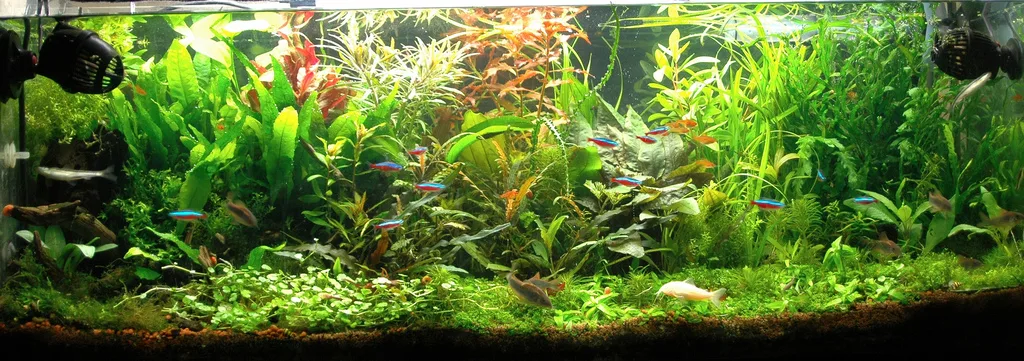
CO2 Regulator and Diffuser Basics
For related reading, see Air Pumps and Airline Gear, community fish compatibility and aquarium water chemistry.
Regulator Components
A quality regulator drops high-pressure cylinder pressure to working pressure safely. Dual-stage models resist end-of-tank dumps better than single-stage budget units.
Add a solenoid on a timer to shut CO2 off at night when plants respire. Pair with a bubble counter and working-pressure gauge for repeatable tuning.
Diffusers vs Reactors
Inline or in-tank diffusers create fine bubbles that dissolve as they rise — simple and visual. Inline reactors mix CO2 with filter flow for higher efficiency and less visible microbubbles.
Choose based on filter type and aesthetics. Canister-fed reactors often achieve lower bubble counts at the same dissolved CO2 level.

Tuning With a Drop Checker
A drop checker with 4 dKH reference solution gives a rough green-yellow-blue map to CO2 levels. Start low and increase slowly while watching fish for gasping at the surface.
Bubble rate varies by diffuser, pressure, and tank turnover — never copy another aquarist's number blindly.
Safety Checks
Soap-test all connections after assembly. Never overtighten disposable cartridge threads. Store cylinders upright and secured.
If fish show distress after CO2 increases, reduce injection and increase surface ripple before assuming disease.
When CO2 Is Optional
Low-tech planted tanks with moderate light thrive without injection using epiphytes, mosses, and slow stems. CO2 becomes valuable when light and fertilisation push demand beyond atmospheric equilibrium.
Budget the full system — regulator, solenoid, diffuser, check valve, and monitoring — not just the cylinder.
Explore other topics
Dive into more aquarium guides across the site.