

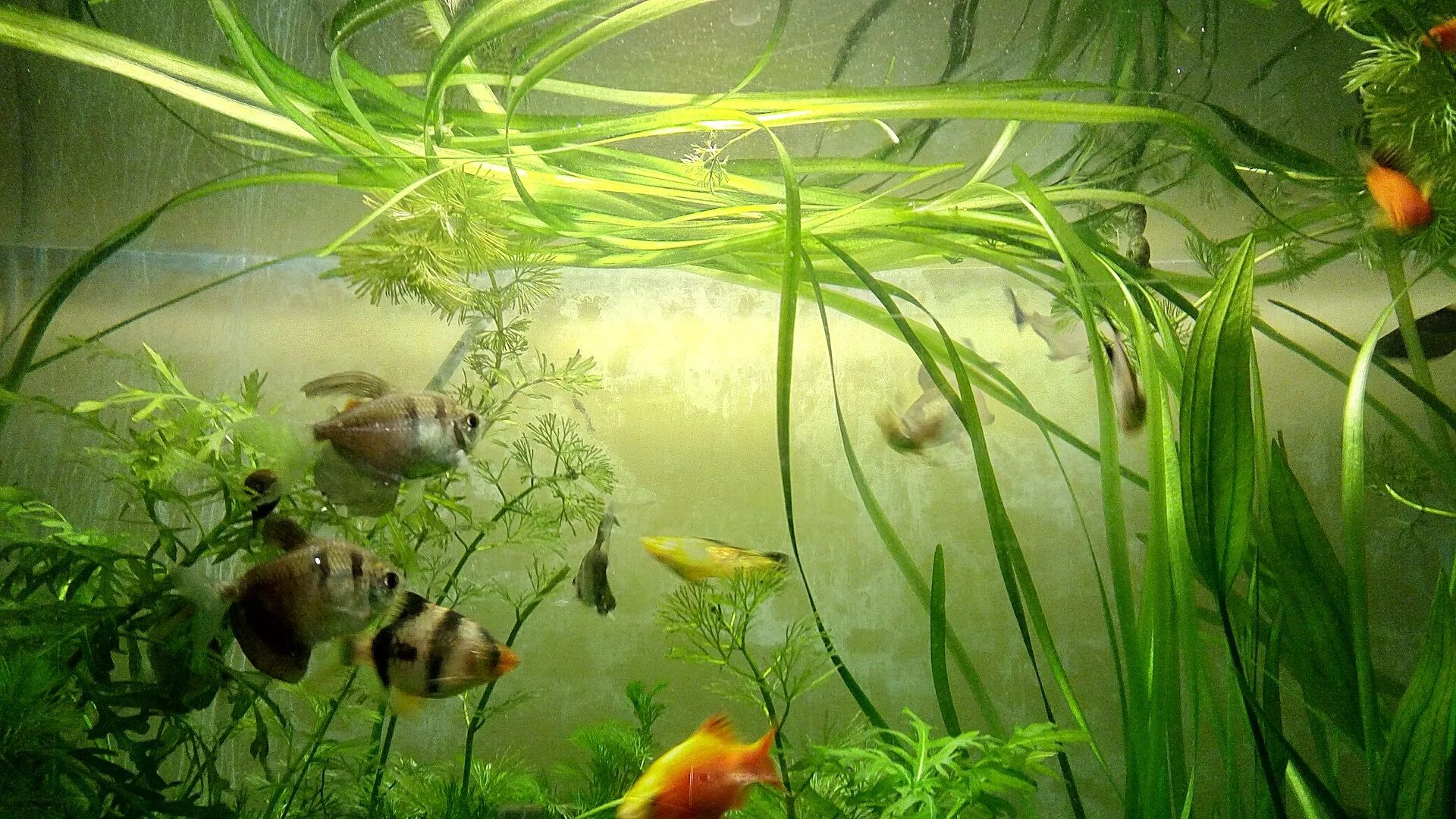
Guide de Stockage d'Aquarium : Combien de Poissons Votre Réservoir Peut-il Contenir ?
“Un pouce de poisson par gallon” est un slogan, pas une science. Un véritable stockage d'aquarium équilibre la taille adulte, la charge biologique, le comportement de nage, la filtration et le tempérament. Ce guide montre comment planifier une communauté qui reste calme et teste propre six mois plus tard.
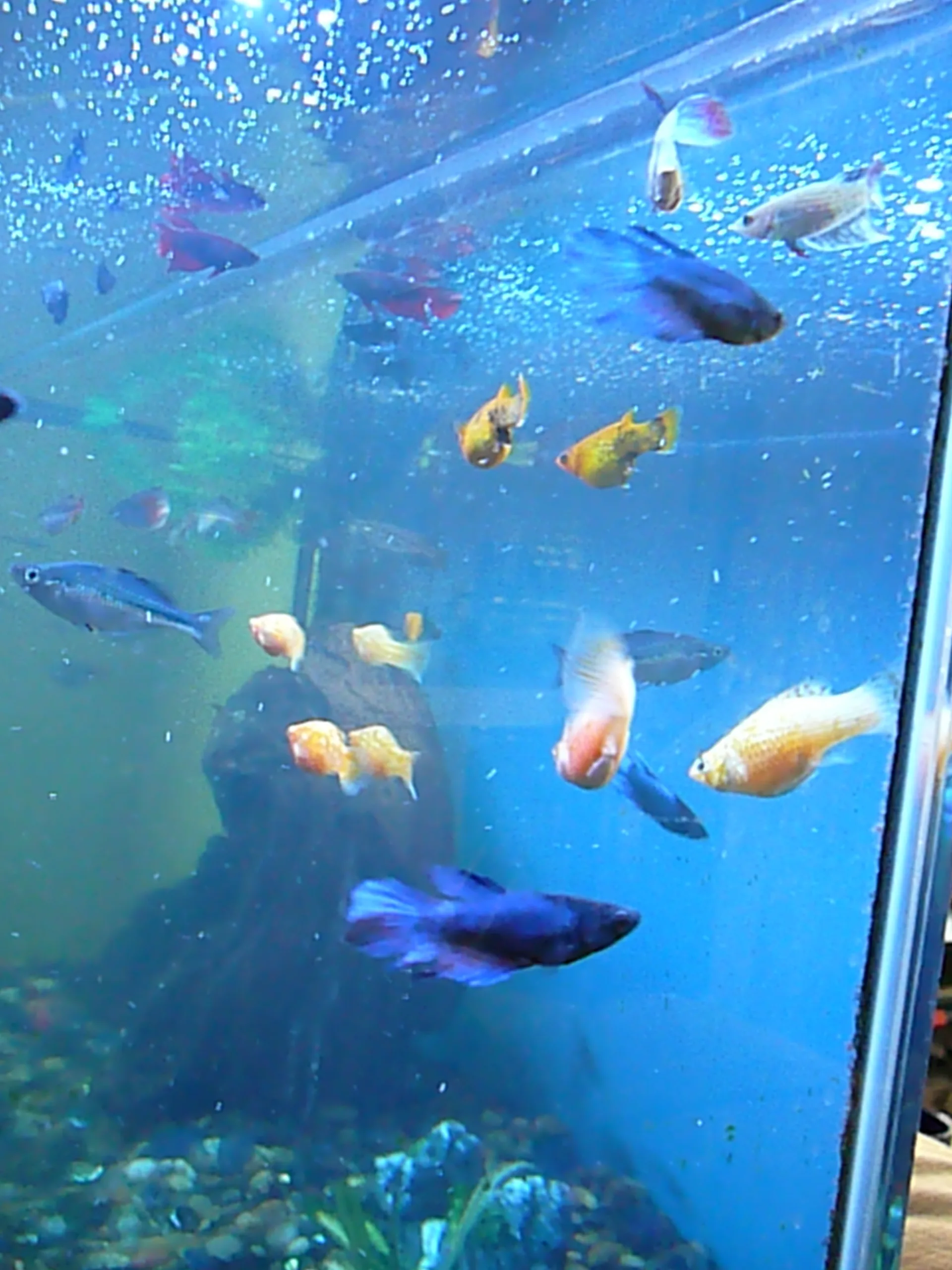 Un bon stockage laisse des couloirs de nage et une masse de plantes pour la stabilité. Photo : Aucun auteur lisible par machine fourni. Epastore supposé (basé sur des revendications de droits d'auteur). / Wikimedia Commons (CC BY-SA 3.0)
Pourquoi le Mythe de l'Inch-Par-Gallon Échoue
Un poisson rouge de 3 pouces et un néon de 3 pouces ne sont pas égaux. Les poissons rouges produisent beaucoup plus de déchets ; les néons ont besoin de bancs et d'espace de nage horizontal. Le comptage des pouces ignore également le territoire, l'agression et la différence entre une communauté densément plantée à faible charge biologique et un réservoir prédateur vide.
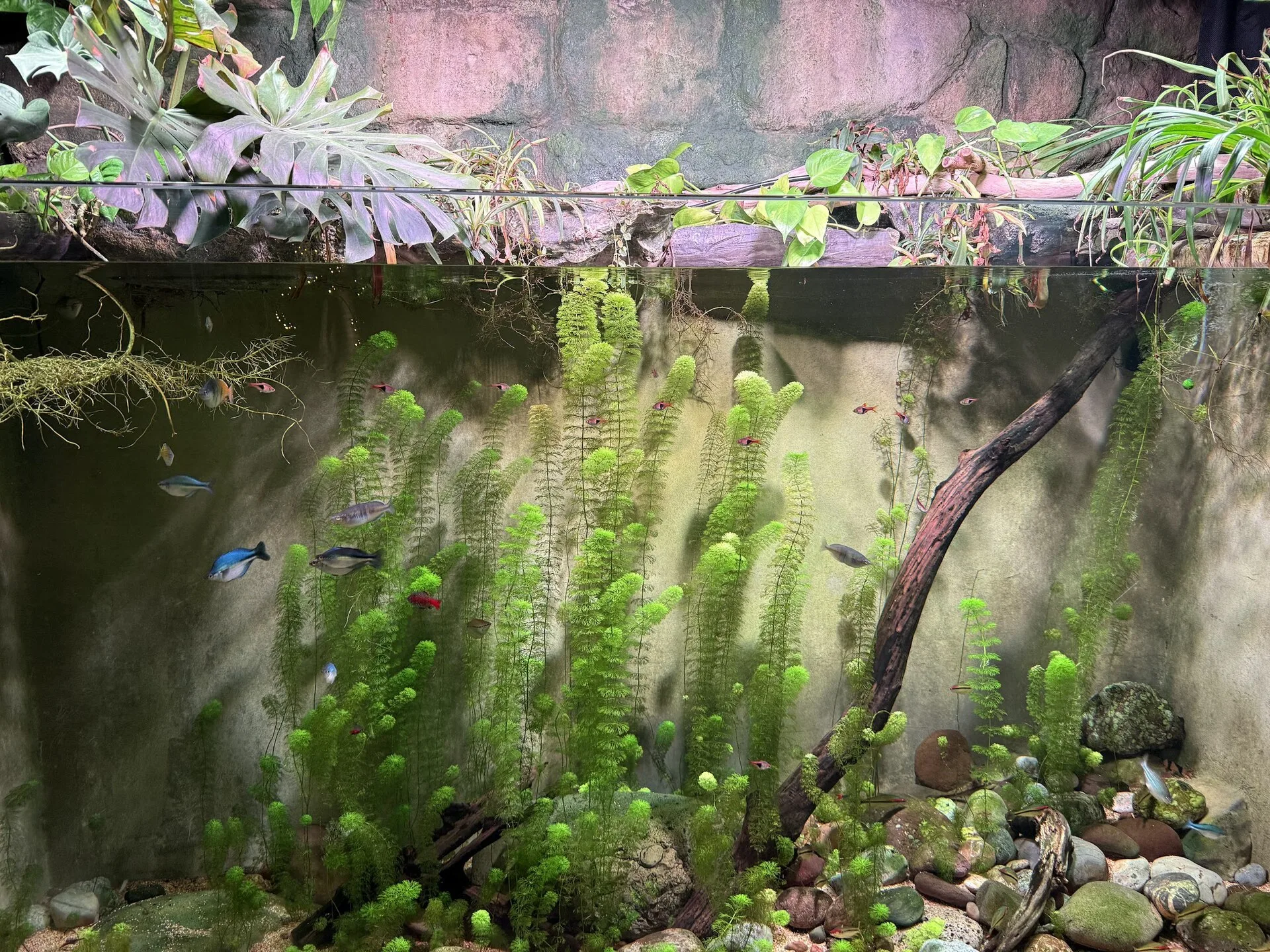 Les poissons en banc actifs ont besoin de longueur plus que d'un simple comptage de gallons. Photo : Netha Hussain / Wikimedia Commons (CC0)
Stockez selon ces Cinq Facteurs
- Taille adulte : Stockez toujours pour des poissons adultes, pas des juvéniles du magasin.
- Charge biologique : Les mangeurs désordonnés et les poissons de grande taille ont besoin de plus de capacité de filtration et de volume d'eau.
- Besoins sociaux : Les espèces grégaires ont besoin de groupes (souvent 6+), ce qui multiplie les besoins en espace.
- Territoire : Les cichlidés, les bettas et certains rasboras revendiquent des zones — le plan de sol compte.
- Filtration et entretien : Une filtration biologique forte et des changements d'eau hebdomadaires élargissent ce qui est réaliste.
Repères Pratiques de Départ
- 10–20 gallons : Petite communauté ou spécialistes nano — pas un banc complet de gros barbes
- 29–40 gallons : Communauté classique pour débutants avec tétras/rasboras + corydoras + une pièce maîtresse
- 55–75 gallons : Place pour des poissons paisibles plus grands, des bancs plus importants, ou des configurations douces du Malawi/Tanganyika avec recherche
Ajoutez du bétail par étapes après un cycle complet. De nouveaux groupes toutes les 1 à 2 semaines permettent au biofiltre de rattraper son retard.

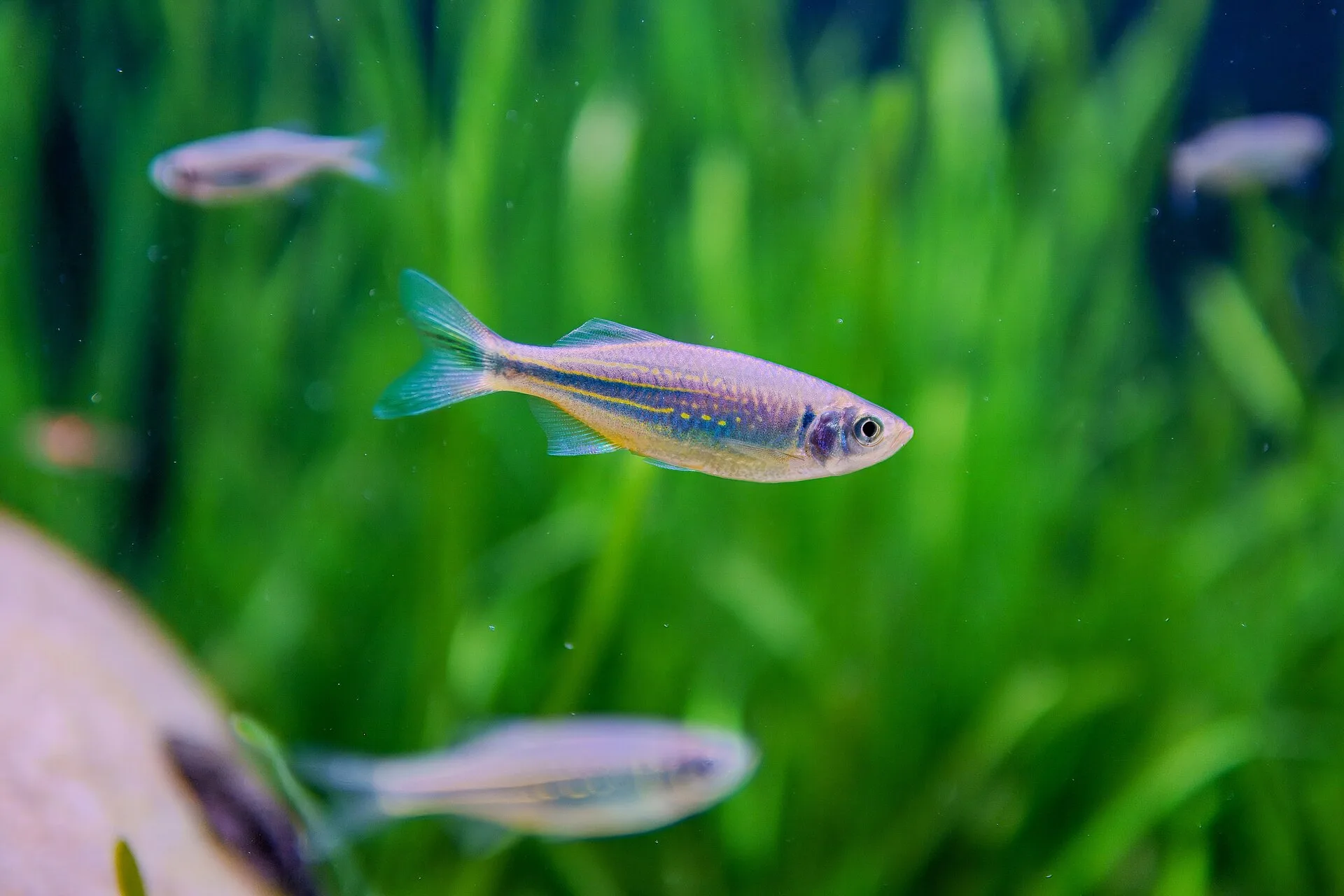 Les incompatibilités de tempérament causent du stress bien avant que le filtre échoue. Photo : Shifu Tanks / Wikimedia Commons (CC BY-SA 4.0)
Mathématiques de Stockage Qui Aident Réellement
Esquissez une liste de stockage avec des longueurs adultes, puis demandez :
- Le plus grand poisson aura-t-il encore de l'eau claire lorsque les plantes mûrissent ?
- Le filtre peut-il gérer 2× la charge biologique attendue lors d'une mauvaise semaine d'entretien ?
- Y a-t-il trop d'espèces territoriales "dominantes" pour l'empreinte ?
Si les nitrates montent au-dessus de ~40 ppm entre les changements d'eau hebdomadaires malgré une alimentation normale, vous êtes en surstockage ou en sous-entretien — considérez cela comme un problème de stockage, pas seulement un problème de changement d'eau.
Raccourcis de Compatibilité
- Associez d'abord la température et le tempérament, la liste de souhaits de couleur en second
- Poissons de spectacle à nageoires longues + mordilleurs chroniques = nageoires déchirées
- Les poissons de fond ont toujours besoin de groupes et d'un substrat doux — ils ne sont pas des emplacements de remplissage gratuits
- Laissez de la marge : un réservoir "terminé" est plus difficile à sauver après des achats impulsifs
Lectures Connexes
- Meilleurs poissons communautaires
- Meilleurs poissons d'eau douce faciles à entretenir pour les débutants
- Choisir la bonne taille d'aquarium
- Comment cycler votre aquarium
Conclusion
Un bon stockage est un stockage patient. Planifiez pour des adultes, respectez les écoles et les territoires, construisez une filtration avec une marge, et ajoutez des poissons lentement. Un réservoir légèrement sous-peuplé a meilleure allure — et reste plus sain — qu'un réservoir bondé qui a toujours besoin de changements d'eau d'urgence.


Explore other topics
Dive into more aquarium guides across the site.