

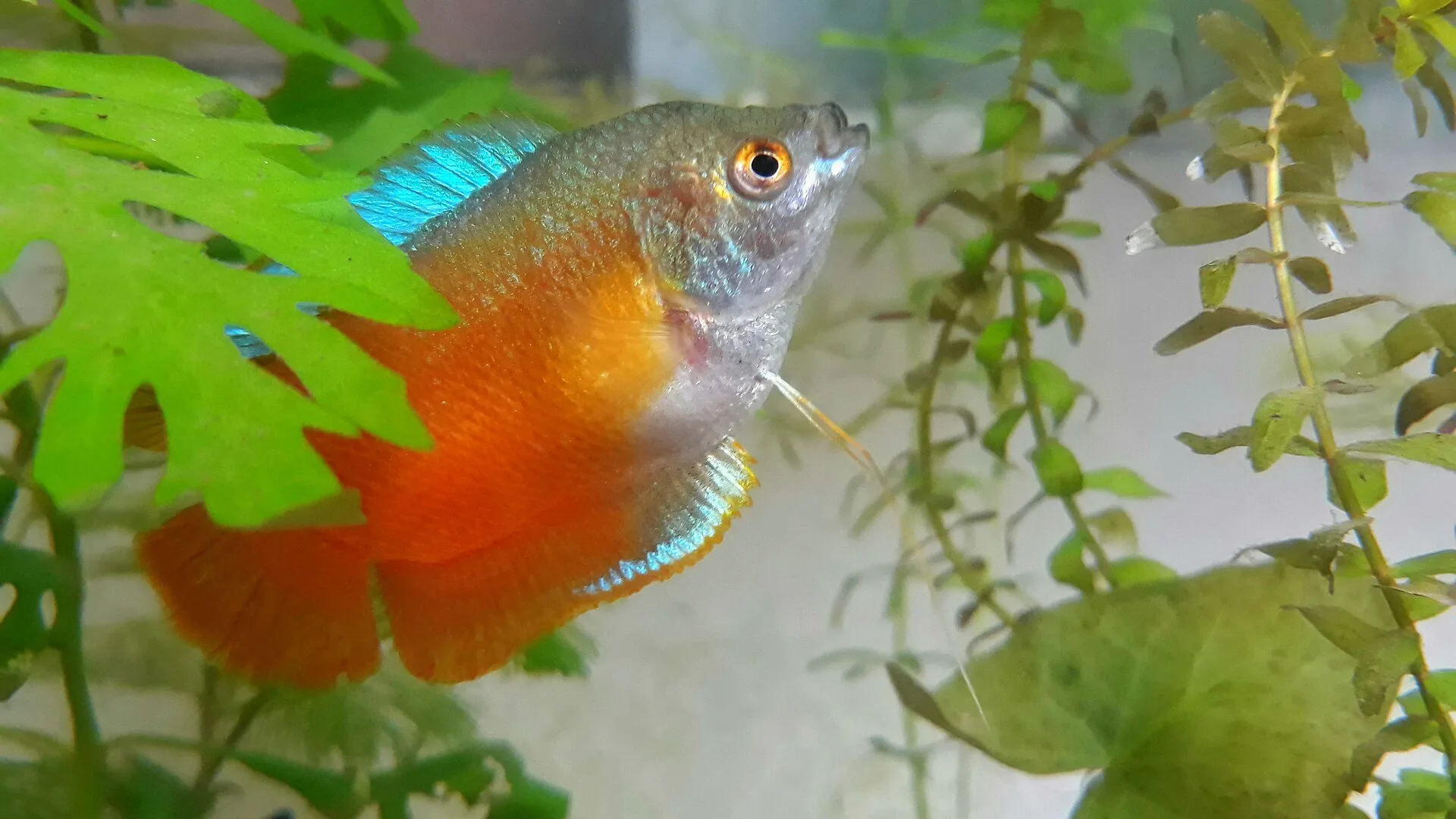
Honey Gourami (Trichogaster chuna)
The Honey Gourami (Trichogaster chuna) is one of the most charming small labyrinth fish available to freshwater keepers. With soft golden-amber colouring, a gentle temperament, and a manageable adult size, it brings quiet personality to planted community aquariums without the intensity of larger gouramis. This guide covers habitat, tank setup, water conditions, diet, compatibility, sexing, breeding, and day-to-day care so you can keep honey gouramis healthy and confident in your tank.
Natural Habitat and Origin
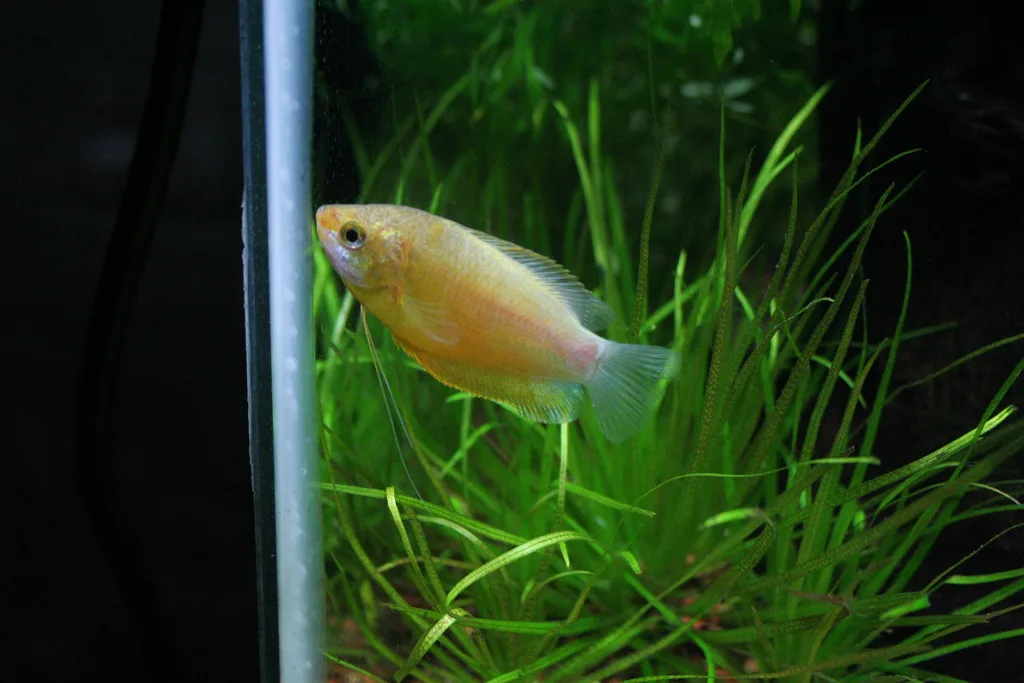
Honey gouramis are native to parts of South Asia, particularly slow-moving waters in India and Bangladesh. In the wild they favour shallow streams, flooded fields, and densely vegetated pools where oxygen can dip and floating plants offer cover. Like other gouramis, they are labyrinth fish, meaning they can gulp atmospheric air when dissolved oxygen is low — a useful adaptation for warm, still habitats.
In the aquarium, that background translates into a preference for calm flow, shaded areas, and plenty of plant cover rather than bright, open, high-current spaces.
Appearance and Size
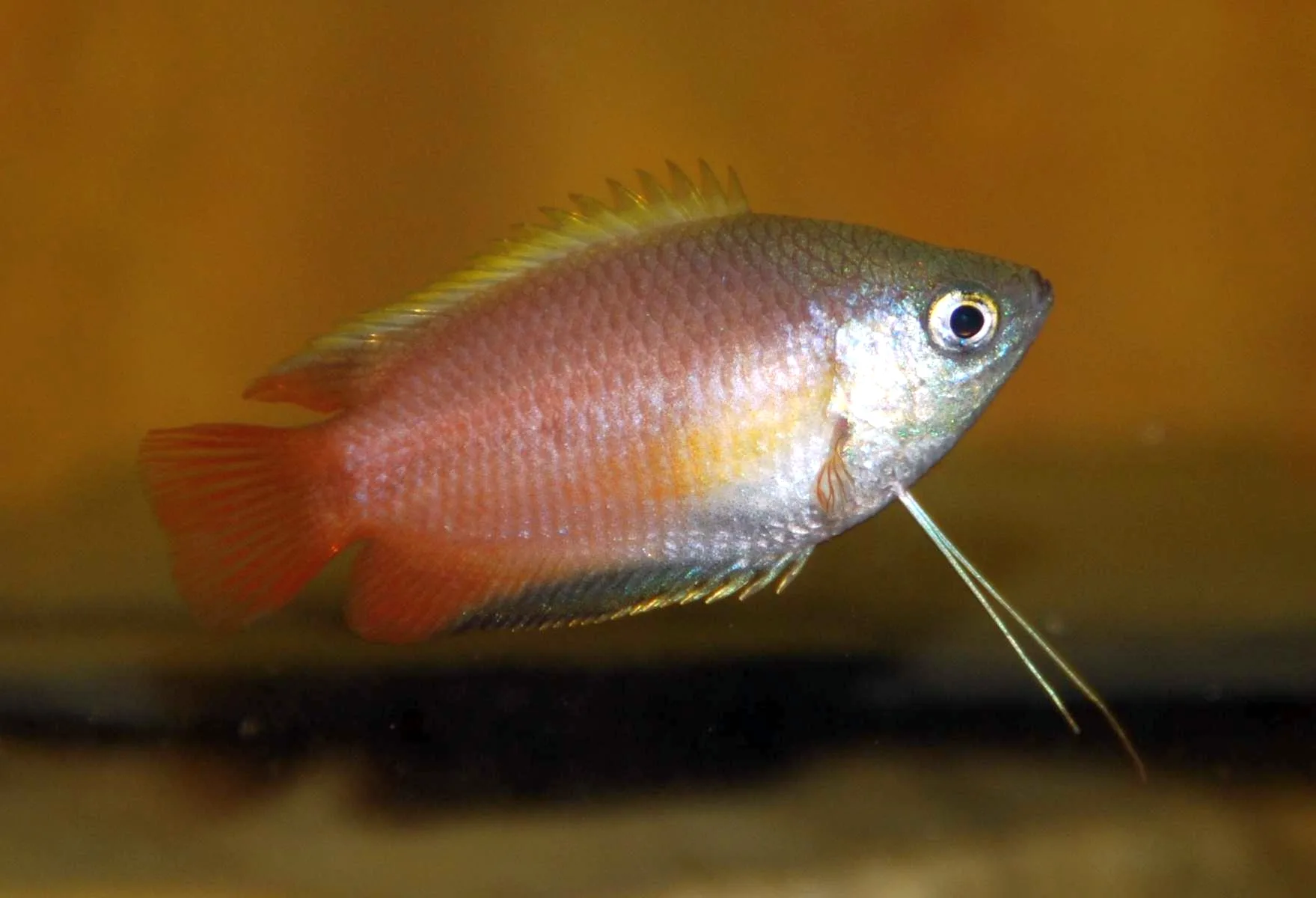
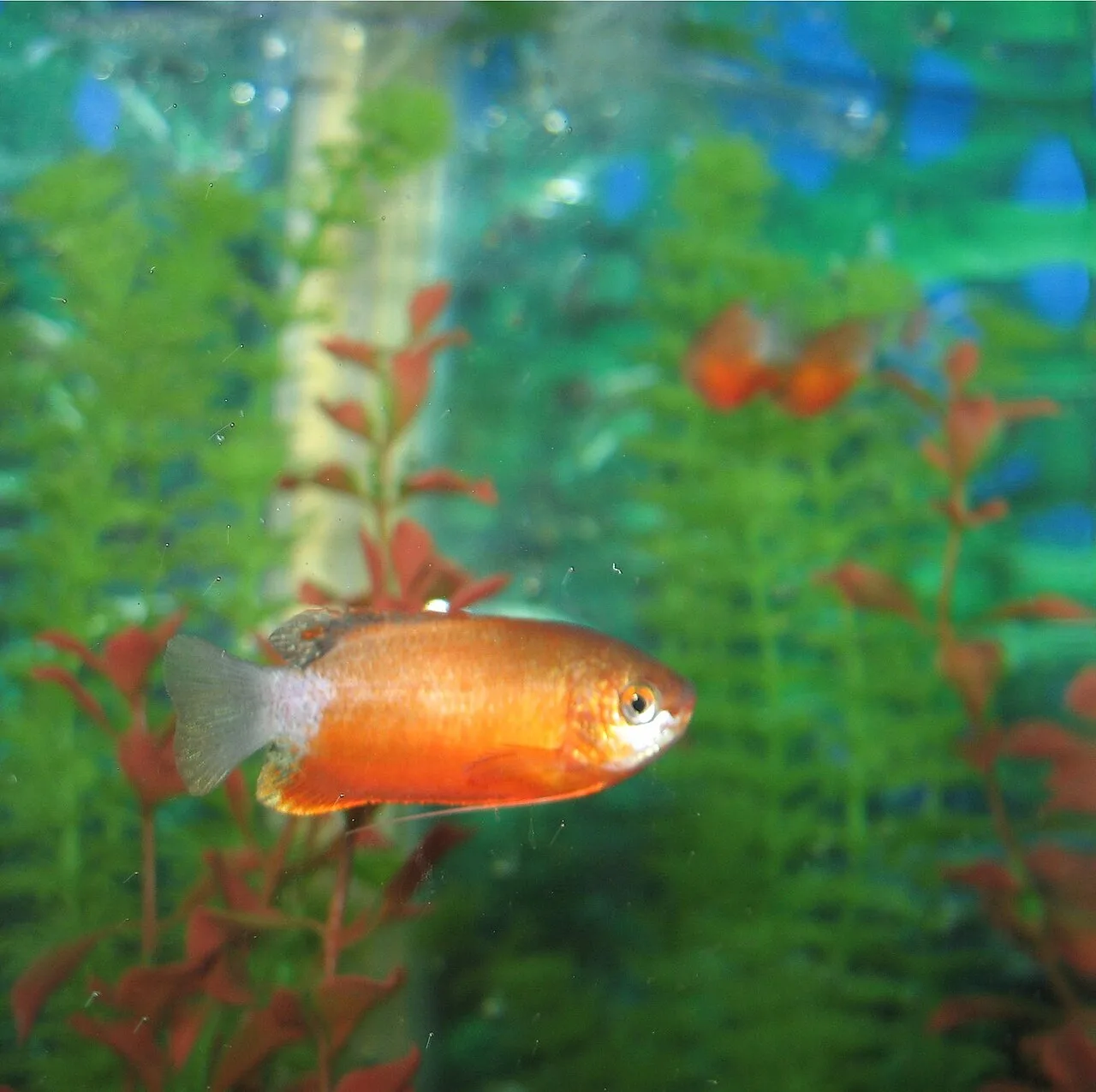
Honey gouramis typically grow to about 1.5–2 inches (4–5 cm), making them one of the smaller commonly kept gouramis. Body colour ranges from warm honey-gold to deeper amber, often with a soft horizontal shading along the flank. Males in good condition show richer gold tones and a more contrasting throat and belly, especially when displaying.
They share the familiar gourami silhouette: a compact oval body, soft dorsal and anal fins, and delicate thread-like pelvic fins that they use almost like tactile “feelers” when exploring plants and tank décor.
Tank Size and Aquarium Setup
A single honey gourami or a peaceful pair can be kept in a well-filtered 10–15 gallon (40–60 L) planted tank, though a 20 gallon (75 L) setup gives more stable parameters and better community options. Prioritise footprint and planting over bare swimming lanes.
Setup tips:
- Use live or high-quality silk plants to create shaded zones and vertical cover.
- Include floating plants to dim light and mimic their natural surface shelter.
- Keep filtration gentle — sponge filters or baffled outlets work well.
- Provide at least one retreat near the surface where the fish can rest undisturbed.
- Leave an open path along the front for calm cruising and bubble-nest space if breeding.
Avoid strong powerheads and aggressive tank mates that will chase or nip fins. Honey gouramis do best when they can claim a quiet corner of the aquascape.
Water Conditions
These fish are relatively adaptable, but they settle and colour up best in warm, soft-to-moderately hard water with low stress.
- Temperature: 72–82°F (22–28°C), ideally around 76–78°F (24–26°C)
- pH: 6.0–7.5
- Hardness: soft to moderately hard water is preferred
- Flow: low to moderate
- Maintenance: weekly partial water changes and a tight lid (gouramis may jump, and a stable humid surface layer supports labyrinth breathing)
Stability matters more than chasing “perfect” numbers. Sudden swings in temperature or ammonia spikes will show up quickly as clamped fins, hiding, or faded colour.
Diet and Feeding
Honey gouramis are omnivores with a natural leaning toward small invertebrates and soft plant matter. In the aquarium they accept a mixed diet:
- High-quality micro pellets or crushed flakes as a staple
- Frozen or live daphnia, baby brine shrimp, and bloodworms as regular treats
- Occasional blanched vegetables or spirulina-based foods for variety
Feed small portions once or twice daily and make sure mid-water or surface foods reach them before faster tank mates clear the water. A varied diet improves colour, breeding condition, and immune strength.
Temperament and Community Compatibility

This is a peaceful species and one of the better gourami choices for community tanks. Males may display or briefly flare at each other, but serious aggression is uncommon when space and cover are adequate.
Good tank mates:
- Small tetras (ember, neon, cardinal, glowlight)
- Rasboras and small danios
- Corydoras and otocinclus
- Peaceful shrimp in mature, well-planted tanks (with caution around predatory or large fish)
- Other gentle dwarfs such as sparkling gouramis or small livebearers
Avoid: fin-nippers (some barbs), large aggressive cichlids, and very boisterous fish that will outcompete honey gouramis at feeding time.
Sexing Honey Gouramis
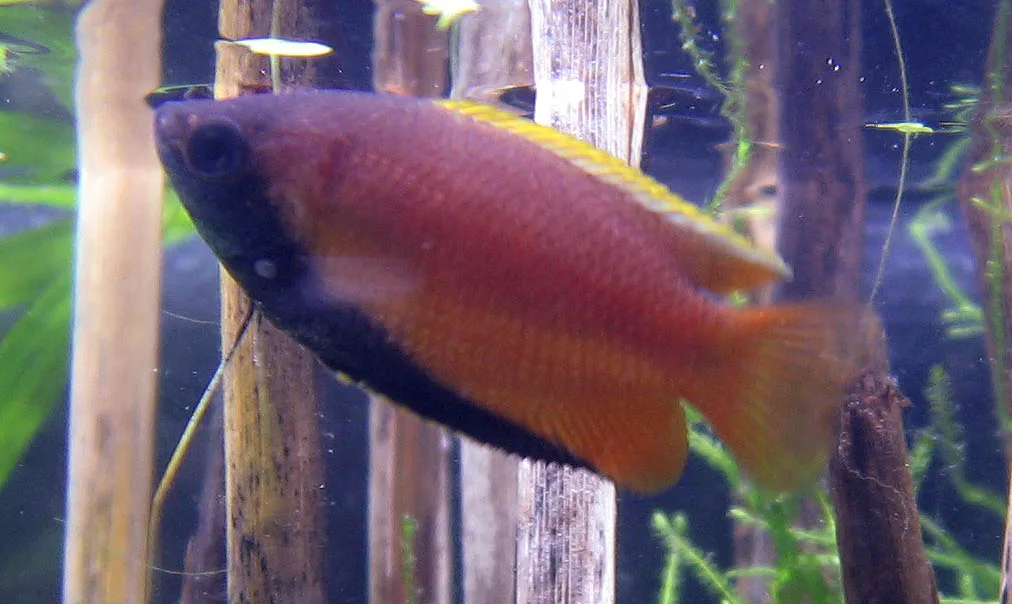
Males are typically more vividly coloured, with a stronger golden body and warmer orange to reddish tones on the throat and belly when mature. Females are usually softer yellow-silver or muted honey in tone and have a rounder body shape when carrying eggs. The dorsal fin on males often appears longer and more pointed.
Sexing is easiest once fish are adult and displaying; juveniles can look similar until colours intensify.
Breeding Behavior
Honey gouramis are bubble-nest builders. A conditioned male will gather bubbles beneath floating plants or at a quiet surface corner, then court a receptive female. Spawning is usually followed by the male guarding the nest while the female is often best moved to reduce stress.
For breeding success:
- Condition both fish with live/frozen foods for 1–2 weeks
- Use warm water toward the upper preferred range
- Provide dense floating plants and very gentle flow
- Keep the breeding tank shallow and calm
- Feed free-swimming fry with infusoria or commercial fry foods, then baby brine shrimp as they grow
Not every pair will spawn on cue, but a planted, low-stress setup gives them the best chance.
Ease of Care
Honey gouramis rate as a beginner-to-intermediate community fish. They are hardier than some delicate dwarf gouramis sold through mass distribution channels, especially when you start with healthy stock and give them cover. Their small size, peaceful nature, and readiness to accept prepared foods make them a strong pick for planted nano and mid-size aquariums.
The main care requirements are simple: warm stable water, gentle neighbours, varied food, and enough planting that the fish never feels exposed.
Common Health Concerns
Like other labyrinth fish, honey gouramis can be vulnerable when shipped poorly or kept in poor water. Watch for:
- Clamped fins or lethargy after parameter swings
- Surface gasping when water quality drops (investigate ammonia/nitrite immediately)
- Fin damage from nipping tank mates
- Internal or fungal issues in stressed, newly imported fish
Quarantine new arrivals when possible, avoid overcrowding, and keep maintenance consistent rather than reactive.
For long-term success, pair this fish with stable water parameters, a mature nitrogen cycle, and peaceful community tank mates in a planted aquarium when possible.
Related Reading
Conclusion
The honey gourami is a small fish with a big aquarium presence: warm colour, calm manners, and a natural fit for planted freshwater tanks. Give it soft light, gentle tank mates, and steady water conditions, and it will reward you with colour, subtle personality, and long-term ease of care — whether you keep a single showcase fish or a softly bonded pair.
Explore other topics
Dive into more aquarium guides across the site.