

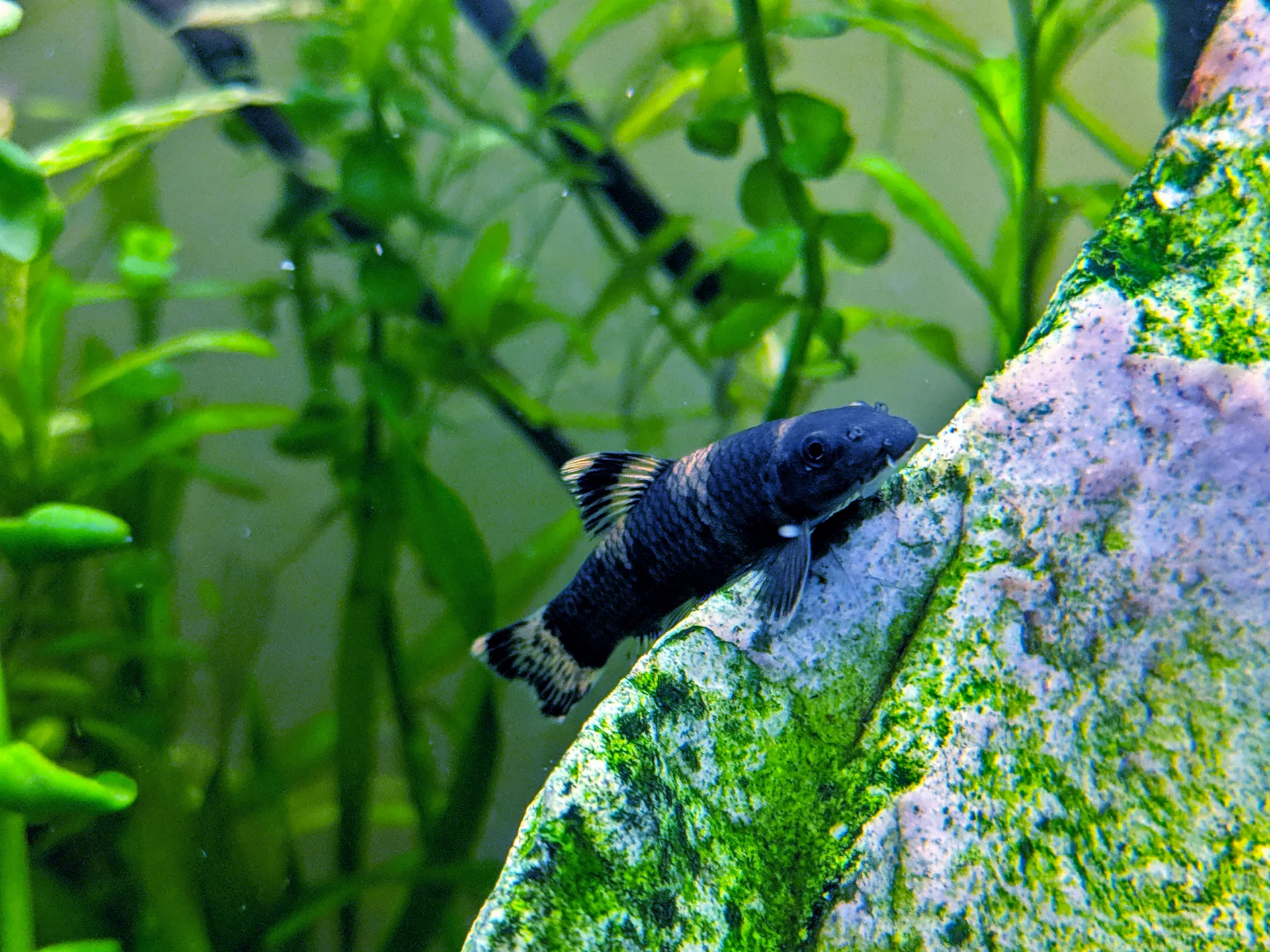
The Panda Garra (Garra flavatra) is a distinctive freshwater aquarium fish valued for its appearance and behaviour. It is native to fast-flowing streams and rocky waterways in the Rakhine region of Myanmar. Understanding its small natural habitat details helps aquarists provide the right flow, cover, food and tank mates.
Panda Garra Size and Aquarium Setup
Adults reach about 7–9 cm (2.8–3.5 inches). A 110-litre (29-gallon) or larger aquarium is best for a small group. Provide rounded stones, wood, open grazing surfaces and strong filtration with plenty of oxygen. The aquarium should be fully cycled before the fish are added, and routine partial water changes should be used to keep nitrate and dissolved waste under control.
- Use a mature, fully cycled aquarium.
- Provide cover as well as open swimming or feeding space.
- Match filtration strength to the species’ natural habitat.
- Prevent sudden changes in temperature or water chemistry.
Water Conditions
Recommended conditions are 20–26°C (68–79°F), pH 6.5–7.5, and moderate hardness. Low oxygen, dirty substrate and neglected filters can quickly cause problems. Always acclimate new fish gradually and test ammonia, nitrite and nitrate, especially during the first weeks after introduction.
Diet and Feeding
The Panda Garra should be fed an omnivore that grazes biofilm and algae but also needs sinking wafers, quality pellets, blanched vegetables and occasional frozen foods. Offer portions that can be eaten promptly, vary the diet through the week and remove uneaten food before it affects water quality.
Sexing Panda Garra
Mature males may develop small tubercles around the head and snout, while females are often fuller-bodied. Differences can be subtle outside breeding condition. Juveniles can be difficult to sex, so differences may only become clear as the fish mature.
Breeding
Home breeding is rarely documented and is not considered straightforward. Commercial production may use specialized conditions. Focus on excellent diet, seasonal temperature changes and a well-oxygenated setup if attempting to encourage spawning. Consistent feeding and very clean water are usually more important than frequent handling or major changes to the aquarium.
Is It Good for a Community Tank?
Active and usually peaceful, though individuals may squabble over preferred rocks. Keep several with enough space, or one in a community with fish such as Giant Danios, peaceful barbs and sturdy loaches.
Species Variations and Albino Forms
The bold black and yellow-brown pattern changes with age and mood. Garra species are sometimes confused in shops, so verify the scientific name. A true albino Panda Garra is not commonly offered.
Ease of Care
Care level: Intermediate. Success depends on choosing healthy stock, avoiding overcrowding and ensuring every fish receives suitable food. Observe the group daily for clamped fins, unusual hiding, rapid breathing or weight loss.
Frequently Asked Questions
How many Panda Garra should be kept together?
Follow the species’ social needs described above and provide enough room for natural displays, feeding and escape from dominant individuals. A proper group usually produces more confident behaviour than keeping only one or two schooling fish.
Can Panda Garra live in a beginner aquarium?
The listed care rating is a useful guide, but even beginner-friendly fish need a cycled tank and stable water. Species rated intermediate often have special feeding, flow or social requirements that should be prepared before purchase.
What is the best way to introduce Panda Garra?
Dim the aquarium lights, acclimate gradually, and release the fish near cover. Feed lightly on the first day and watch existing tank mates for chasing or food competition.
Explore other topics
Dive into more aquarium guides across the site.