

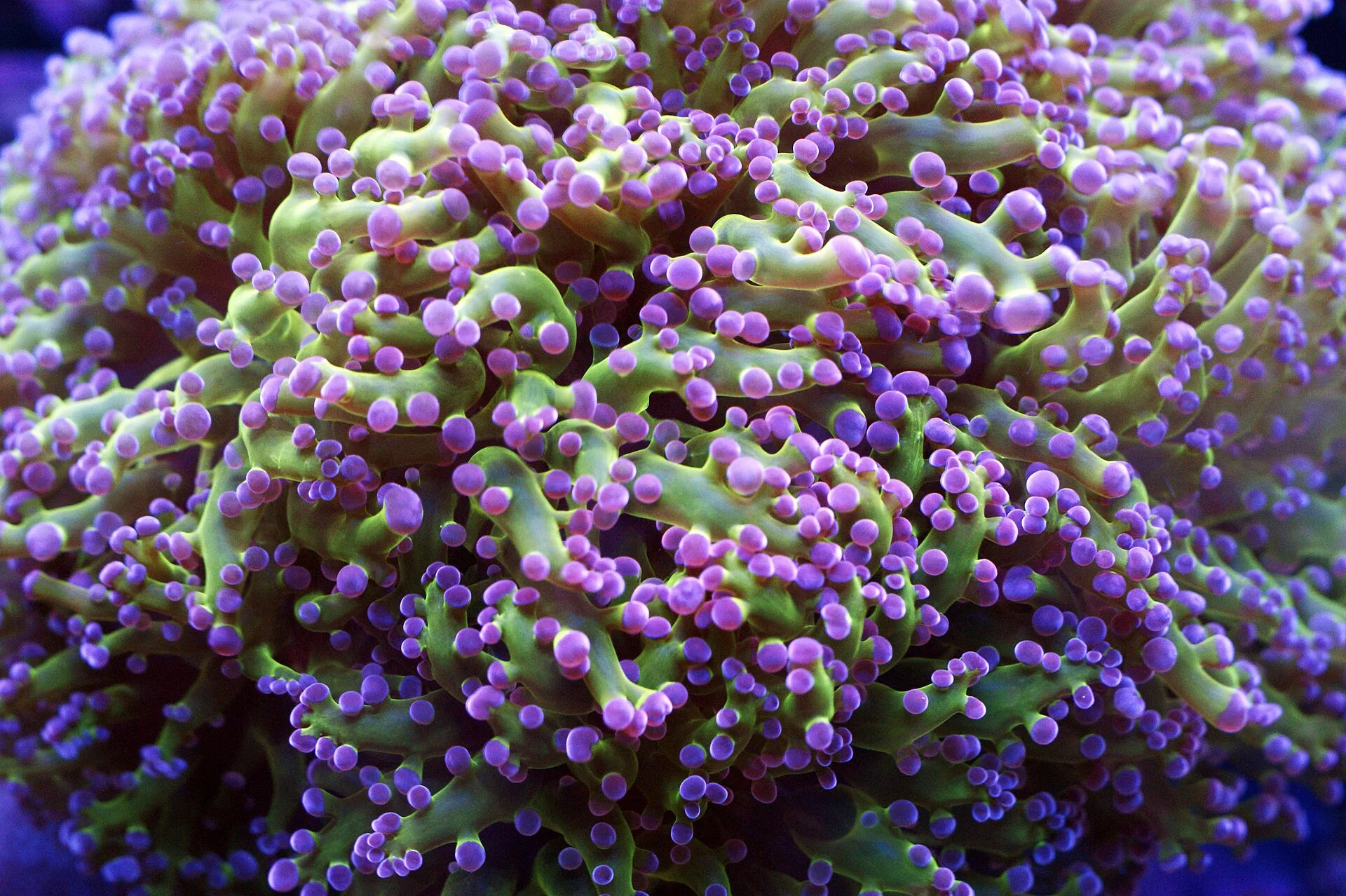
Frogspawn Coral (Euphyllia divisa)
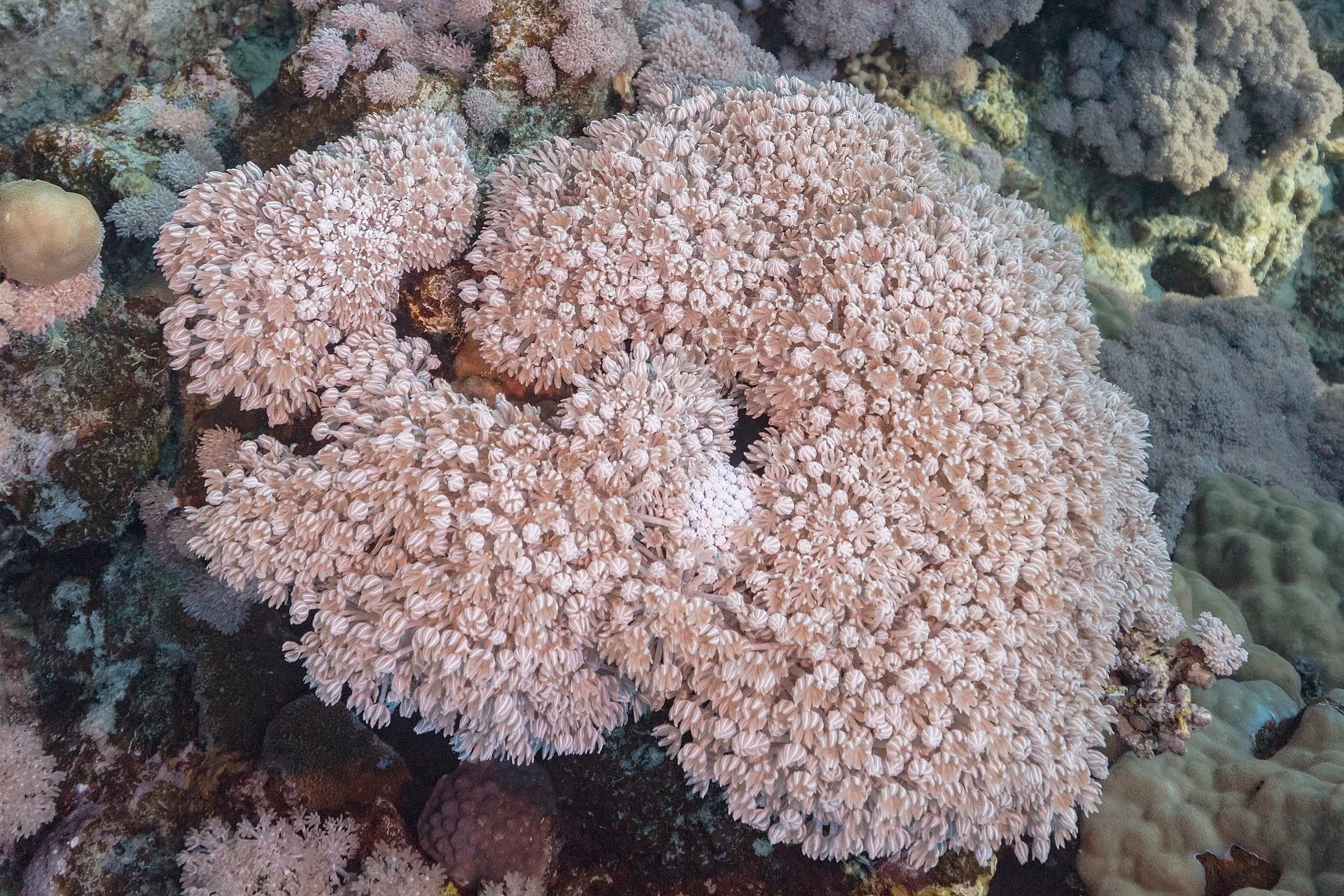
The Frogspawn Coral (Euphyllia divisa) is a reef aquarium staple kept for colour, motion, and aquascape structure. This profile matches our other coral and invertebrate guides with origin, lighting, flow, water chemistry, feeding, placement, and husbandry pitfalls.
Keeper notes: Long sweeper tentacles at night — give clearance from other corals. Acclimate light slowly after shipping.
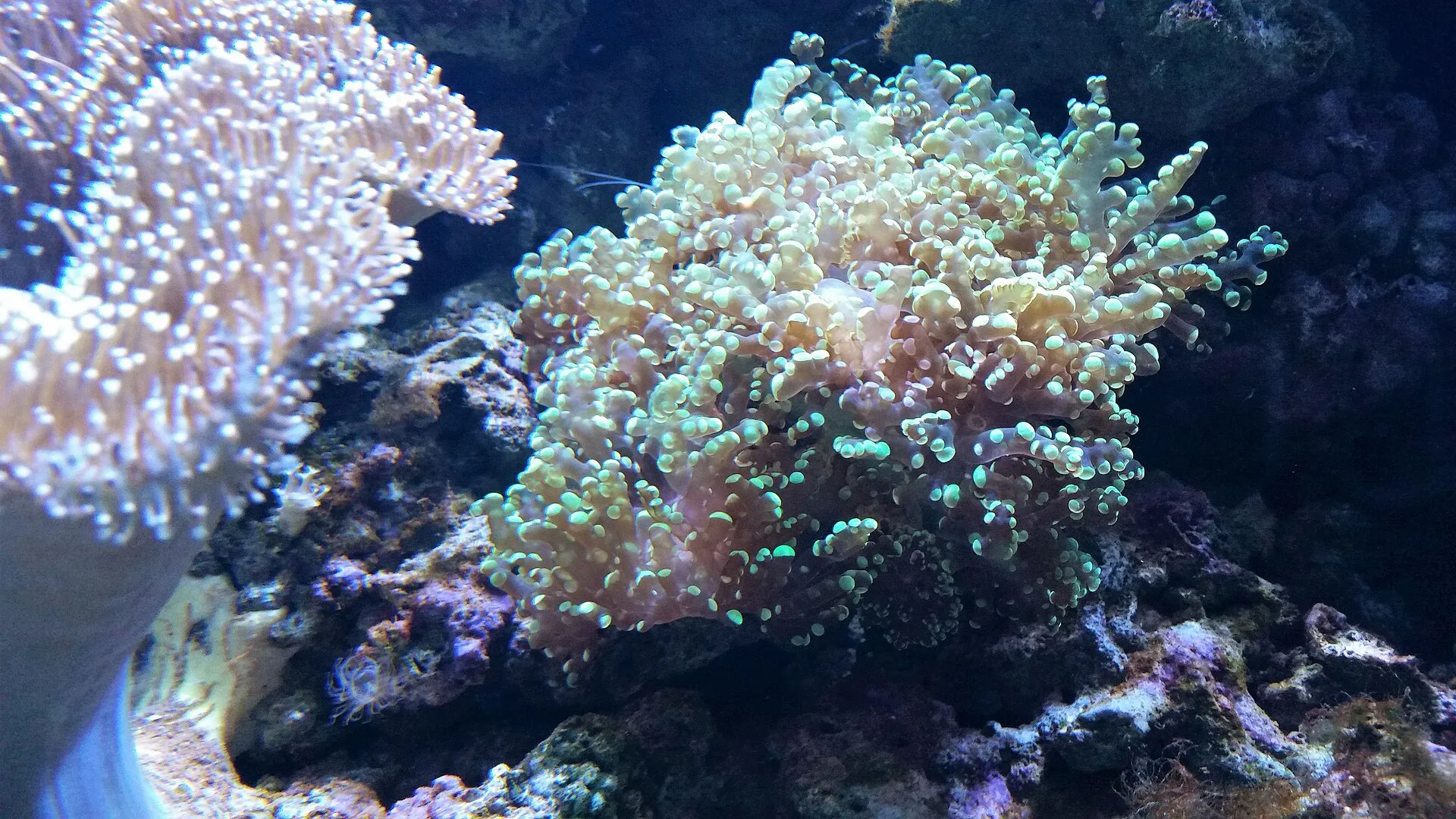
Natural Habitat and Origin
Wild colonies are associated with Indo-Pacific reef slopes and lagoons. Translating that into aquariums means mature rock, stable salinity, and lighting/flow that match the species’ depth preference rather than blasting every coral with identical PAR.
Appearance and Colony Form
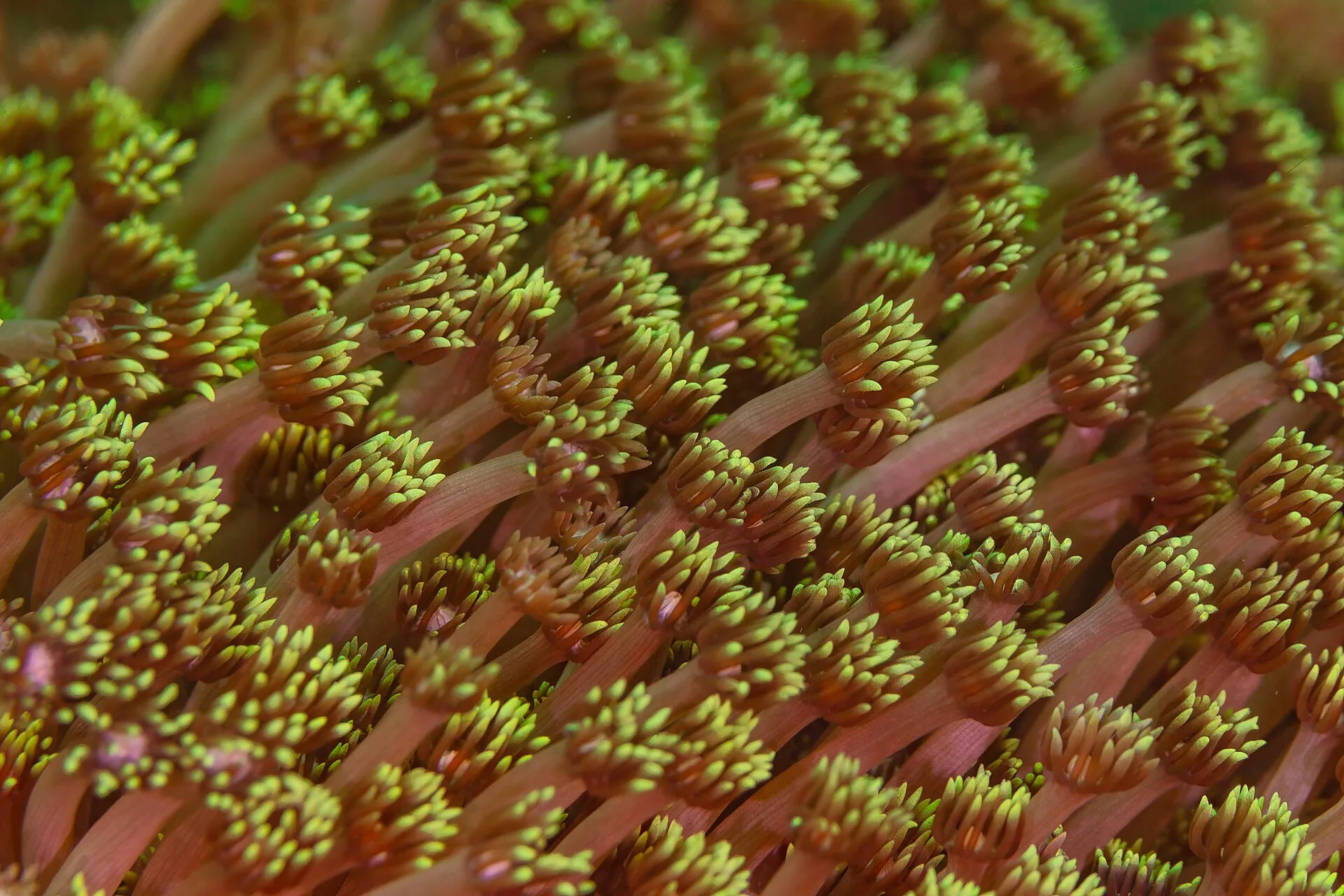
Typical aquarium size/range: colonies expand to 8–16+ inches (20–40+ cm) in captivity. Healthy tissue looks inflated, colourful (or naturally brown with strong fluorescence under actinics), and responsive to light cycle changes. Receding tissue, bleach, or stringy pests deserve immediate chemistry and pest checks.
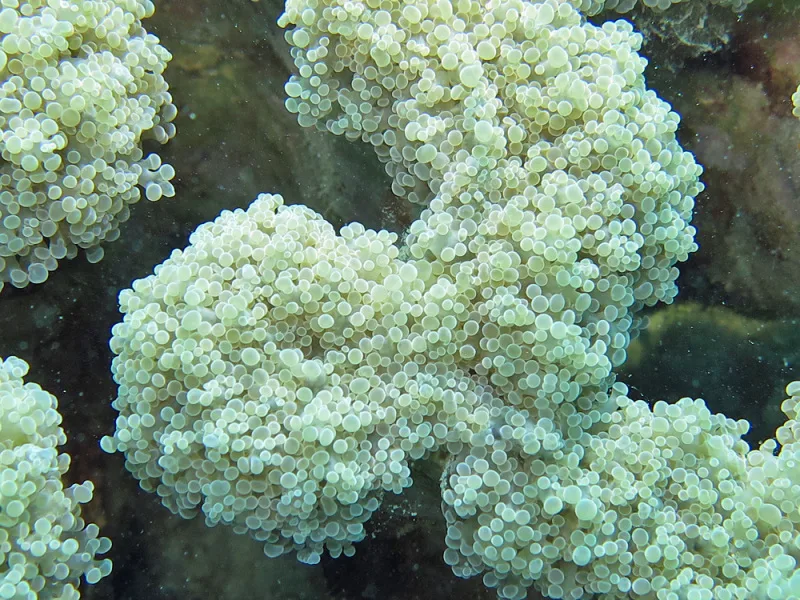
Lighting and Flow
- Light: low to moderate
- Flow: moderate, indirect
- Acclimate new frags by starting lower and raising intensity over 1–2 weeks
- Observe for closed polyps (too much flow/light) or stretched searching behaviour (too little)
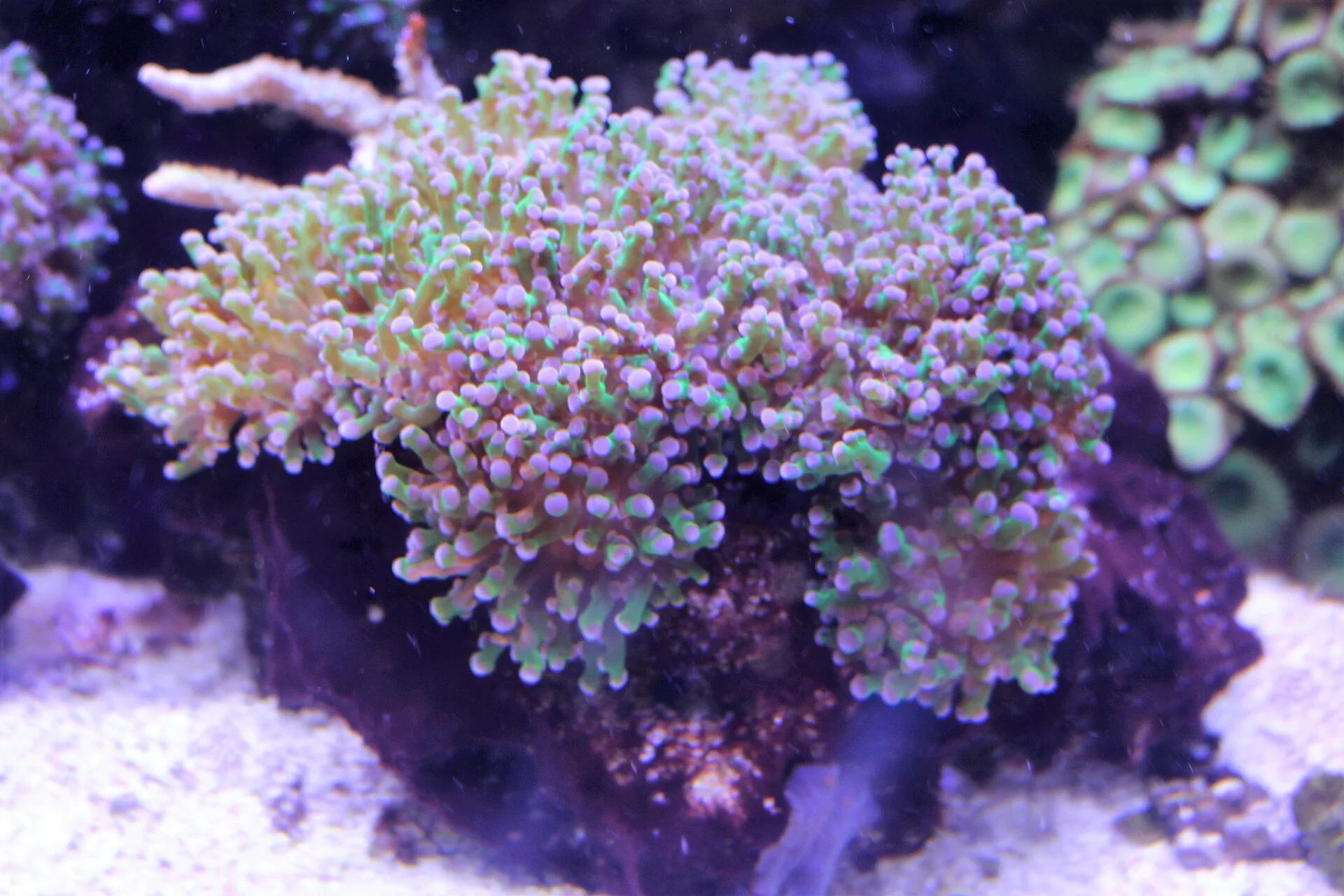
Water Conditions

- Temperature: 75–80°F (24–27°C)
- Salinity / SG: 1.024–1.026
- pH: 8.1–8.4
- Tank: 40 gallon (150 L)+ stable reef
- Alkalinity / calcium / magnesium: keep reef parameters stable; avoid big daily Alk swings
Feeding
Ecology: photosynthetic + occasional target feeding. Many photosynthetic corals still benefit from periodic target feeding or broadcast reef foods when nutrient export is strong. Feed lightly — excess nutrients fuel algae.
Placement and Aggression
Give chemical and physical space. LPS sweepers, zoanthid mats, and anemones can wage slow wars across rock. Mount frags on plugs for easy rearranging while they find a permanent home.
Ease of Care
Care level: intermediate. Stability, cleanliness, and patience outperform constant additive tinkering.
Common Problems
- Bleaching from sudden light intensity changes
- Tissue recession from Alk crashes or pests
- Chemical warfare when coral aggression is ignored
- RTN/STN events after shipping stress or parameter spikes
Related Reading
Conclusion
Frogspawn Coral (Euphyllia divisa) can be a showpiece coral when lighting, flow, and water chemistry stay consistent. Use this guide alongside our other invertebrate and reef profiles for clear, practical long-term care.
Explore other topics
Dive into more aquarium guides across the site.