

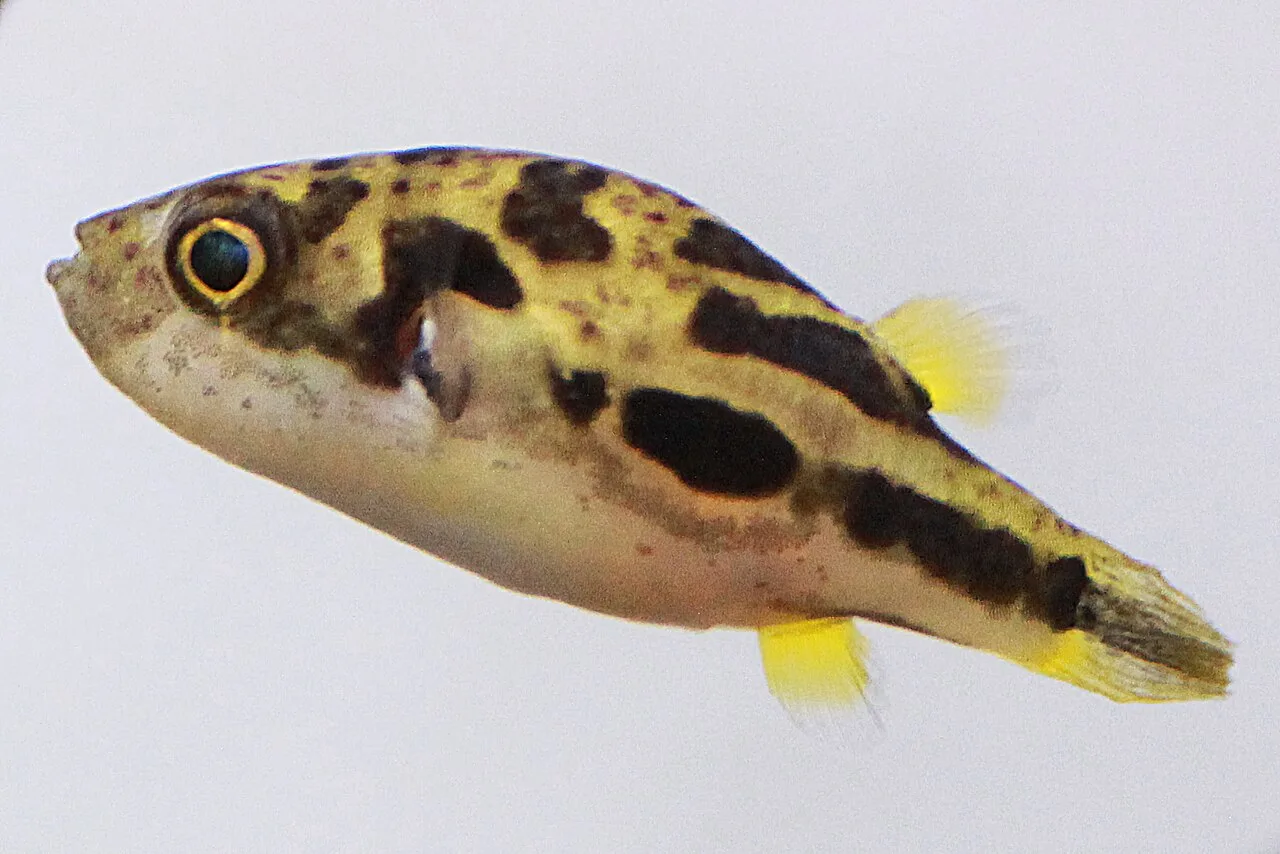
The Pea Puffer, Carinotetraodon travancoricus, is a miniature freshwater pufferfish from Kerala in southwestern India. It is also sold as the dwarf puffer or Malabar puffer. With an adult size of only around 3.5 cm, it is easy to assume this fish belongs in any nano community aquarium. In reality, its territorial behaviour and specialized feeding requirements make careful planning essential.
Native Range and Natural Habitat
Pea Puffers are endemic to freshwater habitats in Kerala, India, including river systems in the Western Ghats region. Unlike many familiar pufferfish, they are true freshwater fish and do not require salt to be added to the aquarium.
Size and Aquarium Setup
Adults reach roughly 3–3.5 cm. Even at this size, they need a structured aquarium with plants, wood and other visual barriers. A bare tank can cause individuals to see and chase each other constantly. Dense planting creates separate territories while giving less dominant fish somewhere to retreat.
When arranging the aquarium, use plants and hardscape to break lines of sight without eliminating swimming space. Our guide to aquascaping with aquatic plants can help with creating natural cover.
Water Conditions
Keep Pea Puffers in clean, fully cycled freshwater with stable conditions. Warm tropical temperatures around 24–28°C are appropriate. A near-neutral pH is a practical target for many captive setups, provided the fish are acclimated and water chemistry remains stable. Ammonia and nitrite should remain at zero, with nitrate controlled through maintenance and planting.
Diet and Feeding
Diet is one of the most important parts of Pea Puffer care. Many individuals ignore dry flakes and pellets, especially when newly acquired. Appropriate foods include small snails, frozen or live bloodworms, brine shrimp, daphnia, mosquito larvae and other small aquatic invertebrates. Variety is important.
Pea Puffers are active hunters, so observe each fish at feeding time. In groups, dominant fish may monopolize food unless it is distributed in several areas.
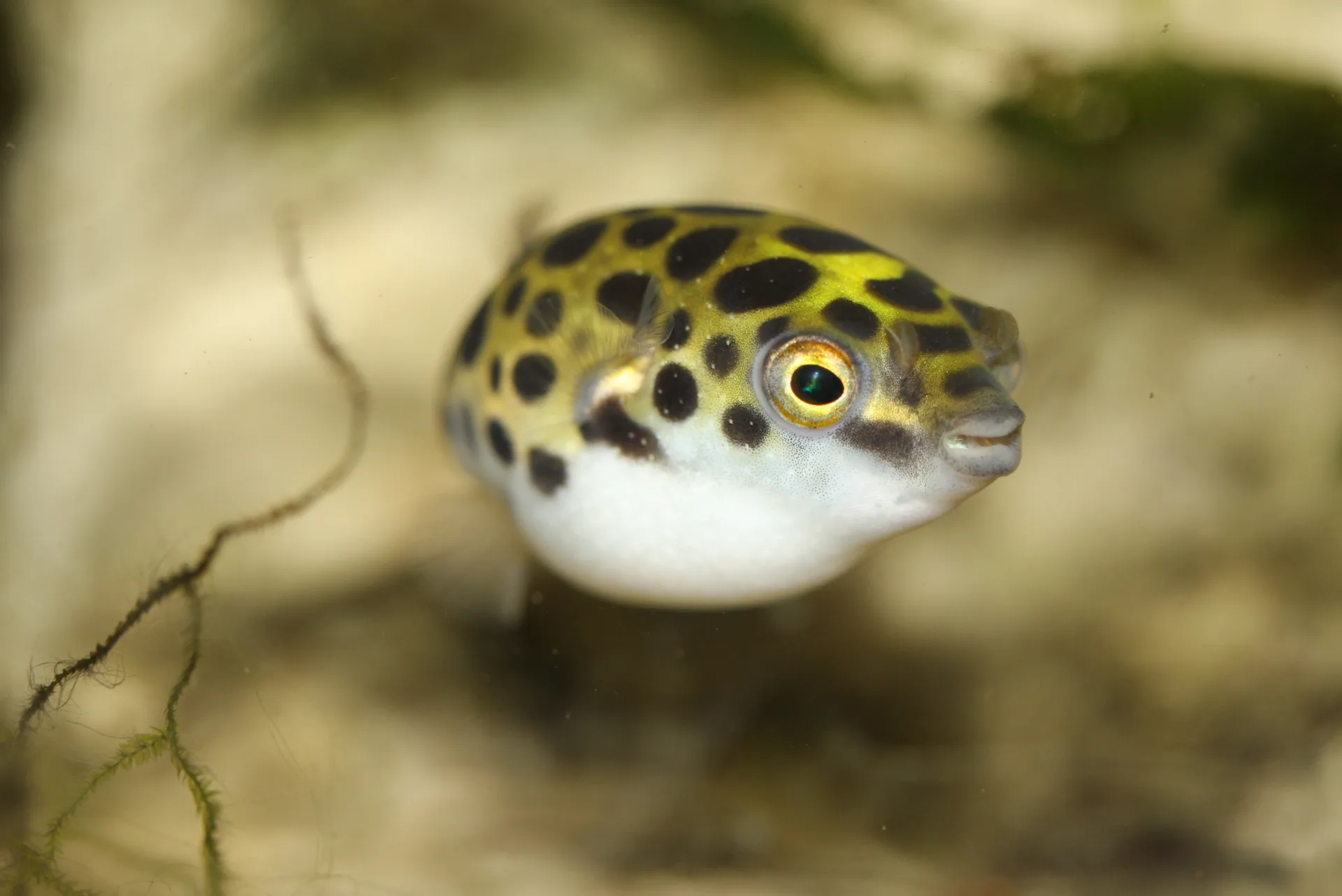
By Starseed - Own work, CC BY-SA 3.0 de, https://commons.wikimedia.org/w/index.php?curid=7425051
Sexing Pea Puffers
Sex differences become clearer as the fish mature. Males can develop a darker line along the underside of the abdomen and may show more pronounced coloration or markings around the eyes. Females usually have a rounder body, especially when carrying eggs. Juveniles can be difficult to sex reliably.

Breeding
Breeding is possible in planted aquariums. Courtship usually involves the male following and displaying to a female before eggs are deposited among dense vegetation or fine-leaved plants. Adults can eat eggs or fry, so breeders may remove spawning material or separate the adults. The newly hatched fry require tiny live foods before moving on to baby brine shrimp and other larger prey.
Are Pea Puffers Good Community Fish?
They are not a typical community fish. Pea Puffers can nip fins and harass tank mates, and individual temperament varies. Species-focused setups are usually the safest choice. Keeping multiple puffers can work in a well-planted aquarium with enough room and broken sight lines, but aggression must be monitored carefully.
Do not select tank mates simply because they are small. Slow fish, long-finned fish and delicate bottom dwellers can all be targets. If your goal is a peaceful mixed aquarium, consider one of the species in our best community fish guide instead.
Ease of Care
Pea Puffers are intermediate rather than beginner fish. Their small size is manageable, but feeding, territorial behaviour and the need for close observation add complexity. They are a rewarding choice for an aquarist prepared to provide a dedicated setup and suitable frozen or live foods.
Species Variations and Albino Pea Puffers
There is no widely recognized aquarium strain of true albino Carinotetraodon travancoricus. Pattern and colour intensity naturally vary between individuals, and stressed fish can look considerably paler. Other small Carinotetraodon species are separate species rather than colour forms of the Pea Puffer.
Frequently Asked Questions
Do Pea Puffers need brackish water?
No. Pea Puffers are freshwater fish and should not routinely have marine salt added to their aquarium.
Do Pea Puffers need snails?
Small snails are useful as part of a varied diet and provide natural hunting behaviour, but they should not be the only food offered.
Can one Pea Puffer live alone?
A single individual can be maintained in a carefully designed aquarium, but modern keepers also successfully maintain groups when enough space, cover and food are provided. The key is to monitor behaviour and prevent persistent bullying.
Explore other topics
Dive into more aquarium guides across the site.