

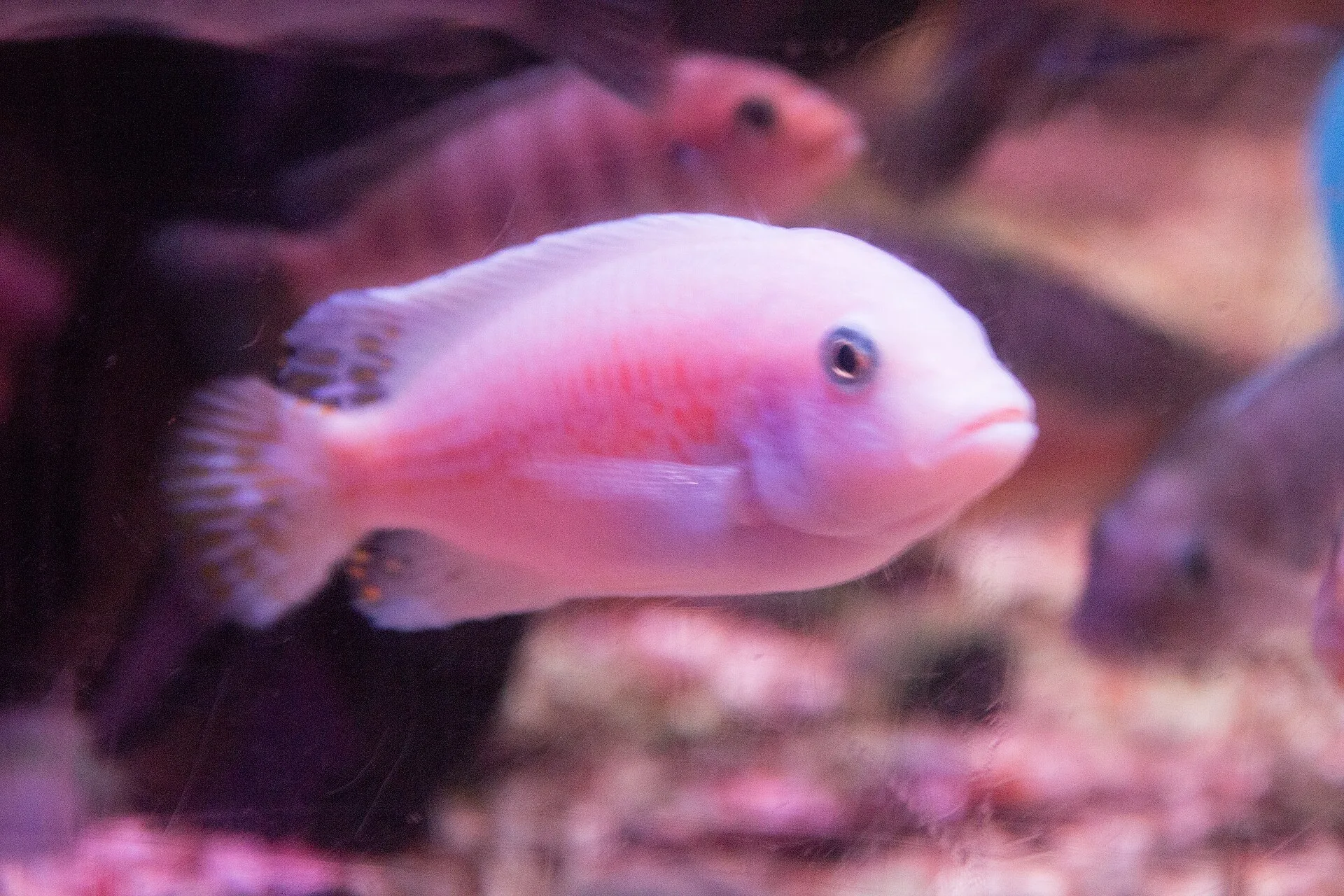
Hard Water Fish and Rift Lake Chemistry
This guide covers rift lake aquarium chemistry with practical steps for home aquariums. Rift lake cichlids evolved in liquid rock — hard, alkaline water with stable pH above 7.8 is non-negotiable for long-term health.
For related reading, see mastering aquarium pH and community fish compatibility.
Natural Rift Parameters
Lake Malawi and Tanganyika feature high carbonate hardness, elevated pH, and mineral-rich water. Fish osmoregulate expecting those ions — soft acidic water causes bloat and poor immunity over months.
Livebearers and many Central American cichlids also appreciate moderate hardness — not every hard-water tank is African.
GH and KH Targets
Malawi setups often run GH 10–18 dGH and KH 10–15 dKH with pH 7.8–8.6. Tanganyika can run even harder with higher pH.
Test kits matter — guessing from limestone rock alone leads to crashes when wood or CO2 pull pH down.

Buffering Methods
Crushed coral, aragonite sand, limestone rock, and commercial cichlid buffers maintain carbonate availability. Avoid peat, driftwood-heavy scapes, and planted-tank CO2 injection that fights buffering.
Small weekly water changes with hard tap or remineralized RO prevent slow drift downward.
Substrate and Rock
Aragonite substrates leach minerals continuously — excellent for Africans, wrong for discus. Stack rock before adding fish to prevent collapses.
Salt additions (Malawi vs Tanganyika salts) supplement trace minerals when tap is hard but incomplete.
Compatibility Reminder
Mixing rift lake Africans with soft-water tetras stresses both. Design species tanks or carefully researched communities within similar chemistry.
Stable hard water outperforms perfect-but-unstable parameters every time.
Explore other topics
Dive into more aquarium guides across the site.