

Columnaris in Aquarium Fish
This guide covers columnaris aquarium fish with practical steps for home aquariums. Columnaris strikes fast — white mouth patches and saddle lesions need immediate water fixes and targeted antibiotics.
For related reading, see ich white spot disease treatment, Dropsy — Causes and Care and stable water chemistry.
Identification
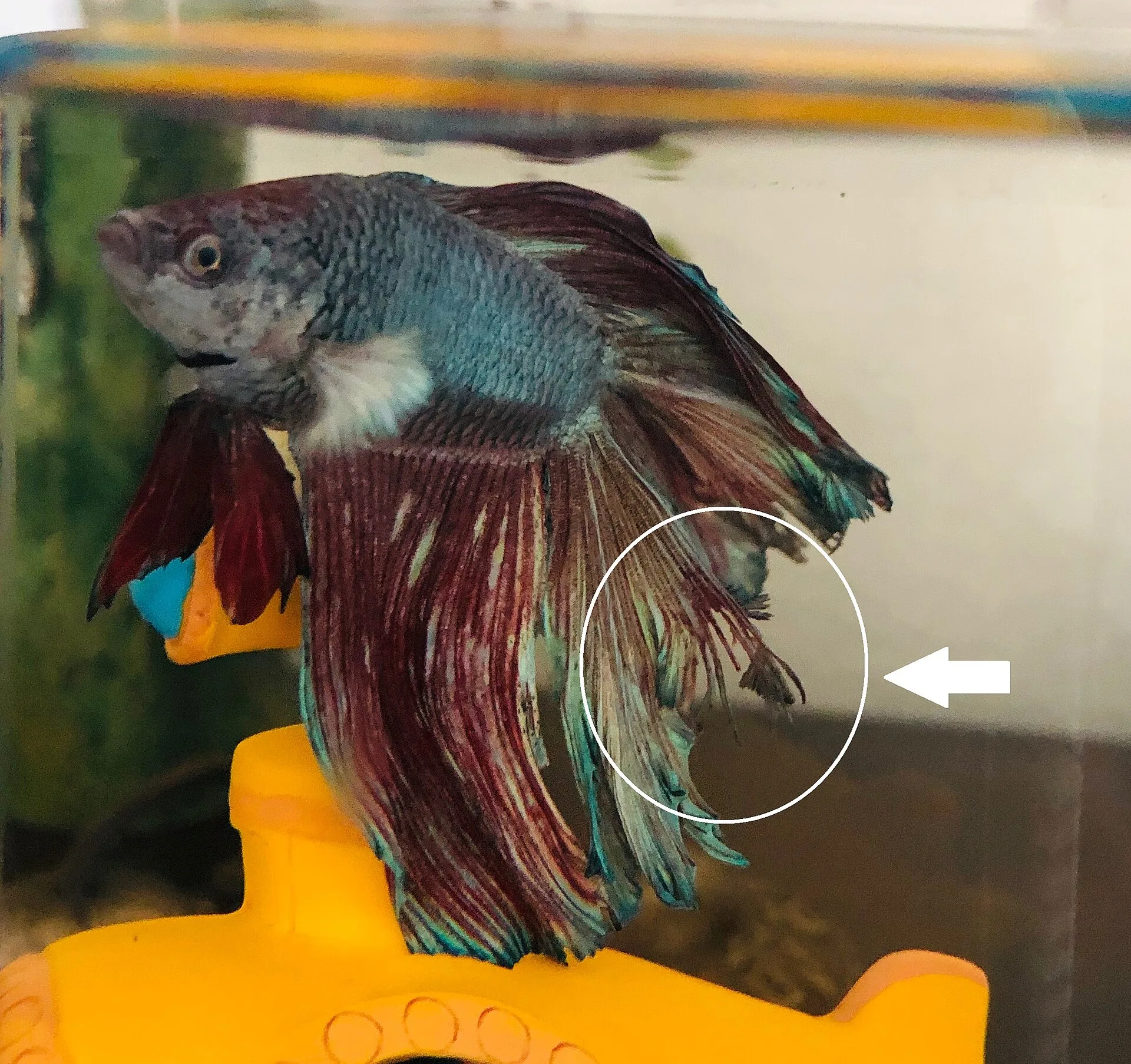
Columnaris (Flavobacterium columnare) shows white-gray patches on mouth, fins, or body — often described as saddle-shaped lesions on backs. Mouth may look eroded or cottony.
Fungus is fuzzy and cotton-like on dead tissue; columnaris lesions look tighter and can kill within days in warm water.
Triggers
Stress, overcrowding, and temperatures in upper 70s to 80s°F favor columnaris. Shipping and poor acclimation common triggers.
High organic load and low oxygen worsen outbreaks — clean mechanical filtration helps.

Immediate Actions
Move affected fish to hospital tank if possible. Large water change on display. Reduce temperature slightly if species allow — cooler slows bacteria.
Stop feeding briefly if water quality is poor; resume lightly when ammonia and nitrite are zero.
Treatment
Antibiotics effective against gram-negative bacteria (nitrofurazone combinations, kanamycin where appropriate — follow regional availability and label). Treat full course even if symptoms fade.
Remove carbon during medication. Scaleless fish and invertebrates need compatible formulas or isolation.
Recovery and Prevention
Quarantine all new fish 2–4 weeks. Avoid mixing store water. Maintain oxygen with surface agitation.
Outbreaks after heat spikes suggest checking heater reliability and room temperature swings.
Explore other topics
Dive into more aquarium guides across the site.