

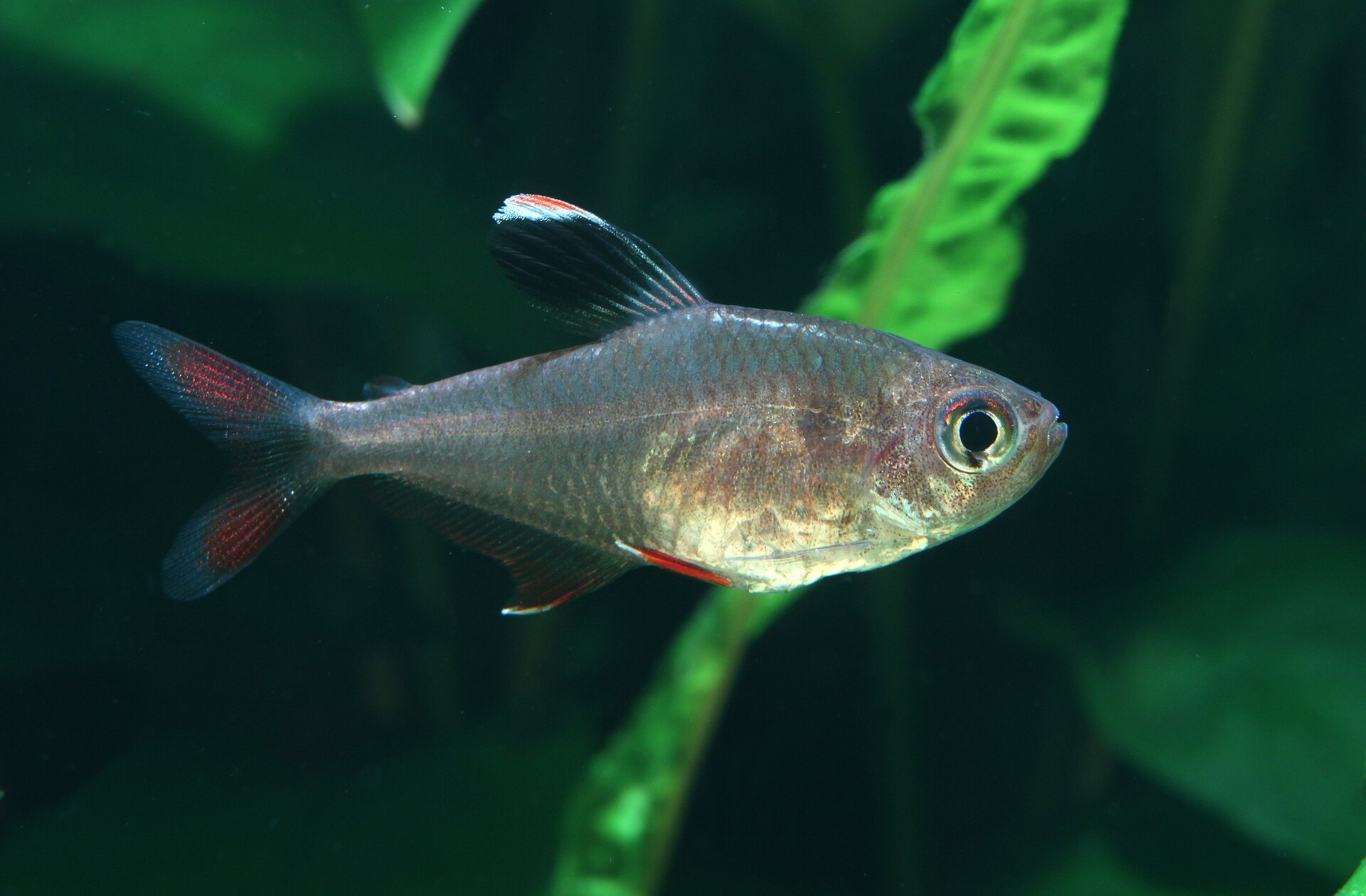
The ornate tetra is the tall, rosy Hyphessobrycon with white tips on the dorsal and anal fins. Hyphessobrycon bentosi sits in a messy species complex that shops also call rosy tetra, white-tip tetra, or bentos tetra. It is not an ember tetra, not a phantom, and not a Buenos Aires tetra with extra makeup. It is a deep-bodied Amazon schooler that shows off when males have space to flare a white-edged flag.
The bentosi complex in the bag
These fish come from Amazon and Guiana drainages. Trade stock is almost all captive-bred. Names slide around: some older books split rosy tetras as H. rosaceus; many ichthyologists now fold a lot of that look into the bentosi group. For husbandry you need the fish in front of you: tall body, pink to rose wash, white fin margins, a modest dark shoulder mark on some individuals, adults around 4–5 cm.
Water: warm and on the soft, acidic side — 24–28°C, pH 5.5–7.2. They are true tropical Amazon fish. Cool unheated rooms that suit Buenos Aires tetras do not suit bentosi. Hard, alkaline tap will keep them alive and pale.
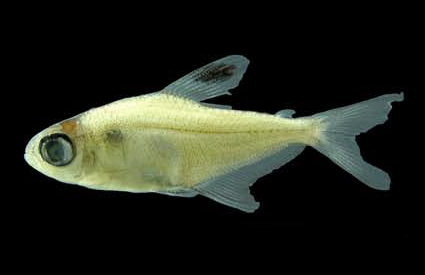 Hyphessobrycon bentosi. Photo: Renildo Ribeiro de Oliveira, Marcelo Salles Rocha, Maeda Batista dos Anjos, Jansen Zuan… / Wikimedia Commons (CC BY 4.0)
White tips and a display school
Males grow a taller dorsal with a white leading edge and often a more intense rose body. They will face each other and quiver. In a group of ten that is theatre. In a group of three it becomes harassment. Females are rounder, slightly shorter in the fin, still attractive. The “ornate” in the name is that fin work, not a paint job.
Colour is best over a dark substrate with tannins and side lighting. Bright white sand and cool LEDs wash them out to beige. They occupy midwater, using plant thickets as a stage wing, not as a cave.
A peaceful tank that still has length
A 80 litre tank is a fair start for a school. They are not giant, but the deep body needs turning room. Flow should be gentle. A lid prevents jumps when they bolt. They are not dedicated jumpers like hatchets; they are ordinary startled characins.
They mix well with other calm Amazon tetras, Corydoras, small rasboras, and angelfish only in large, well-fed tanks — angels may still pick at trailing fins. They mix badly with nippy barbs, small groups of Cochu’s blues, and anything that treats a tall dorsal as a target. Yellow phantoms can share a planted Shield/Amazon community if both schools are large; the ornate tetra is the deeper-bodied actor, the phantom the smaller gold extra.
Conditioning the flag

Omnivore with a bias toward small invertebrates. Flakes, micro pellets, frozen daphnia, brine shrimp, and bloodworm in pieces they can manage. Males putting out finnage need consistent protein. They will take food throughout the midwater, so they are easier to feed than pencils or hatchets. They will not eat your plants like Buenos Aires tetras. They will not graze algae like an oto.
Underfed fish hold fins clamped and lose the rose. Overstocked fish hold fins nipped. Those are different problems. Look at the dorsal edge: clean white means the school and the diet are working.
Spawning a tall Hyphessobrycon
Egg scatterer among fine plants. Soft water, dim light, a pair or trio conditioned on live foods, then remove adults. Fry are small. Infusoria then baby brine shrimp. Males may drive females; give plants so she can break line of sight. This is not a jumping spawn. It is not a cave spawn. It is a standard characin scatter with more fin-flaring beforehand than a glowlight tetra usually shows.
If you are trying to keep a “pure” line in a hobby sense, do not mix every pink Hyphessobrycon in the breeding tank. The trade already blurred rosaceus and bentosi. Accidental hybrids help no one who cares about the white-tip look.
Rosy name, wrong fish
Shops use “rosy tetra” for bentosi, for other pink tetras, and sometimes for dyed rubbish. Look for the white fin margins and the body depth. Quarantine anyway. They are commercially bred and relatively sturdy compared with wild hatchets, but mixed vats still share ich. They are more delicate than Mexican tetras and less cool-tolerant than Ulrey’s tetra.
If you wanted a tiny red fish, that is an ember tetra. If you wanted a smoky tall fin, that is a black phantom. If you wanted rose plus white tips on a deep Amazon body, keep H. bentosi in a warm, planted school and let the males use that dorsal on each other, not on a betta.
White edges as a nipping forecast
The ornamental value of bentosi is the white leading edge of the dorsal. The moment you add a fish that nips, you have paid for a flag and bought a rag. Inspect tankmates’ reputations: even “peaceful” Cochu’s blues in a small group can fray those edges. If you already own nippers, keep ornate tetras in their own planted box rather than hoping plants will hide the damage.
Captive-bred bentosi are used to flake. They still colour better on frozen foods. They still want warmth. An ornate tetra shivering in an unheated 20°C room is not “adaptable like a Buenos Aires tetra.” It is a tropical deep-bodied characin in the wrong climate. Bring the temperature into the mid-twenties before you blame genetics for beige fish.
When males flare, do not break the school into pairs to “stop fighting.” Add plants and numbers. Three males in a thin tank fight. Eight males in a thicket display. That is the bentosi social math.
White-tipped dorsals are the ornate tetra’s product. Warm, planted, slightly stained water and a large enough school keep those tips intact. Cool-water plant-eaters, nippy small groups of blue tetras, and unheated rooms take the product off the fish and leave you with a beige Hyphessobrycon that still needs tropical care.
Photograph males against a dark back wall in the morning, when they flare. If the white edge is already gone in the photo, the tank is already wrong — too few fish, too many nippers, or water too cool and hard for a tropical bentosi. Fix the room before you buy another bag of “rosy tetras.”

Explore other topics
Dive into more aquarium guides across the site.