

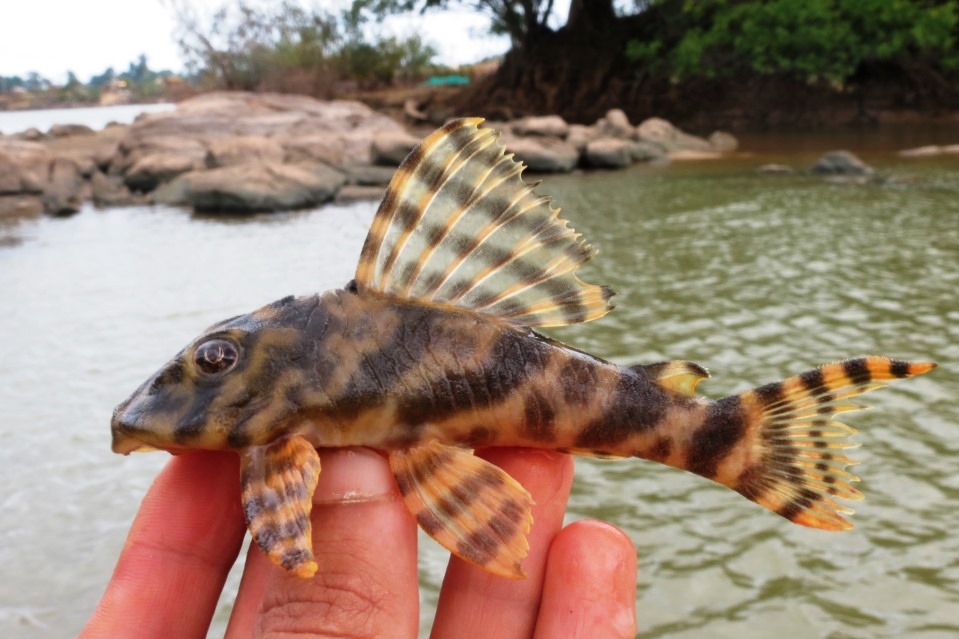
Peckoltia vittata is the striped, medium, cave-loving pleco that sits in the sweet spot the common pleco advertised and never delivered. Adults often stay in the 10–15 cm range. The body is banded or striped in brown and tan, the fins are barred, and the fish uses wood cavities the way a bristlenose does, without being an Ancistrus and without being a xylophagous Panaque. In L-number culture you may see related Peckoltias sold as clown-pleco cousins; P. vittata is its own species from Amazonian waters. Diet is mixed: some biofilm, some vegetable food, some protein, a little wood-associated rasping — not an algae-only oto and not a log-eating royal.
Amazon woodpiles, not a Guianan giant’s river
The species is Amazonian, associated with flowing water, submerged wood, and rocky or woody cavities. It is a structured-water fish of tropical lowlands. Collectors find Peckoltias among snags, not in open pelagic channels and not in Andean cobble torrents. An aquarium that offers several tight caves and a lot of wood surface is copying the right neighbourhood.
Water is typically warm, oxygenated, and not filthy. Blackwater influence varies with locality. Stability and cover matter more than staining the tank until you cannot see the stripes.
Do not treat a bag labelled “clown pleco” as automatically this species. Panaqolus clown plecos are wood-biased dwarfs; Peckoltia vittata is a Peckoltia with its own omnivorous habits. Names in the L-number trade slide around. Look at body shape: Peckoltias are a bit more compact and deep-headed than whip-thin clowns, with bold banding in this species when it is well marked.
Bands, a bristlenose-sized body, no tentacles
The attractive fish is a small-to-medium loricariid with vertical or slightly oblique dark bars, a mottled head, and barred fins. Males develop odontodes on the pectoral spines and a slimmer look; they hold caves. Females are fuller. There is no bushy snout. There is no 40 cm sail. There is no blue eye of Panaque cochliodon.
A healthy P. vittata is compact, with a rounded belly, intact bars, and a habit of backing into a hole head-out. Pinched fish with faded bars have been stored hungry. They recover in a cave-rich tank with food that actually reaches the hole.
Shop lighting washes them out. Dim a corner and you will see more pattern.
Caves first, length second
A single adult or a pair can live in about 80–120 litres if the footprint is long and the caves are plentiful. Several males need more holes than males. Use wood with natural cavities, stacked slate, or tubes. Sand or smooth gravel. Moderate flow and high oxygen. This is closer to bristlenose furniture than to a sailfin hall, and closer to a woodpile than to a rubberlip cobble field.
Leave territories. Two males and one cave is a damaged-fin story. A bristlenose and a Peckoltia in the same small tank will argue about the same hole; pick one cave specialist or buy a much larger scape.
Plants can survive at the margins if they are tough. The fish will still rasp and shove.
Warm, clean, Amazon-ordinary
Temperature 25–29 °C is a typical band. pH 6.0–7.5. Soft to moderate water. They are not as fragile as otos and not as chemically indifferent as a dumped sailfin. Keep the cave water from going sour: siphon around holes, do not let wafers rot in a male’s bedroom, and change water on a schedule.
Ammonia kills cave fish in slow motion because they sit in their own waste. Test. Do not guess.

An omnivore with a cave schedule
Offer vegetarian sinking foods, blanched greens, and regular small protein (frozen foods, quality carnivore crumbs). They rasp wood and biofilm but they are not royal panaques that need a diet of cellulose. They are not otos that starve without a green wall. Variety keeps the belly round and the bars dark.
Feed after dusk at the cave mouth and watch. Midwater fish steal. A fat Peckoltia that never leaves a hole may still be eating; a thin one that never leaves is not.
Too much protein without fibre and greens can contribute to bloating in captive loricariids. Keep vegetables in the rotation.
A modest neighbour list
Peaceful tetras and similar fish that share Amazon warmth can occupy the water column. Avoid large cichlids that evict cave holders. Avoid other male loricariids in a tight tank. Avoid giant catfish. This is a medium, territorial-but-small pleco, not a community janitor and not a predator exhibit.
Incoming fish get a cave in quarantine and food that reaches them. They do not need a torrent box and they do not need a leaf-litter oto setup as the only décor.
Eggs on the cave ceiling
Like many Peckoltias, this is a cavity spawner. The male guards a clutch on the roof of his hole. You can get fry in a dedicated tank with extra caves, excellent water, and no egg-eaters. It is a realistic breeding project compared with a sailfin or a shovelnose, and nothing like a hoplo bubble nest.
Raise fry on fine vegetarian foods and biofilm. They are raspers from the start.
L-numbers, clowns, and the striped cave
The trade may still tag this fish with an L-number or lump it next to Panaqolus clown plecos. Clown plecos are wood-biased dwarfs with a different jaw job. Peckoltia vittata wants a hole, a mixed diet, and Amazon warmth. If a seller shows you a tiny striped fish on a log and says “it eats wood like a royal,” you are being sold the wrong story. Offer wood as a house. Offer vegetables and some protein as food. Offer more than one cave if you keep more than one male. That is the whole difference between a medium Peckoltia and a xylophage you cannot house.
When you acclimate, dim the lights and put the open bag near a cave mouth so the fish can clock a hole before it meets the rest of the tank. A Peckoltia that spends the first night in open panic will shred fins on décor.
The medium pleco that actually is medium
If you wanted stripes, a cave, and an adult that still fits a serious home tank, Peckoltia vittata is in the right size class. If you wanted algae erasure in a nano, you wanted something even smaller and more social. If you wanted wood as food, you wanted a panaque and a waste plan. See bristlenose, royal panaque, chemistry, cycling.
Explore other topics
Dive into more aquarium guides across the site.