
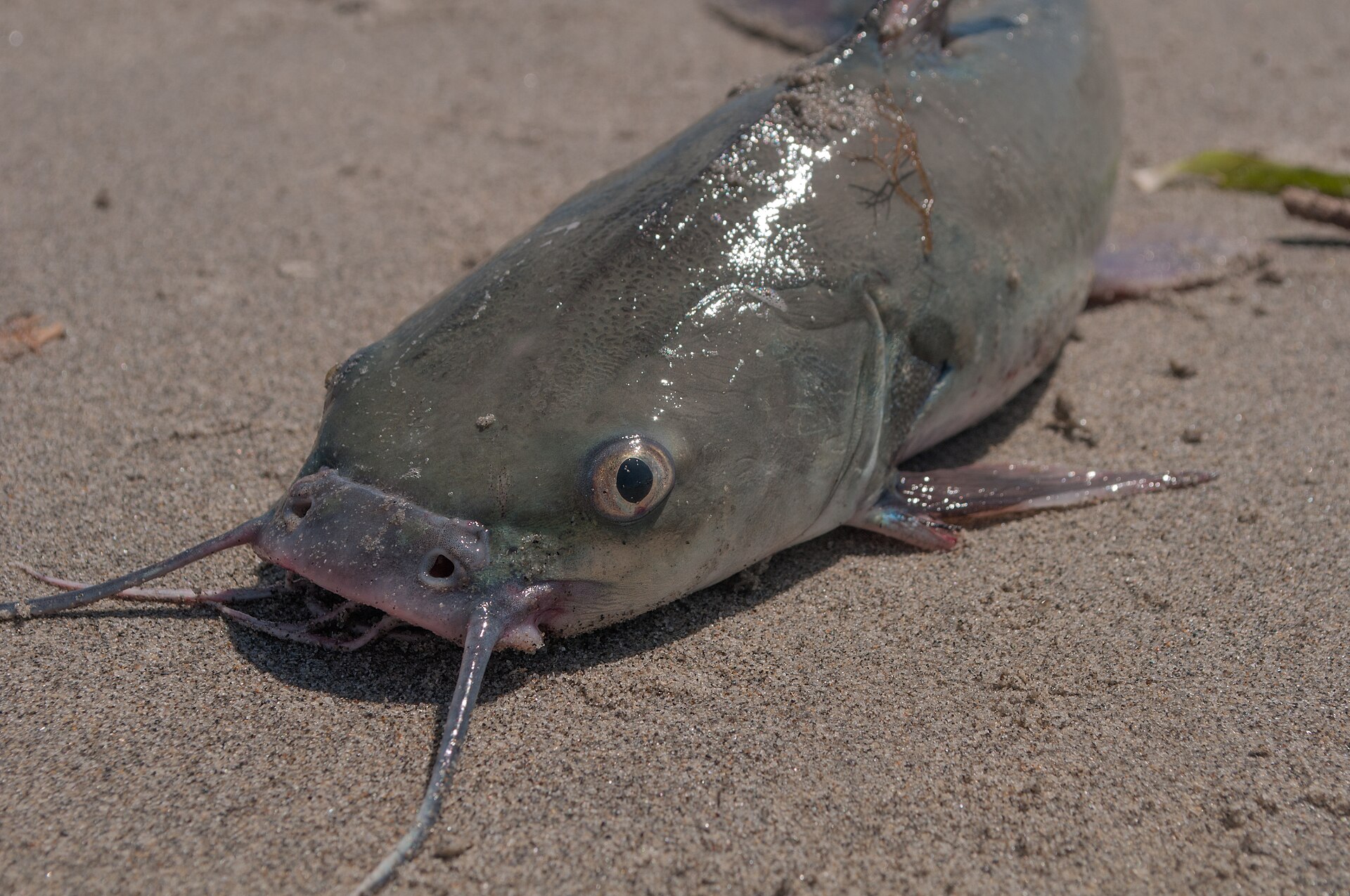
The pemecou is a sea catfish. Sciades herzbergii (you may still see older combinations under Arius or Hexanematichthys) is an ariid of the tropical West Atlantic, from the southern Caribbean along the Guianas to Brazil. Adults are substantial — commonly 50 cm and capable of more, with reports toward the 80–90 cm class in the wild. They use brackish estuaries and coastal marine water, muddy bottoms, and the turbidity of river mouths. They are not Amazon community catfish. They are not hoplos. They are not plecos. A juvenile in a freshwater shop tank is a fish in the wrong salinity, heading toward a huge, spine-armed predator-scavenger of coastal water.
River mouths, mangroves, and the open shore
Pemecou live where freshwater rivers meet the Atlantic: Guianan coasts, northern Brazil, and adjacent shores. Salinity swings with tide and season. The fish is built for that gradient, for mud, for a diet of crustaceans, fish, and detritus in turbid water. Inland, purely freshwater rivers are not the typical adult home. Treating S. herzbergii as a “freshwater catfish” because a shop kept it in tap water for a week is how ariids decline in the hobby.
They are food fish in parts of the range. The ornamental trade is a side door. A coastal catfish with locking spines and a growing mouth does not become a living-room community animal because it was small in a cup.
Mangrove roots, mudflats, and channel edges are the habitat picture. A planted freshwater nano is not.
A shark-shaped catfish with dangerous spines
Ariids look vaguely shark-like to shoppers: forked tail, forked barbels, a broad head, a dorsal spine that can lock. Colour is typically grey to brown above, paler below, without royal-pleco stripes and without the talking-catfish scutes of a Raphael. The spines of sea catfishes can inflict painful wounds; some ariids are medically significant. Handle with knowledge, not with a nylon net.
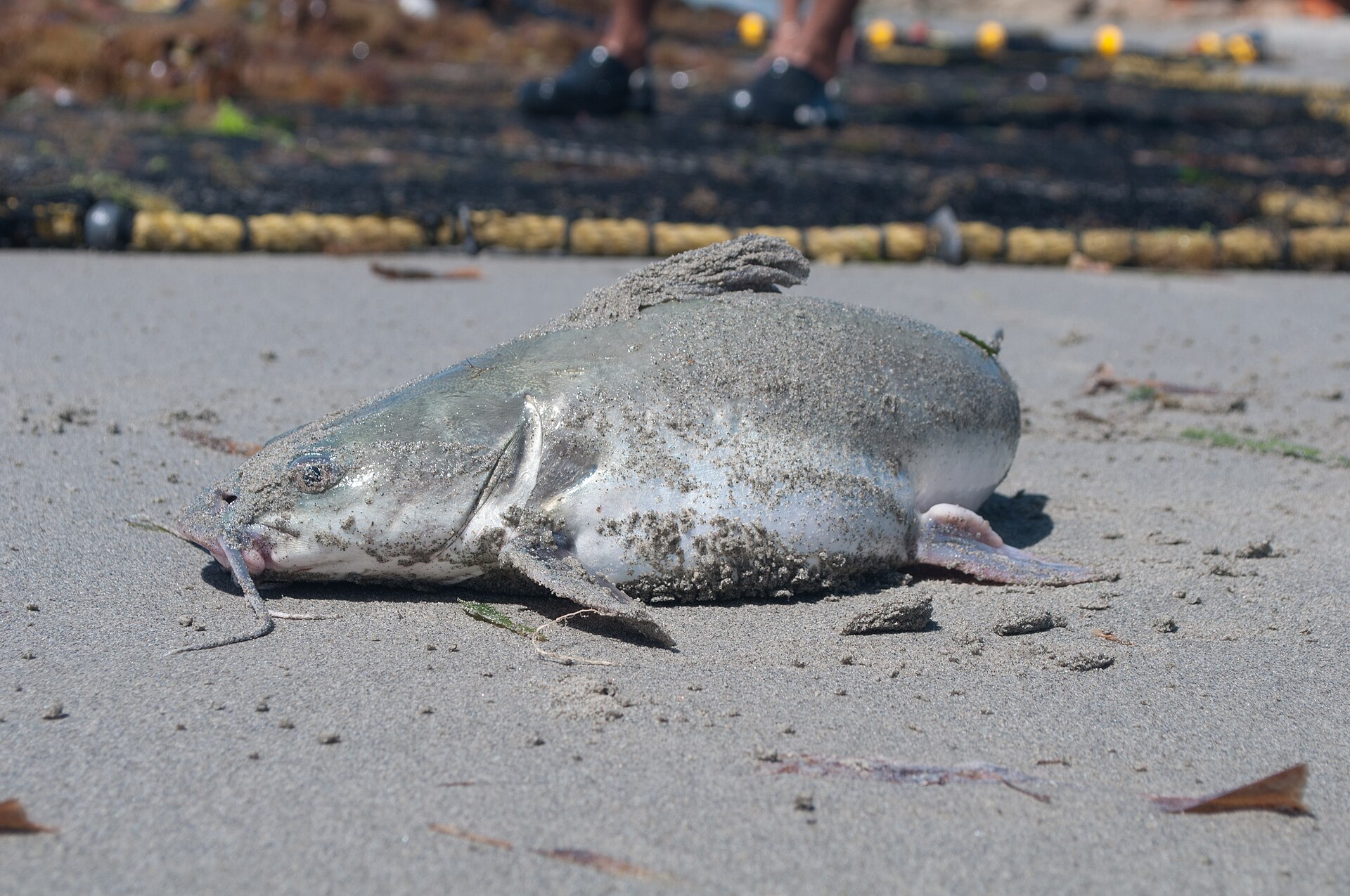
Juveniles look manageable. Adults are heavy coastal fish with a mouth that takes fish and shrimp. Eyes are adapted to turbid water. Barbels taste the mud. A healthy fish in a proper saline system is alert and cruising. A fish gasping in warm, stale freshwater is failing.
Sexing is not a shop sport. Some ariids mouthbrood; that is a marine-catfish reproductive story, not a bristlenose cave story.
Brackish to marine volume, not a 200 litre Amazon box
Adults need a large system with salinity in the brackish to marine range, depending on the life stage and the population, and a footprint that matches a half-metre-plus fish. Public aquaria and dedicated brackish halls are the honest venues. A freshwater community tank is the wrong chemistry and the wrong size.
Substrate can be sand or mud-analogue; they sift. Décor should not trap a spine. Filtration for a protein-rich coastal catfish is heavy. Hydrometers or refractometers are tools, not optional geekery. You cannot “guess” salinity for an ariid.
If you are not prepared to keep brackish or marine water, you are not prepared to keep pemecou. There is no freshwater loophole that makes this a community catfish.
Salt, heat, and coastal chemistry
Temperature in the mid-20s °C matches tropical shores. Salinity should reflect estuary to coastal marine values for this species — not 0.0 specific gravity as a long-term plan. pH will sit higher than Amazon blackwater once salt is in the system. Ammonia is still lethal. Nitrogen cycling in brackish water is its own discipline.

Do not mix this fish into a rift-lake cichlid tank, a plant-only freshwater scape, or a reef of delicate invertebrates. It is a muddy-water coastal catfish, a huge forager, not a coral-safe pet.
Water changes need salt mixed and aerated in advance. Dumping freshwater on a pemecou “to be kind” is a chemistry shock.
Crustaceans, fish, and the estuary menu
Diet is animal: shrimp, fish flesh, molluscs, prepared marine carnivore foods. They are scavenger-predators of the shore. Algae wafers are irrelevant. Wood is irrelevant. A growing pemecou will eat tank mates that fit. Feed to the fish, not to the leftover community idea.
Uneaten seafood fouls brackish tanks quickly. Feed what is finished. Fast adults occasionally if they are fat.
Spines, mouths, and who cannot share
This is a huge estuary fish, not a community catfish. Companions, if any, belong in a large brackish exhibit: other similarly large, robust coastal fishes that will not be swallowed and will not be stabbed in a panic. Freshwater tetras, plecos, and dwarf cichlids are in the wrong water and the wrong size class. They are food or they are dying of salinity.
Never net through the spines if you can lift with a container. A sting is a medical event for you and an injury for the fish.
Mouthbrooding on a coastal schedule
Many ariids are paternal mouthbrooders. That is a fascinating reproductive mode and it is not something you should expect to manage in a home freshwater tank. Do not buy two juveniles to breed pemecou. This is a display animal for people who already run large saline systems — and even then, think twice.
Spines, first aid, and why nets are a bad idea
Ariid dorsal and pectoral spines can lock and puncture. If you are cut, wash, seek medical advice, and do not pretend it is a rose thorn. In the tank, move the fish with a submerged bucket or a plastic bag, never with a cheap hand net. A spine in mesh is how keepers break spines and then watch infection set in on a coastal catfish that already did not belong in freshwater.
Estuary water is turbid in nature. That does not mean you keep the tank as a mud soup of waste. Turbidity from sand is one thing; turbidity from rotting prawn is another. Skim, change water, and keep salinity stable through those changes. A pemecou that survives a week in tap water is not proof it should live there. It is proof ariids are tough enough to suffer a long time.
The salinity sentence
Sciades herzbergii is a brackish and marine sea catfish of the West Atlantic coast, a large, spine-armed forager. It is not a freshwater community pet. If your tank has no salt, it has no pemecou. See chemistry (and learn saltwater testing), plus cycling for the nitrogen cycle that still applies when the water is coastal.
Explore other topics
Dive into more aquarium guides across the site.