

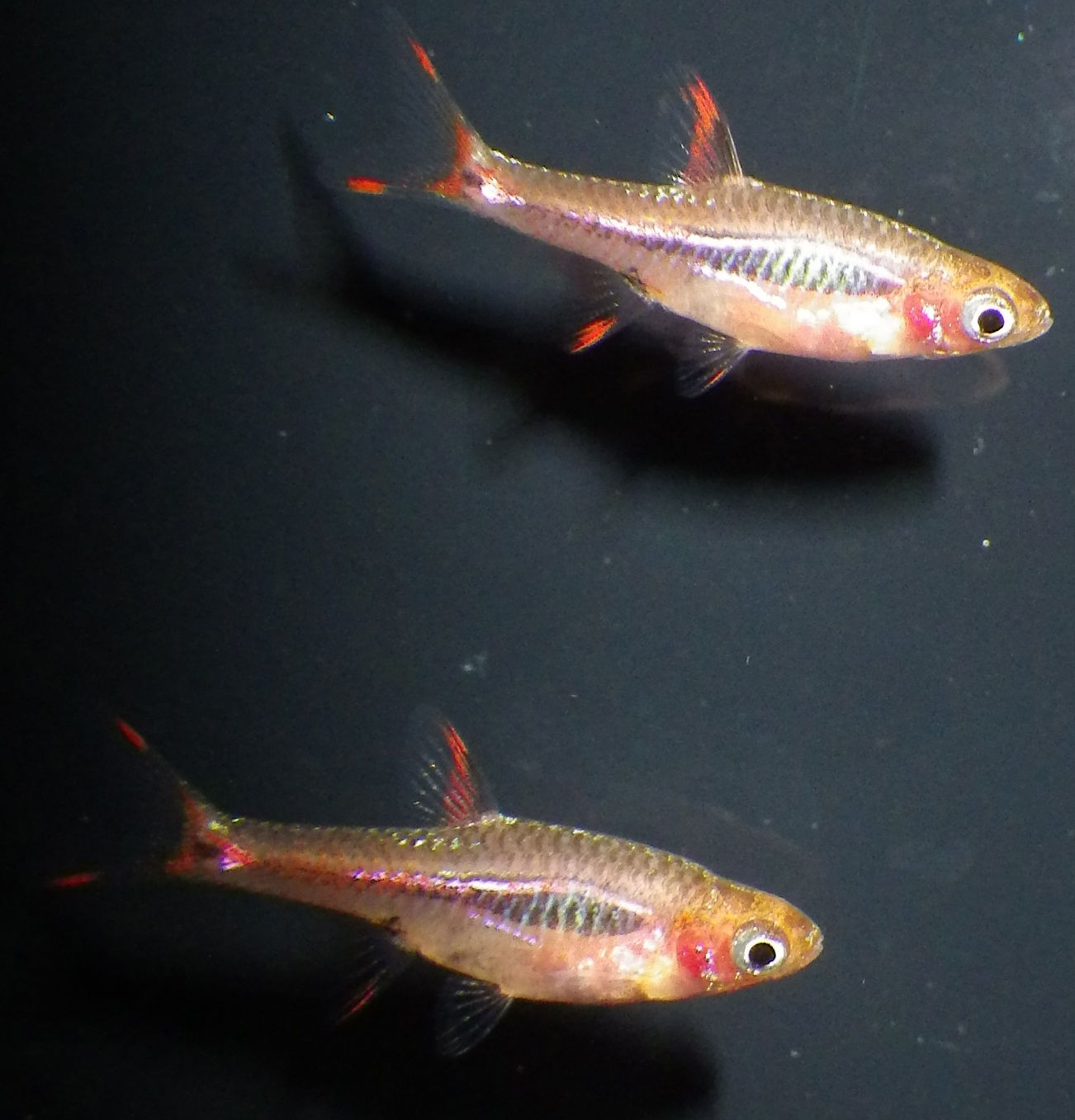
Boraras merah is a peat-swamp dwarf from southern Borneo. The Phoenix rasbora stays near 2 cm, wears a red-orange body with dark blotches, and lives in water that would look like tea in a glass. If you keep it in hard, alkaline tap with a pair of danios “for company,” you will own fading specks that never behave like a swamp school. This is a nano blackwater specialist, closer to chili and clown rasboras than to anything in this article’s danio list.
Kalimantan tea, not Inle, not Ataran
Wild B. merah comes from forest peat swamps and blackwater streams in Kalimantan. The water is soft, acidic, stained, and often low in minerals. Target pH 4.0–6.5, near-zero hardness unless you are mixing a little buffer for stability, and 22–28°C. RO water with botanicals (leaves, alder cones, peat in a bag if you know what you are doing) is the usual path for keepers whose tap is liquid limestone. This is the opposite of red microrasbora chemistry and the opposite of Mexican tetra flexibility.
The name merah is Malay for red. The phoenix common name is trade poetry. The blotches and the red are the identification: they are not chili rasboras (B. brigittae is smaller-spotted, more uniformly red in good males) and not clown rasboras (larger dark marks, different range). If the bag says “mixed dwarf rasbora,” sort with a reference, because peat swamps hold several Boraras that look similar when stressed and grey.
Nano volume versus surface and leaves
A 30–40 litre tank can be a complete world if it is planted, stained, covered, and stocked with twelve to twenty fish. Tall 20 litre vases fail. They need leaf litter or a facsimile, dim light, moss, and still-to-gentle water. A sponge filter is enough. A river powerhead is a weapon.
They use the whole small volume in little hops and hovers, not a danio patrol line. They will jump through rim gaps. Nano lids and auto-top-off holes are classic losses. They are not hatchet gliders; they are tiny swamp cyprinids that still find the ceiling.
Infusoria-scale feeding
Mouths are smaller than kubotai’s. Powdered foods, vinegar eels, microworms, baby brine shrimp, cyclops. Mature blackwater tanks with microfauna help. If you feed adult frozen bloodworm, you are feeding the filter. Several tiny meals beat one cloud of dust that fouls the peat water.
They lose every contest with anything faster. Species-only or with shrimp and snails is the cleanest display. Ember tetras can work in a larger peat-friendly tank. Danios cannot. Hatchets cannot. Mexican tetras cannot. Costello tetras are still too large and too midwater-greedy for a 40 litre merah tank.
Blotches, dim light, and a crowd
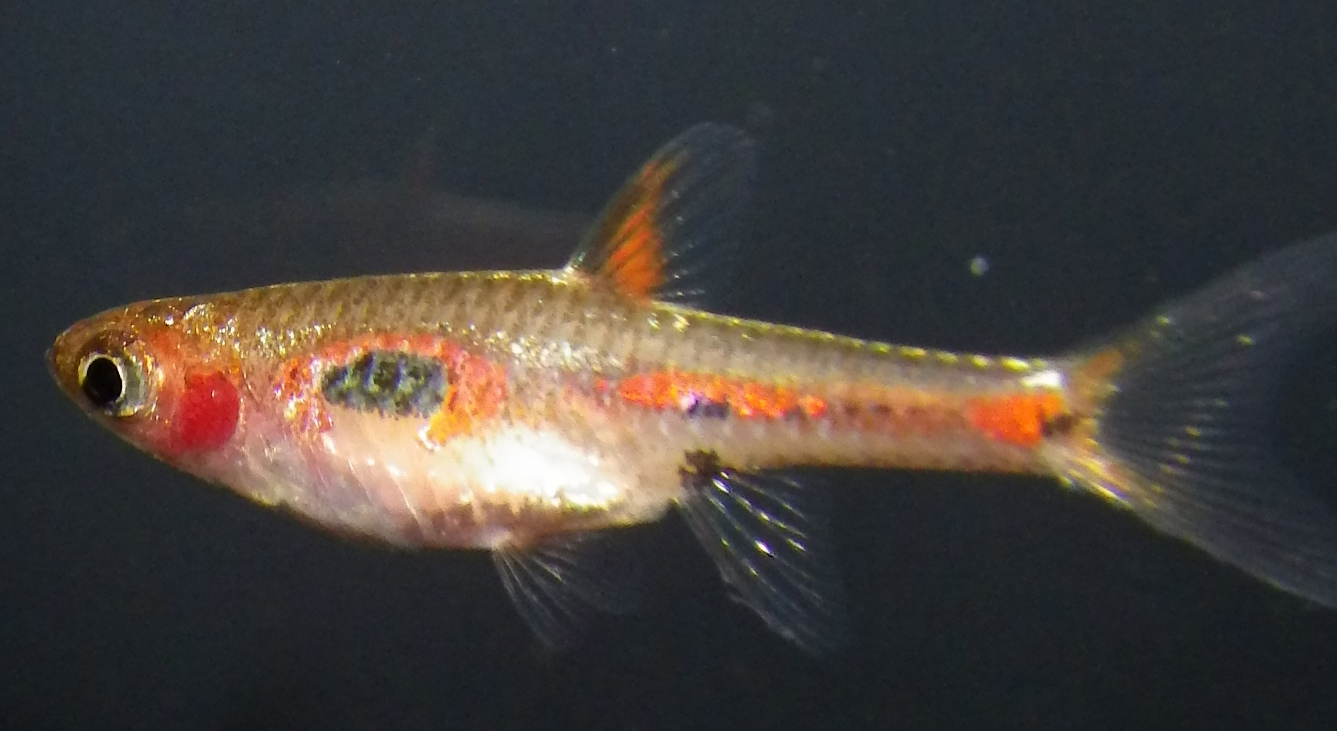
Colour is red-orange with dark lateral blotches that look richer in tannin water over a dark substrate. Bright white sand and cool LEDs erase them. A school that feels like a school is the other half of colour: they settle, they hover in view, they feed in the open. Two fish behind a leaf are not a Phoenix display.

Males are slimmer and often more intensely red; they will display with fins spread. It is not cichlid combat. It is a 2 cm swamp courtship. Females fill with eggs you can almost count through the body when they are ready.
Spawning in tannin water
Egg scatterer among moss and fine roots. Soft, acidic water is required for decent hatch rates. Adults eat eggs. A breeding box or a mossy tank without the parents, then infusoria for a long time, then the smallest live foods. This is among the more demanding spawns in this batch — closer to chili rasboras than to zebra danios. Do not use a marble grate in hard tap and expect miracles. Do not lower the water for splash-tetra eggs. Do not add Inle-lake hardness “because they are rasboras.”
Fry are pin-sized. Many keepers succeed only in mature, well-fed blackwater setups. That is normal, not a personal failure copied from a Malabar care sheet that promised easy eggs.
Peat health and the wrong neighbours
Soft, acidic water is unforgiving of neglect: pH crashes, conductivity spikes from overfeeding, and copper in plant fertilisers can kill inverts and stress fish. Test. Change small amounts of matched RO water. Quarantine is awkward at this size; a planted quarantine with the whole group is kinder than a bare box with two fish. Ich treatments that raise salt and hardness fight the swamp chemistry; choose methods that do not turn the tank into a brackish pond.
If you wanted ruby fish in hard, cool lake water, that is rubescens. If you wanted neon green in milder Ataran water, that is kubotai. If you wanted a red, blotched peat-swamp dwarf from Borneo, Boraras merah is the Phoenix, and the tank has to smell faintly of leaves, look like tea, and hold a crowd of mouths too small to see from across the room.
Read chili rasbora and clown rasbora as the closest cousins, not as identical fish, and do not file all three under a zebra danio lid-and-flow lecture.
Tea-coloured water as life support
Tannins are not décor for merah. They are a stand-in for the dissolved organic world of a peat swamp. If you keep the water crystal-clear, hard, and bright because you like to see every scale, you will see every scale of a faded fish. Accept brown water, dim light, and a flashlight when you want to count them.
RO systems fail, and nano tanks evaporate. Top up with RO, not with hard tap, or you drift out of the swamp in a week of good intentions. Measure conductivity now and then. A creep upward is the tap sneaking in, or overfeeding turning into ions and waste.
Leaf litter should be replaced as it breaks down, not left to become a sewage mat. The line between a peat forest floor and a dirty nano is maintenance. Siphon gently around the leaves. Do not gravel-vac the swamp into a bucket and then wonder why the microfauna and the fry vanished. Phoenix rasboras are a leaf-litter livestock, and the litter is part of the filter as long as it does not become rot in still, overfed water.
Explore other topics
Dive into more aquarium guides across the site.