

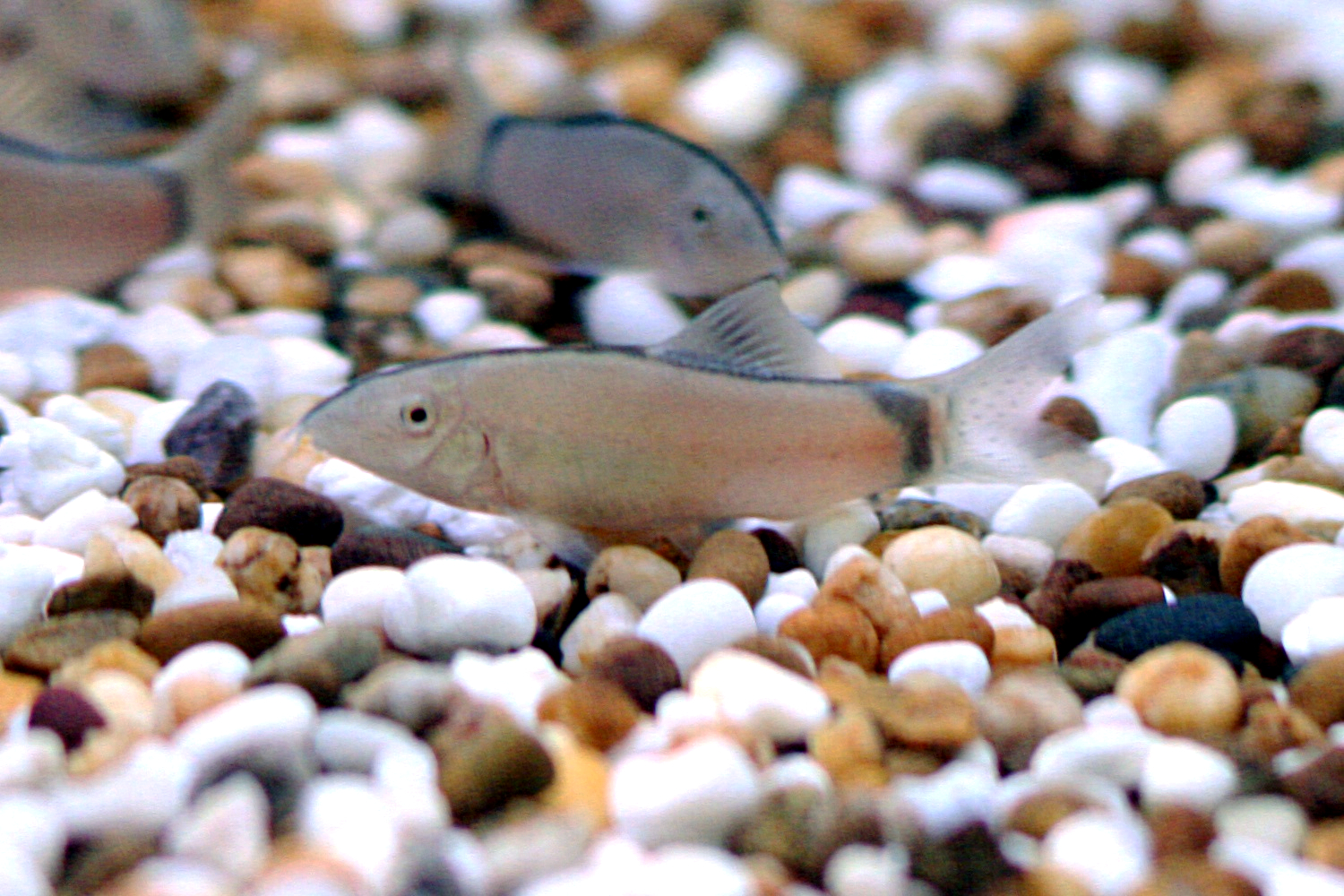
The stripe down the back is why they call it a skunk. The personality is why people who wanted a clown loach in a small tank should have read further. Yasuhikotakia morleti (still sold as Botia morleti or Botia horae in older lists) is a Mekong-basin loach that stays smaller than a clown loach — typically 8–10 cm — and can be sharper-tempered, especially toward other loaches and toward anything that looks like a rival on the floor. It is a character. It is also a fish that needs hiding places, a group or a carefully chosen singleton, and a lid, because botiine loaches jump.
They eat snails. That is the other reason they are bought. A well-fed skunk loach in a tank with proper food will still snack on snails; a hungry one will make it a job. Do not rely on a pest-snail apocalypse as the diet. Do not add them to a shrimp breeding tank.
Mekong weather in a river
The species is native to the Mekong and associated drainages in Southeast Asia, in streams and rivers with a wet-season pulse: wood, leaf, rock, sand and gravel, seasonal changes in flow and temperature. They are not hillstream gastromyzontids clinging to rapids, but they are not still-swamp fish either. Moderate current, oxygen, and cover match the body.
They are social in a complicated way. A group of five or more can spread aggression. A pair often results in one battered fish. A singleton can work in a community if you accept a slightly more reclusive animal and no loach politics. The worst keep is two.
Cream body, black helmet stripe
The dark dorsal stripe runs from the snout over the head and down the back — the skunk mark. The body is pale to golden. Fins are relatively plain. They have the botiid subocular spine; handling is a bad idea, nets get stuck, and other fish can be stabbed in a fight. Adults 8–10 cm, sometimes a little more. Sexing is not obvious; females may be fuller. Buy for a group, not for a breeding project, unless you already keep botias well.
They click. They wriggle into crevices. They may rest in a pile if the group is comfortable. They may also chase one individual without rest. Watch the group’s politics for the first month.
Caves, current, a lid that latches
A hundred litres is a sensible start for a group of five; more is better. Provide wood, rock caves, pipes, and a sand or fine gravel floor they can dig in a little. They will rearrange. They will wedge into the filter if you let them. Sponge on the intake. Plants can survive if rooted well or attached; they may uproot. Moderate flow, good oxygen. Temperature 24–28°C. A heater guard, because they are strong and curious.
The lid is not decorative. These loaches find the one gap. They are found dried on the floor more often than people admit. Weight the cover.
Décor should not collapse. They undermine piles. Use slate on the glass as a base for rock, the same as you would for any digging cichlid.
Southeast Asian river water

pH 6.0–7.5, soft to moderately hard, warmth in the mid-twenties. They are adaptable, which is not a licence for a dirty tank. Botias show poor water as clamped fins, sitting in the flow gasping, and ich — they are famous for ich after a chill or a move. Keep them warm enough and change water weekly. They are messy eaters.
Do not add them to a soft, cool hillstream tank with gastromyzontids and expect harmony. Do not add them to a Malawi tank.
Omnivores that still hunt snails
Sinking loach or cichlid pellets, frozen bloodworm, brine shrimp, vegetable matter, and snails if present. Variety matters. They will beg. They will also forage at night. Feed the floor after the midwater fish have had their share, or the loaches get leftovers and then raid the snails out of hunger. A group needs more than one sinking wafer; dominant fish hog.
The subocular spine and the appetite mean shrimp and fancy snails are at risk. Mystery snails may be left or not. Pest bladder snails will decline.
Stocking is a temperament problem
Tank mates should be too large to bully and too fast to be endlessly harassed: larger barbs, some rasboras, robust gouramis in a big tank, other fish that use the upper half. Small tetras, bettas, and slow long-finned fish may be nipped or stressed. Other loaches — clown loaches, yo-yos — can work in a large tank with enough caves, or can result in a species war. Dwarf cichlids on the same floor will not enjoy them.
A community that is already peaceful and midwater-oriented, with a structured bottom, is the usual good home. A tank of rare shrimp and apistos is the usual bad home.
Breeding stays a specialist story
Like many botias, they are not a routine home spawn. Commercial breeding often involves hormones. If your group spawns, you are lucky and probably not set up for the eggs. Enjoy the adult fish. Do not buy skunk loaches as a breeding species for a first loach tank.
Ich, jumping, and the first fortnight
Quarantine at a stable 26°C or so with caves and sinking food. Expect ich in imports; treat in quarantine, not in a planted display full of scaleless loaches and invertebrates if you can avoid it. Loaches are sensitive to some medications (especially those that are hard on scaleless fish). Use products accordingly, aerate, and watch them. Never lift them in a coarse net if you can drive them into a container; spines and nets tangle.
A group of Yasuhikotakia morleti in a closed, cave-rich, warm river-style tank is active, noisy in a clicking way, and genuinely useful with snails. Two fish in a 60 litre cube with a betta is a cruelty. The stripe is cute. The spine is real. Keep the number odd and high, or keep one, close the lid, and feed the floor. That is skunk loach keeping without the folklore that they are “just small clown loaches.” They are not. They are themselves, and they bite above their weight.
Explore other topics
Dive into more aquarium guides across the site.