

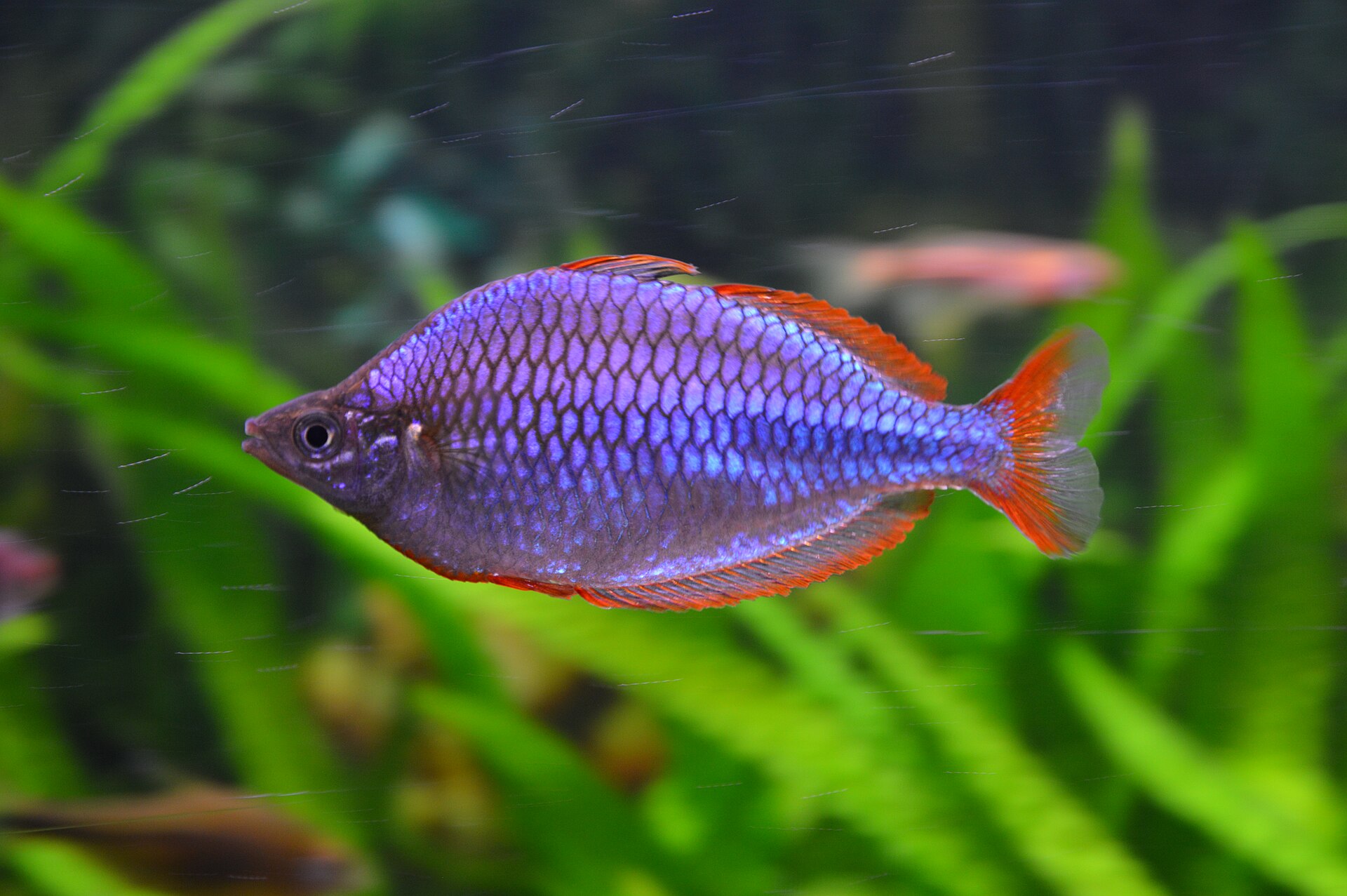
Most rainbowfish are too big for the tank people actually own. Melanotaenia praecox is the exception that still behaves like a rainbow: a school in the upper half, males that colour when they are winning, and a need for length rather than height. The dwarf neon rainbowfish from New Guinea tops out around 5–6 cm, which is why it ended up in smaller planted aquaria. Keep the school at eight or more. Keep the water moving at the surface. Do not treat them like neon tetras that happen to be blue. They are melanotaeniids — they want light, space to parade, and a diet that includes more than leftover flake.
Males are the neon: blue body, red-orange fin margins when they are in condition. Females are plainer, more silver-blue, with shorter fins. A tank of all females is a pleasant school. A tank of two males and ten females is a display. A tank of two fish is a mistake with a long name.
A small rainbow from a large island
Melanotaenia praecox is native to streams in northern New Guinea. The picture is clear, warm, slightly hard to moderately hard water, vegetation, and open stretches where males can flash at each other. It is not a blackwater fish. It is not a cold southern Australian rainbow. New Guinea streams can be fast in the wet and quieter in the dry; the fish is built for swimming, not for hovering in a cave.
In the aquarium that means a long footprint, plants at the back and sides, and a clear lane. A cube full of wood and no swimming room produces skittish, pale fish that hide in the corner and look like a failed tetra purchase.
Blue that depends on an audience
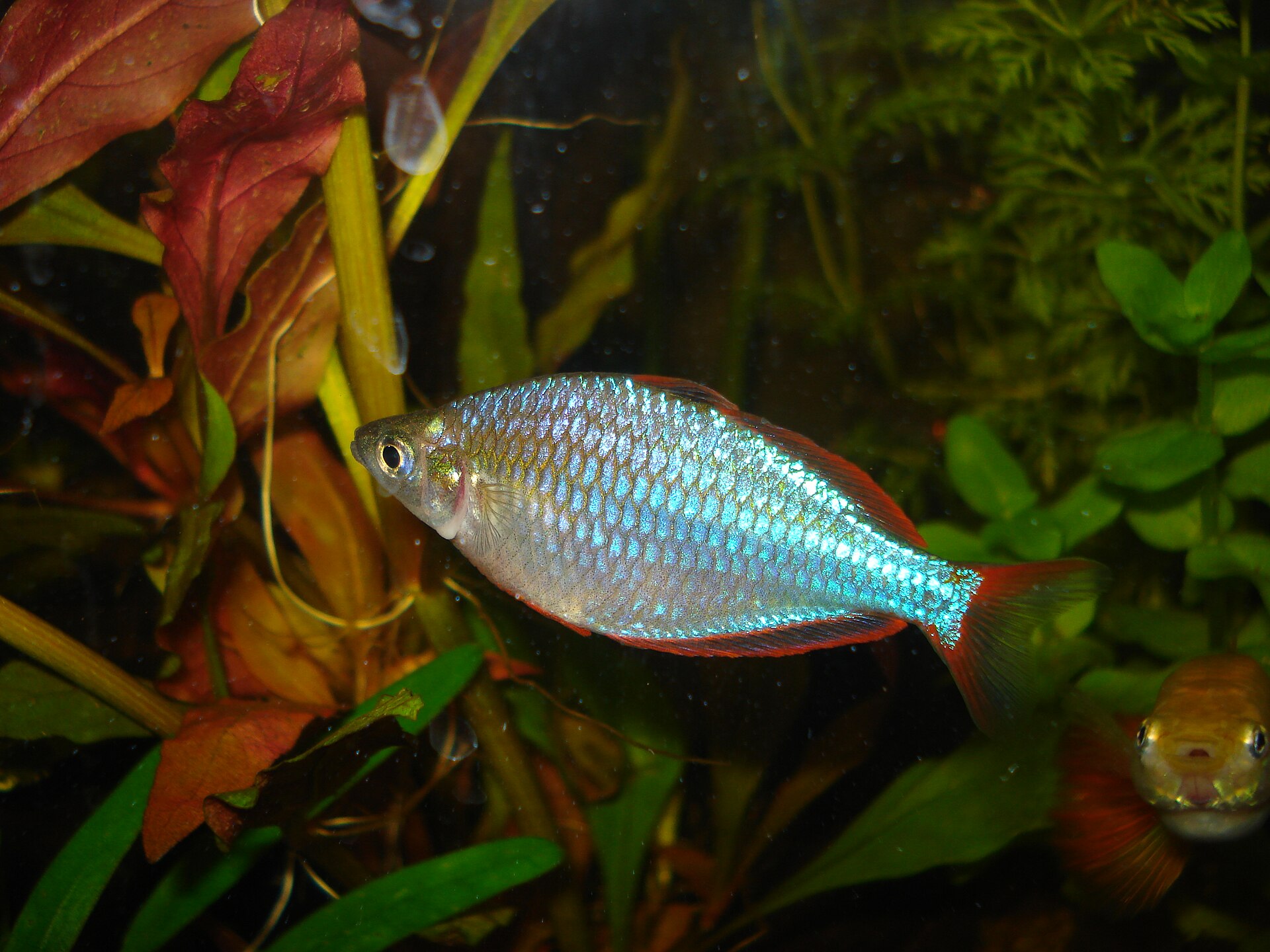
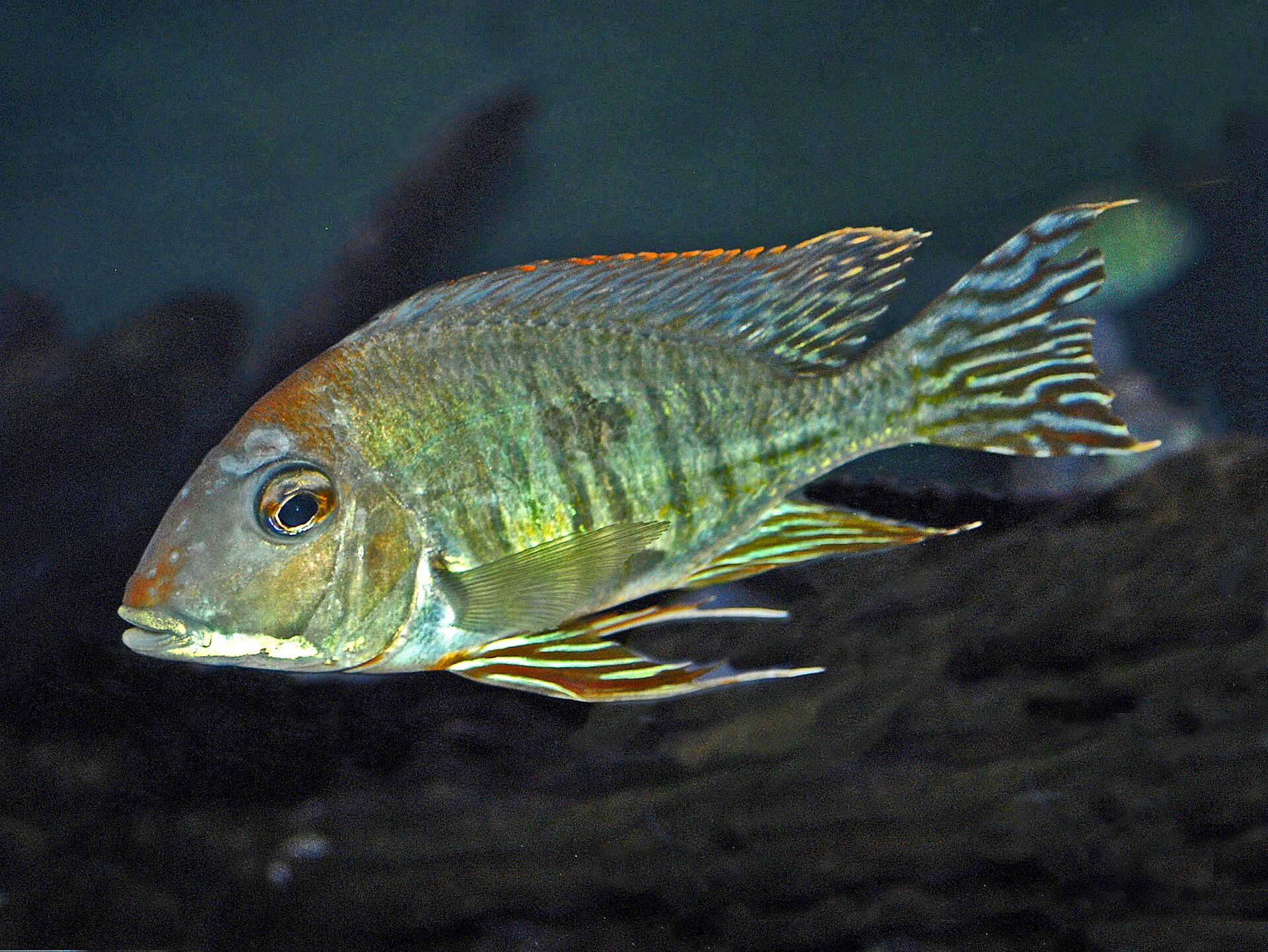
Males fill out through the body and carry more pigment in the unpaired fins. In a group they flare, shimmy, and rank themselves. The dominant male looks like the photo. The others look like they need better food. They do not; they need a larger school and a longer tank so the ranking is not a death match in 40 litres. Females stay slimmer in the fins and are often slightly smaller. Sexing is easy in adults and fuzzy in 2 cm juveniles. Buy a dozen young if you can, and you will get both sexes.
They live a few years, not a decade. Colour peaks when they are adult and well fed, not on the day you bring them home from a dim shop.
Length for a parade, plants for a retreat
Eighty litres is a working minimum for a proper school; a metre-long tank is kinder. Height is less important than length. Plants — stems, Vallisneria, floating cover at the ends — give them a place to duck when they startle. They are jumpers. A tight lid is required. Filtration should create surface ripple; they colour up in oxygenated water and look miserable in a still, warm soup.
Substrate is cosmetic. Sand or fine gravel. They do not dig. They will eat fry of other fish if the fry are tiny enough, and they will eat their own eggs. Décor should not block the swimming lane you built for them.

Not tea-stained, not liquid rock
Temperature 24–28°C, pH 6.5–7.8, moderate hardness. They accept a wider hardness than rummynoses. Very soft, acidic water is not their best look; very hard alkaline Malawi water is the other miss. Clean water with weekly changes keeps the blue from going grey. They are active and they eat a lot for their size, so nitrate climbs if you are lazy.
They can live in a planted community of similarly sized, peaceful fish that share this middle chemistry: other small rainbows, some tetras that are not tiny enough to be harassed, Corydoras on the floor. They are not a match for apistos that need still, stained water and no parade traffic through the upper third — actually they can be, in a large tank, because they stay up. The conflict is water recipe and bustle, not a personal vendetta.
Colour food is just food that they eat
Flake, micro pellets, frozen daphnia, brine shrimp, cyclops, and a little vegetable matter. They have small mouths. Large cichlid pellets will be ignored or choked on. Feed twice a day in amounts they finish at the surface and midwater. Males in display still need calories. A colour-enhancing flake is marketing; variety and crustaceans do more. Garlic additives do nothing a decent diet does not.
Eight is a school, two is a stress behaviour
Keep them in a group of eight or more. They are peaceful toward other species of similar size. Males will duel among themselves; torn fins that always heal are normal, torn fins that never heal mean too little space or too many males in a box. They may nip long fins if bored or crowded — a slow gourami in a small tank with them is a poor mix. Shrimp fry are at risk; adult shrimp in a planted tank often persist.
Do not add them to a tank of large, boisterous cichlids. Do not add three as “dither” for a pair of jewels.
Eggs in the mop, parents at the buffet
They are egg scatterers. Spawning mops or fine plants collect eggs. Adults eat them. If you want fry, a separate mop you pull daily, or a breeding tank, and infusoria then baby brine. Temperature in the mid-twenties. This is straightforward rainbowfish breeding, easier than a mouthbrooder and messier than a livebearer. Most community keepers will never raise fry and will still have a beautiful school. That is fine.
From shop grey to tank blue
Shop fish are often pale. Drip acclimate. Quarantine a school together — isolating one rainbow is cruel and pointless. They usually eat immediately. Ich after a chill is the main import issue. Wait two weeks, then into a long, covered, planted tank with surface flow. Give them a month of good food before you decide the strain is “dull.” Melanotaenia praecox is a small fish with a large need for company and for a runway. Meet those, and the neon was never a tetra. It was a rainbow that finally fit.
Explore other topics
Dive into more aquarium guides across the site.