

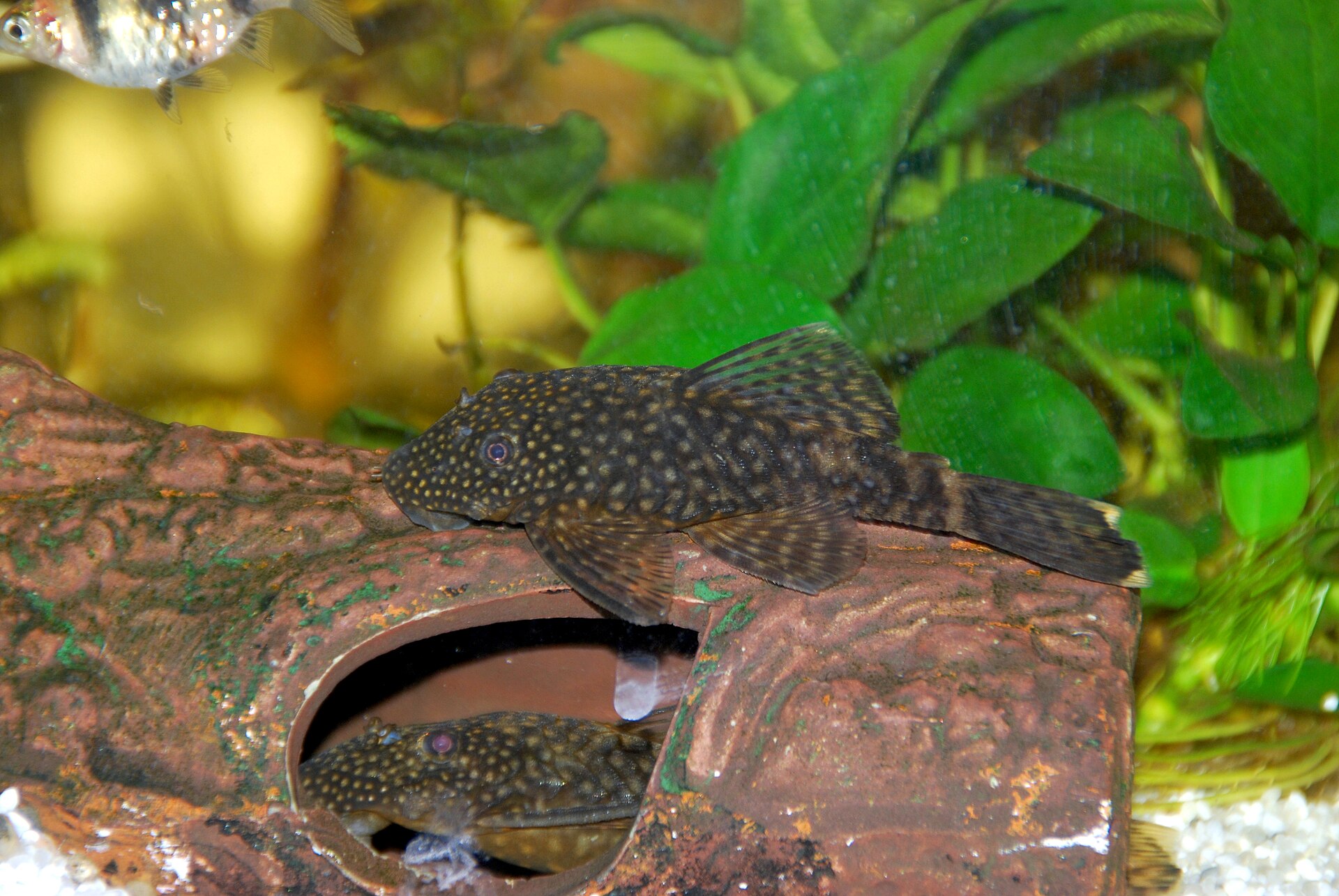
Most “bushynose” or “bristlenose” fish in shops are captive-bred Ancistrus of mixed or uncertain identity, often lumped near A. cf. cirrhosus. Ancistrus temminckii is a real, named species from the Guianas. It is still a wood-and-cave loricariid with tentacled males, but it is not the same animal as the hardy pet-store strain, and it should not be written up as if it were. This article is about Temminck’s bristlenose — Surinamese and French Guianan forest creeks — not a colour morph from a Florida farm.
Temminck’s fish from Guianan creeks
Pieter Bleeker named the species for Coenraad Temminck. The wild range is the Guiana Shield: Suriname, French Guiana, and neighbouring drainages that spill off ancient rock into tea-stained or clear forest streams. These are not Andean torrents and not the lower Amazon floodplain. Logs, root tangles, and cavities in laterite banks are the furniture. The water is typically soft, warm without being hot, and full of tannins from leaves, but it still moves. A. temminckii is a creek fish, not a lake fish.
Field photos from places such as the Mitaraka region show a mottled, wild-type bristlenose that looks more like a piece of submerged bark than like an albino or calico farm fish. If your local shop’s “bushynose” is golden, piebald, or super-red, you are looking at a domestic strain, not documented A. temminckii. Buy wild-type fish with locality data when you actually want this species.
The Guiana Shield is a mosaic of rapids, pools, and flooded forest edge. Temminck’s ancistrus uses the structured edges — the places where a log creates a hole and a film of microbes grows on wood. Copy that, not a bare glass box with one PVC elbow and a heater at 30 °C.
Tentacles that belong to this species
Males of A. temminckii grow the fleshy snout tentacles that make bristlenoses famous. Females have a cleaner snout and a broader ventral outline when gravid. Adults of the true species stay in a modest bristlenose size class, typically around 10–13 cm with the tail, not the 40 cm of a common Hypostomus. The body is armoured, brown to olive, with lighter mottling. Odontodes on the cheek and pectoral spine are more obvious on mature males.
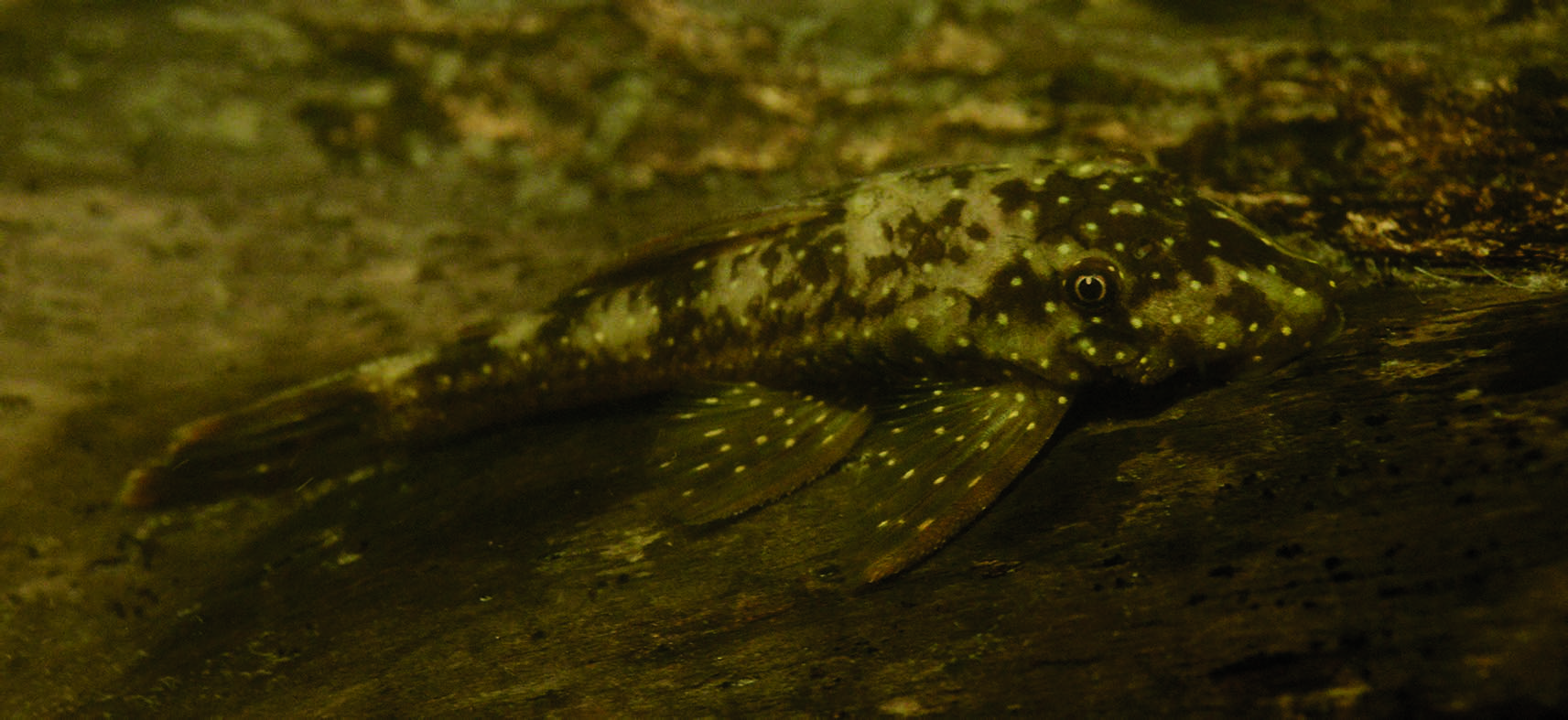
Do not identify the species from tentacles alone. Many Ancistrus males look bearded. Locality, wild-type colour, and a dealer who is not guessing are what separate Temminck’s bristlenose from the generic bushynose. The mouth is a rasping disc used on wood and on surfaces with biofilm; this fish is not a hillstream rubberlip and not a xylophagous panaque that lives on lignin.
A log with a hole in it
A tank around 80–100 litres can house a pair if you give them more than one cavity and a lot of wood surface. Length beats height. Soft sand or smooth small gravel protects the belly. Several pieces of aquarium-safe wood are the habitat, not an afterthought. Males will fight over the best hole; extra caves — natural holes, coconut halves, or tubes — reduce damage.
Flow should be gentle to moderate, enough to keep oxygen respectable and waste moving toward the filter, not a torrent that pins the fish to glass. A mature tank with a visible film on wood is kinder than a freshly bleached scape. Dim lighting and leaf litter suit a forest creek; blazing high-tech plant light is optional if you still keep the wood wet with biofilm.
Heater placement should not cook a cave. Temminck’s bristlenose uses cavities as homes. If the only hole sits on a 100-watt heater, the male will either abandon it or live in stress.
Soft water that has already cycled
Temperature around 24–27 °C fits Guianan creeks better than cool Andean rubberlip water and better than a 30 °C discus vat. pH in the 5.5–7.2 band is reasonable if stable. Soft to moderately soft water matches the Shield. Ammonia and nitrite stay at zero; bristlenoses are not ammonia-proof just because they are catfish.

Tannins from botanicals are welcome if you keep pH from crashing. Do not mix this fish into a hard, alkaline livebearer tank “because it eats algae.” Chemistry mismatch is a slow death. Water changes should be regular and temperature-matched. A filthy cave full of uneaten wafers is how males lose eggs and how adults pick up bacterial infections on the skin.
Biofilm first, vegetables second
Wild A. temminckii rasps wood-associated film and aufwuchs. In captivity that means a mature log, sinking vegetarian wafers, blanched courgette or similar greens, and a little protein. It does not mean the fish will survive on leftover flakes in a new tank with no film. It also does not mean you can skip feeding because “plecos clean.”
Watch night-time grazing. Offer wafers after dusk and confirm the bushynose actually ate. Hollow bellies on a fish that hides all day are a feeding failure. Too much protein without greens can contribute to bloating in captive ancistrids. Variety beats a single brand of disc forever.
Wood here is a grazing surface and a home. It is not the staple diet of a royal panaque. You still want wood in the tank; you do not need to replace half a log every month because the fish ate it.
One male, a cave, and limited neighbours
Keep a single male with one or two females in a well-structured tank, or keep a solitary adult. Two mature males in a small box will contest holes. Peaceful midwater fish that share soft, warm water can occupy the upper half if they will not nip tentacles or steal every wafer. Avoid large cichlids, aggressive barbs, and anything that treats a bristlenose as a punching bag.
This is still a modest fish. It is not a giant catfish and it is not a school of otos. Do not stock it as “the algae solution” for a tank that is already overfed. Incoming specimens deserve a quiet holding tank with a cave, a sponge filter, and the same chemistry as the display until they eat.
Eggs on the cave roof
Like other bristlenoses, A. temminckii is a cavity spawner. The male cleans a hole, the female deposits eggs on the ceiling, and he guards and fans them until fry rasp the walls. Captive breeding of true locality fish is less common than breeding of farm strains, but the mechanics are the same. Condition with extra greens and some frozen foods, keep the cave uncontested, and do not vacuum the fry if you want them.
Raise fry on infusoria-rich wood, powdered vegetarian foods, and a film that already exists. They are tiny raspers, not predators.
Labels, lookalikes, and why the distinction matters
If you want the easy, colourful, farmed bristlenose, buy that fish and enjoy it — but do not call it A. temminckii. If you want Temminck’s species, pay for locality, accept wild-type brown, and build a Guianan creek, not a community dump tank. Mislabeling spreads until nobody knows what they are keeping, and care advice written for a Florida hybrid gets pasted onto a Shield endemic.
Related on this site: the common bristlenose pleco article for farmed Ancistrus, plus chemistry and cycling so the wood is alive before Temminck’s fish arrives.
Explore other topics
Dive into more aquarium guides across the site.