

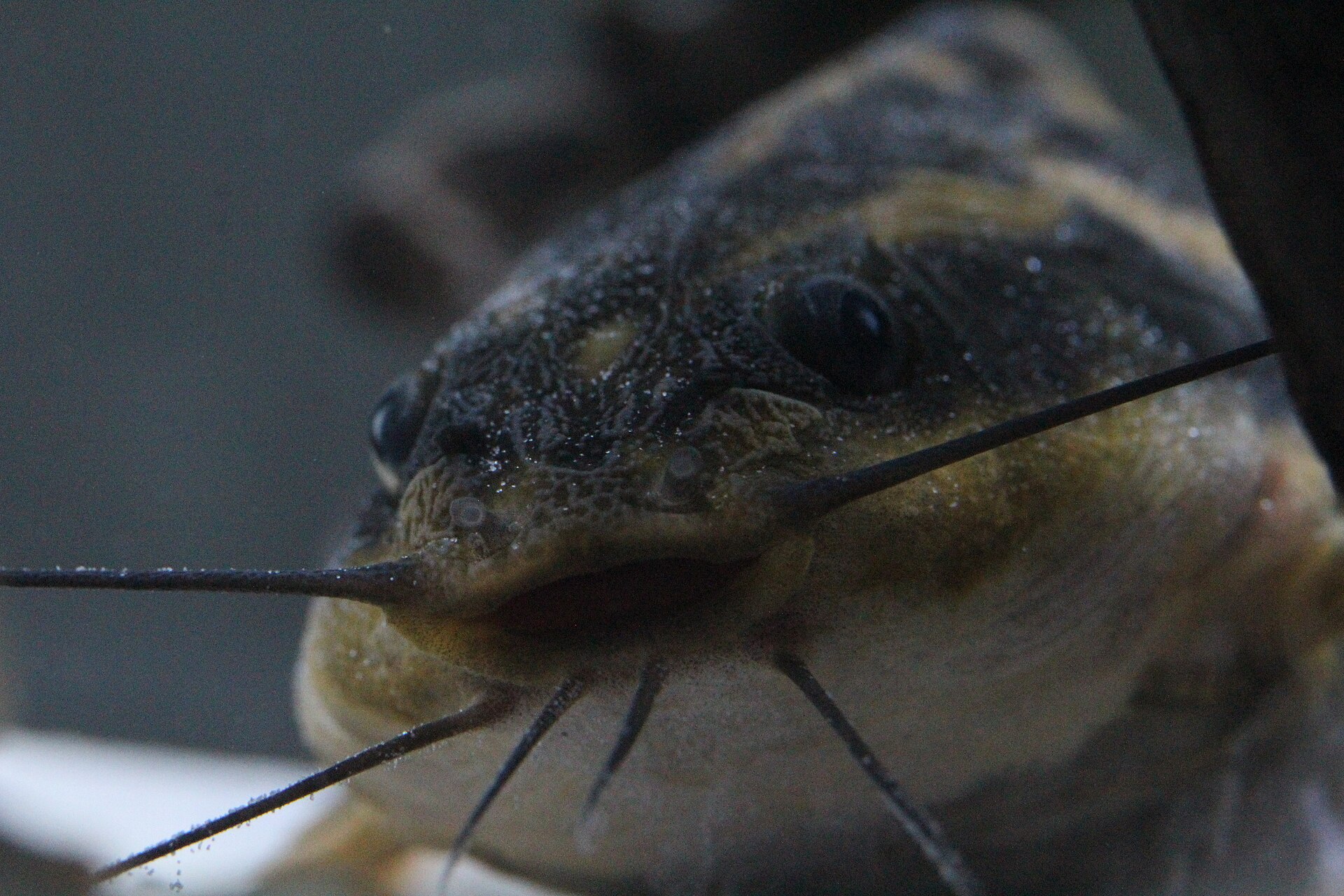
The first thing many people notice about a striped Raphael catfish is the noise. Platydoras armatulus can rasp its pectoral spine in the socket and produce a squeak or croak that carries through glass. That sound is a thorny-catfish behaviour, not a sign that the fish is a talking novelty. The second thing to notice is the armour: bony scutes and locking spines that make netting a bad idea and make this species a poor roommate for anything that will ram it. The third is time. A Raphael bought as a small striped juvenile can still be in the same tank twenty years later. This article is about that Amazon doradid, not about plecos, hoplos, or river giants.
Which Raphael, and which river
For years the trade used Platydoras costatus for the popular striped fish. Modern usage treats the common aquarium Raphael as P. armatulus, a species of the Amazon and related South American lowland systems. It lives over sand and mud near snags, in creeks and river margins, often in groups when young. The water is tropical, not cool Andean, and not brackish. Raphael catfish are freshwater armoured foragers of the night shift.
They share the landscape with many other catfishes, but they occupy a different niche from suckermouths. They do not rasp algae off glass as a lifestyle. They poke along the bottom with barbels, take insects, crustaceans, detritus, and small live foods, and wedge into wood when the lights come on. A planted community can hold them if everything else is large enough not to be swallowed and calm enough not to harass a nocturnal fish.
Seasonal floods expand the foraging ground. In a tank there is no floodplain. You have to offer night feeding, hiding wood, and a sand bed that will not grind the barbels off.
Stripes, thorns, and a body that does not stay tiny
Juveniles are sharply striped in cream and dark brown or black — the “ Raphael” look that sells. Adults keep the pattern but the body becomes heavier, the head broader, and the fish more hulking. Plan for about 15–24 cm total length, not the 8 cm you saw in the bag. The dorsal and pectoral spines are stout and can lock. The sides carry scutes. This is a doradid, a talking catfish, not a loricariid.
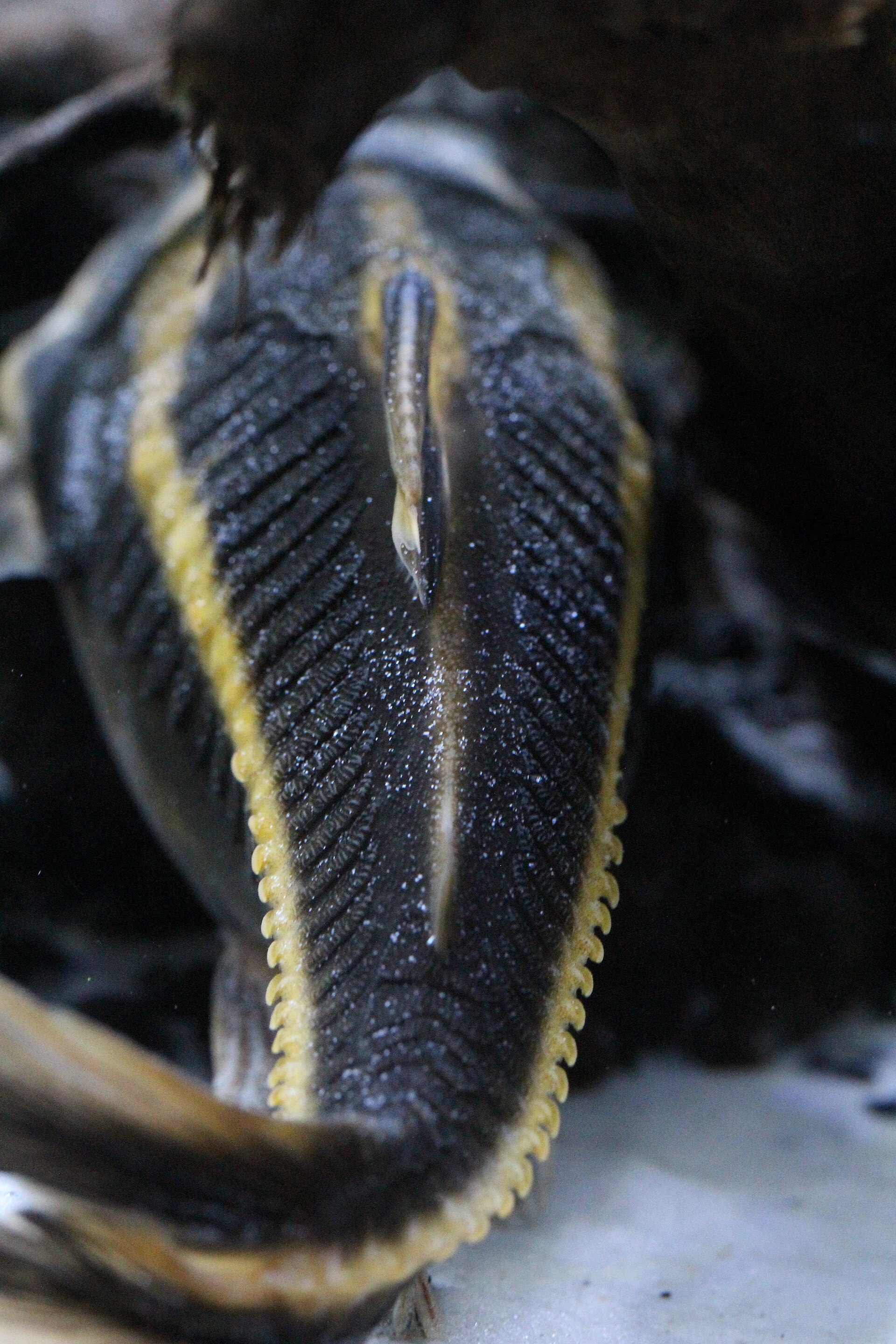
Healthy fish have intact barbels, even stripes, and a firm belly. Damaged spines, fungus on wounds from a bad net, or a fish that never leaves a corner in a brightly lit, barren tank are warnings. Eyes are small. They hunt by touch and smell after dusk. Judging “activity” at noon in a shop is how people buy a stressed Raphael that looks dead and then blame the species.
Sexing is unkind until adults: females may look fuller; males may look slimmer and a little more angular. Do not count on it in a 10 cm import.
A long, dark, sandy box with snags
Give a single adult at least a 120–150 litre footprint with length to patrol. A group of juveniles needs more hiding slots so they do not pile into one log and injure each other with spines. Soft sand is the right substrate. Sharp gravel shreds barbels. Driftwood, pipes, and stacked slate make the daytime dens Raphaels actually use. They will rest on top of each other in a favourite hole; that is normal for this species if nobody is bleeding.
Lighting should be dim or broken by floating plants. A spotlight aquarium makes a nocturnal catfish into a piece of furniture that only moves at 2 a.m. Filtration should be strong enough for a messy, protein-loving bottom fish, with gentle flow at the sand so the fish is not blasted down the tank. A tight lid helps; startled Raphaels can bolt.
Do not scape a Raphael tank like a hillstream. They do not need cobble torrents. Do not scape it like a nano shrimp tank either. They need floor space, darkness, and wood to vanish into.
Warm Amazon chemistry, stable and clean

Temperature 24–28 °C, pH roughly 6.0–7.5, softness optional if stable. They are not fragile tetras, but they are not immune to ammonia. A twenty-year fish dies like any other fish if the tank is a toilet. Weekly water changes, a siphon that does not wreck the sand into a dust storm every time, and a filter you actually clean are the care plan.
They gulp air at the surface only if oxygen is poor or if they are simply wandering; they are not obligate air-breathers like hoplos. If a Raphael is constantly at the surface panting, test oxygen and temperature before you invent a disease.
Night meals for a barbelled forager
Feed after you dim the lights. Sinking pellets for omnivorous catfish, frozen bloodworm, mysis, chopped prawn, and similar meaty items disappear if you stay long enough to watch. Tablets that sit until morning become ammonia. Raphaels will scavenge, but they will also starve in a tank where fast midwater fish eat everything at feeding time.
They are not algae specialists. A green film on the glass is not a Raphael diet. They may pick at leftover wafers, but building the menu around leftover community flakes is how you get a thin, nocturnal ghost. Offer a dedicated sinking meal several times a week, more often for growing fish.
Overfeeding a group turns the sand into a sour bed. Feed what they finish in a few minutes of darkness. Fast one day a week for adults if the belly looks too round.
Spines, neighbours, and the long lease
Keep Raphaels with fish too large to eat and too peaceful to attack a slow night-shifter. Medium South American cichlids of similar adult size, larger tetras, and other robust but non-boisterous fish can work. Tiny fish may be eaten as the Raphael grows. Anything that fits in a 20 cm catfish mouth is eventually food. Delicate long-finned fish get spines in the side during night collisions.
Never lift this species in a nylon net if you can avoid it. Spines lock in mesh. Use a container, or unhook with patience and wet hands. A puncture from a pectoral spine is painful for you and infectious for the fish if the wound is dirty.
Young Raphaels often do better in a small group. Adults may still share a log or become more solitary. Watch for damaged fins. This is not a giant predator that needs a public aquarium, and it is not a 5 cm community dwarf. It is a medium, armoured, long-lived bottom fish.
Spawning that almost never happens in the living room
Wild P. armatulus is believed to spawn in the wet season with eggs among vegetation or in cavities; aquarium reports are scarce and inconsistent. Do not buy a “breeding pair” as a project. Treat the fish as a decades-long companion whose reproduction is a bonus you probably will not see.
The twenty-year decision
If you cannot commit to a sandy, dim, well-filtered tank until the 2040s, do not buy a juvenile Raphael because the stripes are cute. If you can, you get one of the more characterful Amazon catfishes — a squeaking, snag-dwelling forager that has nothing to do with pleco rasping or with shovelnose hunting. See also water chemistry and cycling.
Explore other topics
Dive into more aquarium guides across the site.