

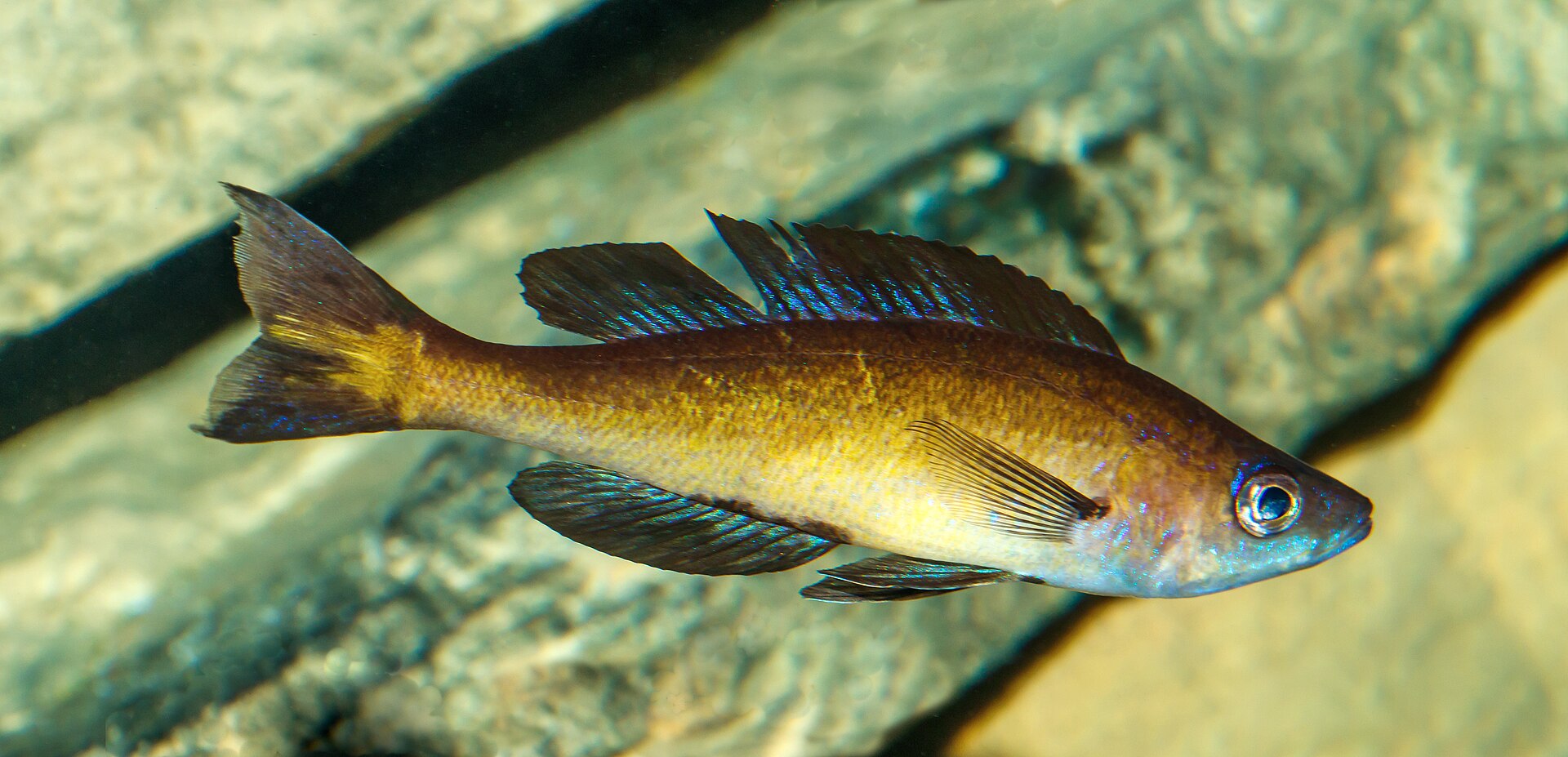
Lake Tanganyika has a sardine that is a cichlid. Cyprichromis leptosoma lives in open water in schools, hanging at an angle, picking plankton, and mouthbrooding in the blue rather than in a cave. It is the opposite of a julie, the opposite of a calvus, the opposite of a Tropheus on a wall. If your Tanganyikan tank is all rock and no swimming hall, this fish has nowhere to be. If you can offer a long, reasonably tall volume of hard, alkaline water and a dozen or more of them, you get a midwater river of colour-morph males — yellow-tail, blue-tail, Kitumba, Kekese, Utinta, the names pile up — and silver females that do the actual work of holding fry.
They jump. They spook. They need a lid and they need numbers. A trio in 100 litres is a nervous waste of a pelagic animal. A school of fifteen in 250 litres with rock at the back and a highway in front is the species.
Sardine grammar, cichlid grammar
Males reach about 8 to 11 cm, slimmer than a tropheus, with a forked tail that carries the morph colour. Females are silver, slightly smaller, easy to ignore until their mouths swell with eggs. The body is built for hanging in the water column, often head-up. That posture is not swim-bladder disease. That posture is Cyprichromis. People new to them call the shop in a panic. The shop, if it is a good one, says yes, they do that.
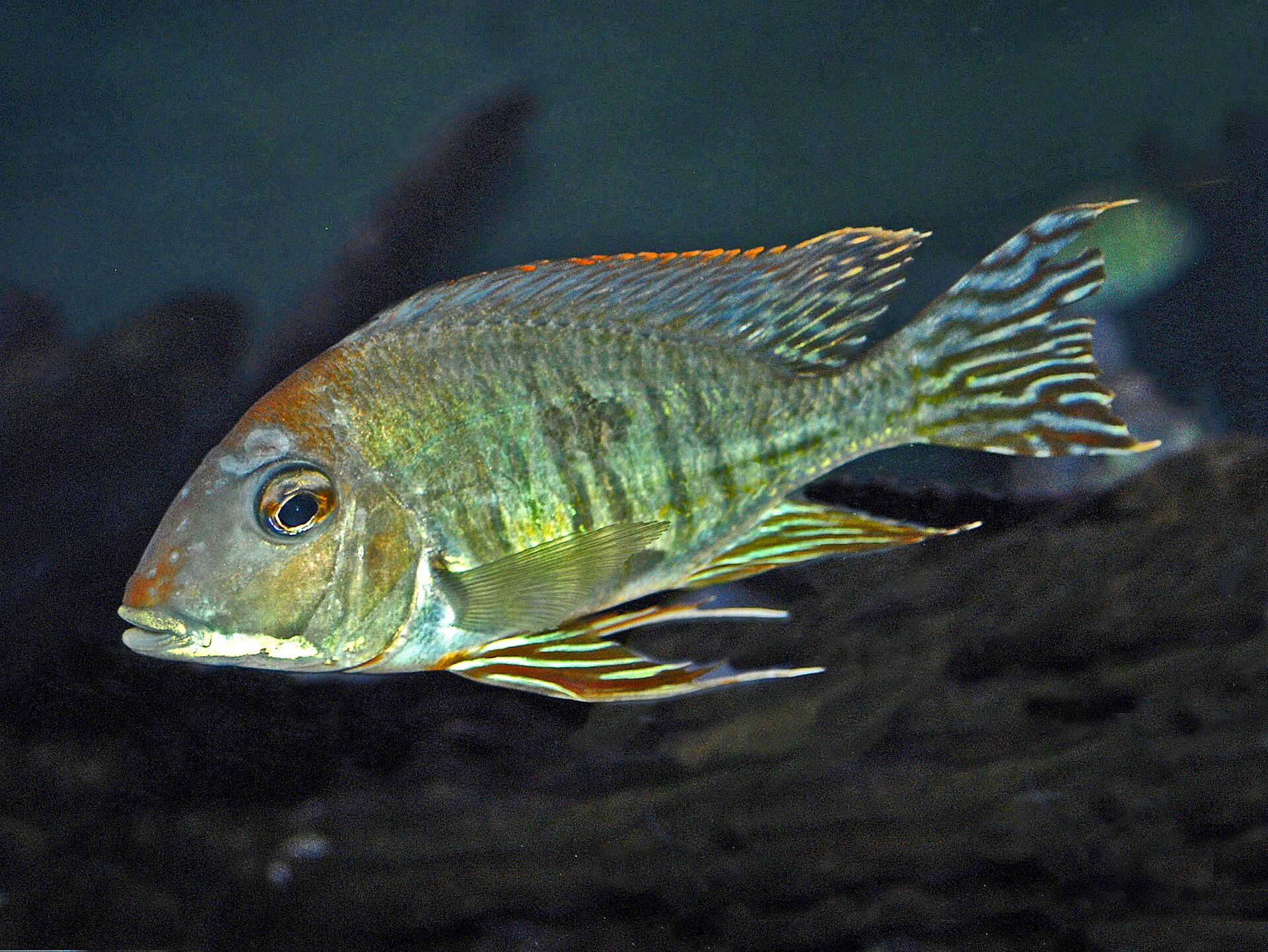
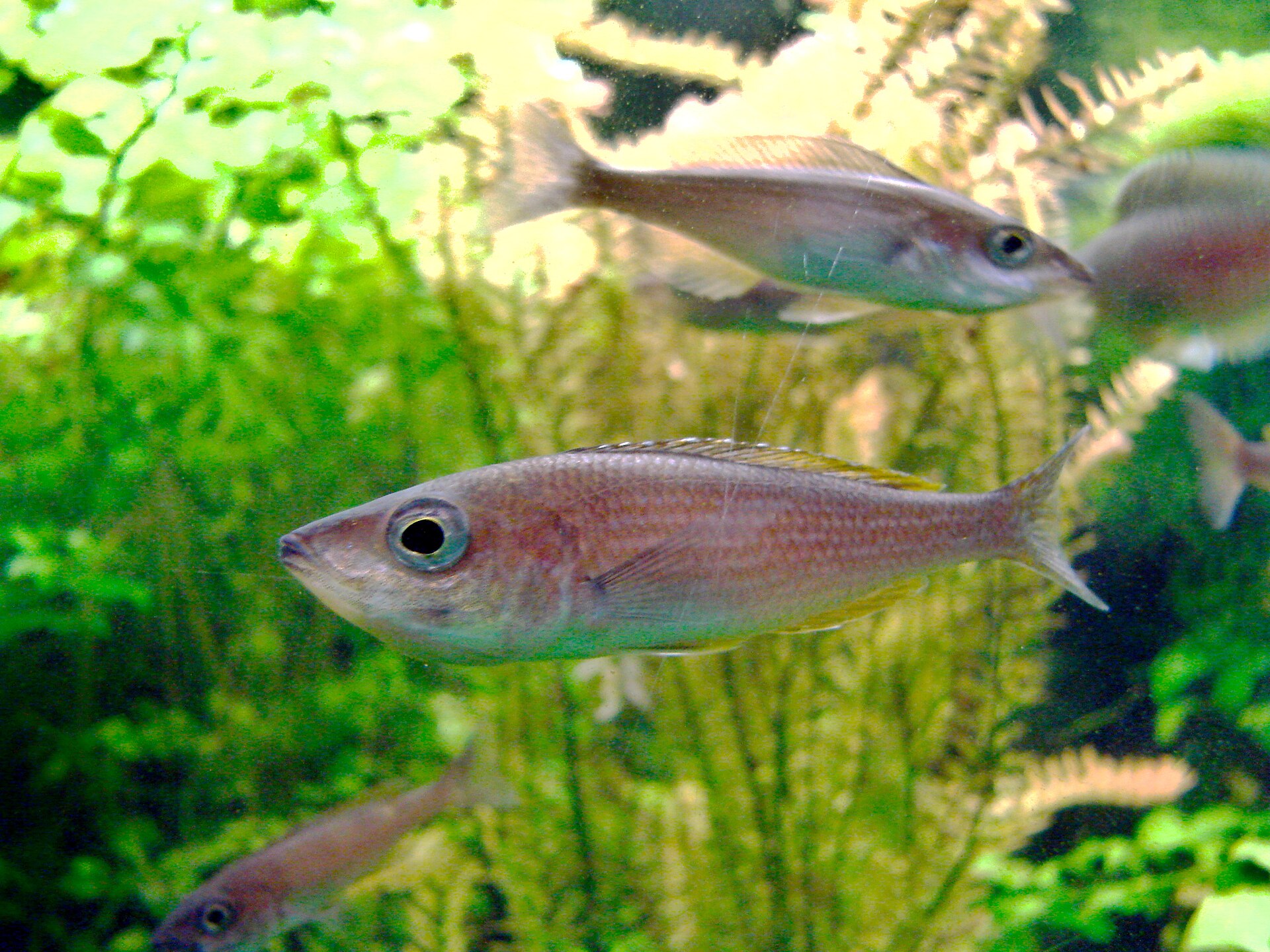 Cyprichromis leptosoma. Photo: Guérin Nicolas ( messages ) / Wikimedia Commons (CC BY-SA 3.0)
The empty half of the tank is the habitat
Two hundred litres as a floor for a real school, more if you also have rock dwellers. Put the geology at the back and ends. Leave a clear midwater. Height lets them stack. Length lets them turn. Temperature 24 to 27°C. pH 8.0 to 9.0. High mineral. Bright, clear water. Flow they can hold station in, not a washing machine. They are plankton pickers; a roaring powerhead that pins them to the glass is the wrong river. A gentle, oxygen-rich current is the right one.
Cover the tank completely. A 10 cm cichlid that thinks like a sardine will find the one gap in the hood during a spook. Decorations should not include narrow vertical death-gaps. They are not cave fish. They will still ram wood if the whole school turns at once. Soften the lighting schedule so morning is not a jump scare.
Food that stays in the water, not on the sand
Fine pellets that linger, crushed flakes, frozen cyclops, daphnia, baby brine, and other small items they can pick on the hover. Sinking wafers for the rock dwellers will not feed the cyps. Feed in the midwater, several places, so the back of the school eats. They have small stomachs and a high metabolism for their size. Little and often beats a daily steak. They will take some food from the surface. They are not herbivores. They are not piscivores of hap scale, though they will snap at tiny fry of other fishes that rise into the column.
A school that ignores sand food while your julies get fat is a feeding design problem, not a cyprichromis personality problem. Feed the column first.

A harem in the blue
More females than males. Males colour up and display in the open; they will quarrel, but the school usually absorbs it if the volume is there. Two males in a tiny tank is torn fins. Six males in a huge school with twenty fish is a shimmer. Maternal mouthbrooder: the female holds for about three weeks and may continue to hang in the school, which is the remarkable part. Fry are sometimes released into the group and survive among the adults in a way cave-cichlid fry do not. Sometimes they do not survive. A nursery still raises more. Holding females should not be chased to exhaustion; numbers and space are the protection, not a cave they will not use.
Do not mix colour morphs if you want to keep a locality look. They will hybridise with enthusiasm. The shop “mixed cyps” box is a rainbow and a dead end for named lines. If you do not care about lines, the mixed school is still a valid, beautiful animal as long as the husbandry is pelagic.
Who shares a highway
Rock-dwelling Tanganyikans that stay on the wall: Tropheus in a huge tank, julies in their cracks, leleupi in a hole, brichardi if the colony does not decide the open water is also theirs (it might). Bottom shell dwellers. Not mbuna. Not anything that hunts 8 cm slim fishes as a job — calvus will take fry and maybe juveniles; large predatory Boulengerochromis is a joke stocking. Not tiny soft-water schoolers. The water is a Rift lake. The neighbours should have read the same chemistry chapter.
Cyprichromis are generally peaceful in the sense that they do not hold a cave. They are not peaceful in the sense that a male display can still shred another male. They are fragile to bullying from rock fish that come up to meet them. If your Tropheus spend all day in the open water, your cyps will have a bad year. Layout keeps the jobs apart.
Spook, ich, and the thin fish at the back
A thin cyprichromis at the rear is being outcompeted or is ill. Check faeces, flashing, and whether the school still includes it or has shunned it. Ich after shipping is common; they come from exporters in dense packs. Quarantine a school together if you can; isolating one sardine-cichlid is cruel and uninformative. Treat the group. Watch oxygen when you heat for ich; warm water and a packed QT is an oxygen trap.
They can live several years. The males look like they should be delicate. The species is keepable if you honour the open water. It is not keepable as two fish in a cave tank “for colour.” Colour is a school property here.
The lake’s open sentence
If your Tanganyika plan was all stone, add a highway or skip this genus. If you can do both — a wall and a pelagic hall — Cyprichromis leptosoma is the movement that makes the rock look like a coast instead of a sculpture. Males paint the water with tail colour. Females hold the next school in their mouths while still hanging in this one. That is a cichlid pretending to be a sardine so well that you have to remember to test pH like a Rift keeper, not like a marine biologist and not like an Amazonian. Feed the column. Lid the box. Buy a dozen. The empty water is not empty. It is the habitat you were supposed to leave for them all along.
Named morphs are a rabbit hole worth falling into if you like locality fishes. Kitumba males with their particular tail, a Kekese line kept pure, a group of females that actually match — that is the specialist hobby. The general hobby is simpler: a lot of slim Tanganyikan cichlids in a lot of open, hard water, eating small food, jumping if you let them, hanging at that odd angle that means they are finally home. Either path beats two lonely fish over a flowerpot. The flowerpot was never their lake.
Explore other topics
Dive into more aquarium guides across the site.