The trade name is a trap. False Upside-down Catfish (Synodontis nigrita) is a West African squeaker that usually sits the right way up. The true upside-down specialist is Synodontis nigriventris. Nigrita is a spotted, medium-large syno from the Sahelian river systems — Niger, Senegal, Gambia, Chad basin and related waters — and it behaves like a nocturnal river cat, not like a cute inverted ornament and not like a Corydoras.
Right-way-up, brown, and actually West African
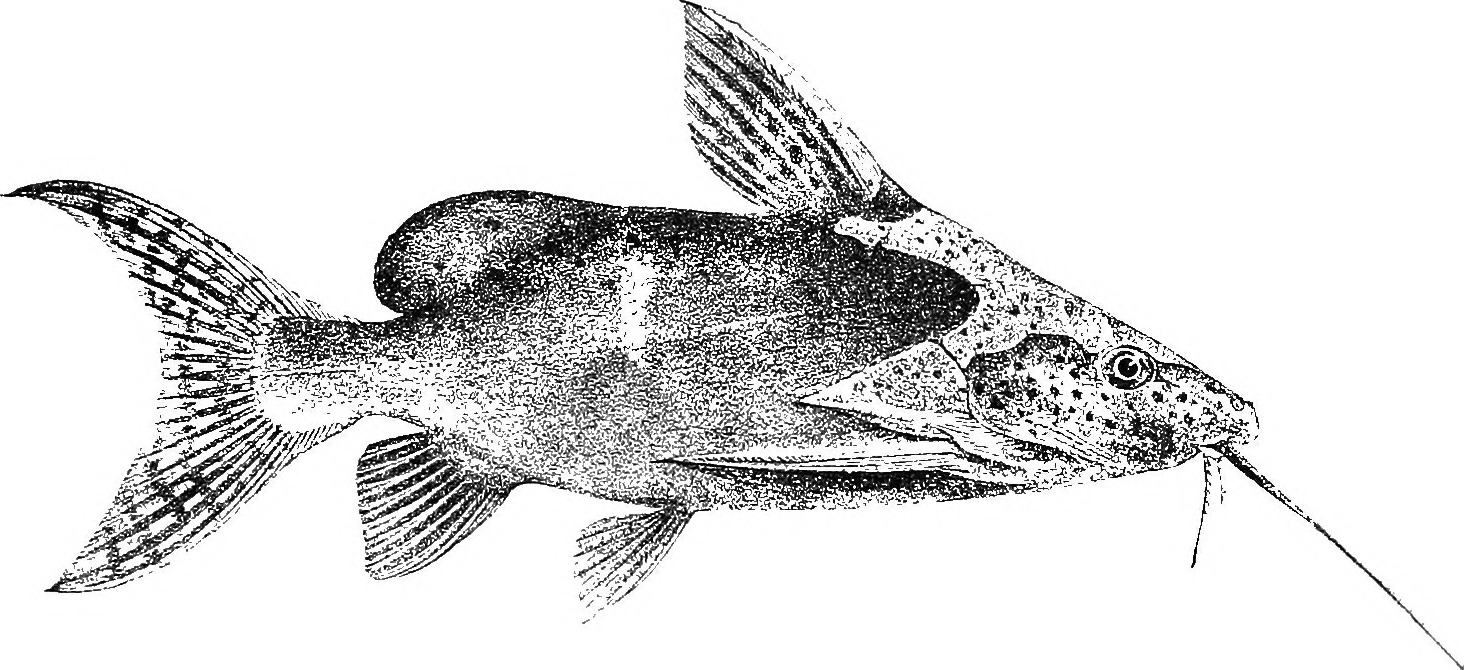
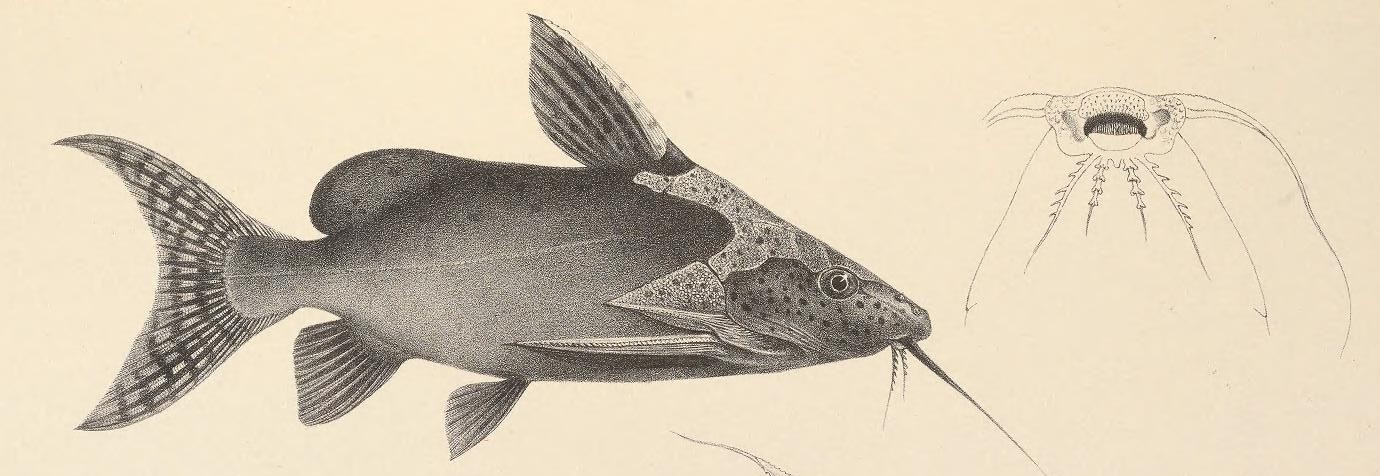
Adults often reach 15–20 cm, sometimes more, which already removes it from dwarf-catfish conversations. Colour is brown to grey-brown with darker spots; the belly is not the high-contrast black of nigriventris (the “nigriventris” name flags a dark belly on the true upside-down fish). Pattern varies with origin and age. The body is the mochokid package: humped profile, locking spines, barbels for night work. They may rest at odd angles on wood, which is how the “false upside-down” name sticks, but they are not inverted swimmers as a lifestyle.
If the fish in the tank is 5 cm, very inverted, and has a dark belly, you likely have nigriventris. If it is a spotted brown syno that patrols the bottom and caves, nigrita is plausible. Shop labels lie in both directions.
Sahel rivers, seasonal and tough
Nigrita’s map is West and west-central Africa: large rivers and connected lakes that swing with rains, turbidity, and temperature. These are not Congo forest blackwaters in the same way as angelicus, and not South American sand creeks. The fish is an opportunistic omnivore in a hard world. That is why it has a reputation as one of the more keepable synos — not because it stays small, because it is less delicate than a specialist Congo jewel.
A river box with caves
150 litres and up for an adult, more if you want more than one. Caves, wood, a lid, strong filtration. Substrate sand or smooth gravel. They will dig. They will fight over the best hole. Lighting is secondary; feeding time is dusk. This is not a planted delicate scape species, though plants can survive if not uprooted. They are messy. Filter design should assume protein and waste, not a lightly stocked shrimp tank.
Sahel chemistry, not Amazon recipes
Temperature 23–28°C. pH 6.5–8.0; they often accept harder, more alkaline water than a Negro tetra would, which matches some Sahelian rivers better than a Congo forest creek. Still keep ammonia at zero. Oxygen high. They are not a licence to skip changes. They are not Malawi mbuna, even if pH overlaps at the high end — rock-dwelling cichlids and a digging syno have different fights.
Social life of a false upside-down
Juveniles can be kept in groups in large tanks. Adults may pair off or bicker. They are more “keep a few if space” than angelicus, and still not a shoal of six identical sand-sifters. They will eat small fish. They may nip fins. Good neighbours are robust, similar-sized, fast or armoured fish. Bad neighbours are neons, guppies, dwarf corys, and anything that wants the same cave. Compare with decorus: nigrita is usually the more available, less filament-showy, more West African utility syno.
What a West African Synodontis takes
Omnivore with a protein lean: sinking pellets, frozen foods, prawn, some vegetable wafers. Feed at night. They will scavenge eggs and fry. They will not replace a pleco. A fat nigrita in a small tank is a water-quality problem; a thin one is a hiding or parasite problem.
Spawning nigrita
Rare in home aquaria. Seasonal cues, possible egg-scattering or cave habits depending on report — do not count on it. Sexing is not obvious. This is a catfish you keep for the adult West African presence, not for a spawning project.
Handling a Sahel Synodontis
Spines, nets, jumps. Parasites on wild West African imports. Ich. Skin infections in dirty water. Quarantine. They are tougher than angelicus and still die in uncycled boxes. Do not treat them with copper as if they were marine fish. Do not house them with corys and then wonder who vanished.
Nights in a Sahel-style tank
Turn the room lights off and wait. Nigrita comes out to patrol wood, sand, and the cave mouth it has decided is government property. Feed then. If you only ever see the fish during a Saturday glass-clean, you do not know whether it is eating. A red LED or a dim torch for two minutes is enough. They may rest at a tilt on a branch, which is how the false upside-down story starts; they should still swim upright when they hunt. Constant inversion in this species is not the nigriventris lifestyle — it can be a fish that is unwell or a fish on décor that happens to be vertical.
They make the squeaker croak when netted or when two adults argue. That sound is a locked-spine complaint, not a request for a smaller tank. Give the argument more caves and more length. A single adult in a well-filtered 150–200 litre river tank with a few robust neighbours is a coherent display. A trio in a 80 litre “African community” with Congo tetras the catfish can swallow is a countdown.
What the old plates got right
Boulenger-era illustrations of S. nigrita show a spotted syno with a serious head and a river-fish body, not a clown ornament. That is still the animal. West African rivers in the Niger–Senegal–Gambia–Chad web are seasonal: floods, turbidity, heat. Your glass box cannot flood a floodplain, but it can offer turbidity-free water that is nonetheless warm, oxygenated, and stable, plus food that does not depend on a flood pulse of insects. They will take a wide omnivore menu. They will also take a neighbour that was priced as a show tetra. Choose the menu on purpose.
Compared with Congo angelicus, nigrita is usually cheaper, faster to settle, and more willing to live in harder water. Compared with decorus, it lacks the show filament and the same barred-clown juvenile marketing. It is the utility syno of the three — which is why it gets the dishonest “upside-down” label, because utility fish always get a gimmick in the shop.
False name, real species
Keep Synodontis nigrita because you want a spotted West African squeaker that lives right-way-up in a large, cave-rich tank. Keep nigriventris if you wanted actual inverted swimming in a smaller African cat. Keep angelicus for Congo polka dots. Keep Corydoras if you wanted South American sand troops. The “false” in the name is the warning about nigriventris. The centimetres are the warning about your aquarium. The Niger–Senegal map is the biology. None of that is a cory care sheet with the continent swapped.
Explore other topics
Dive into more aquarium guides across the site.