

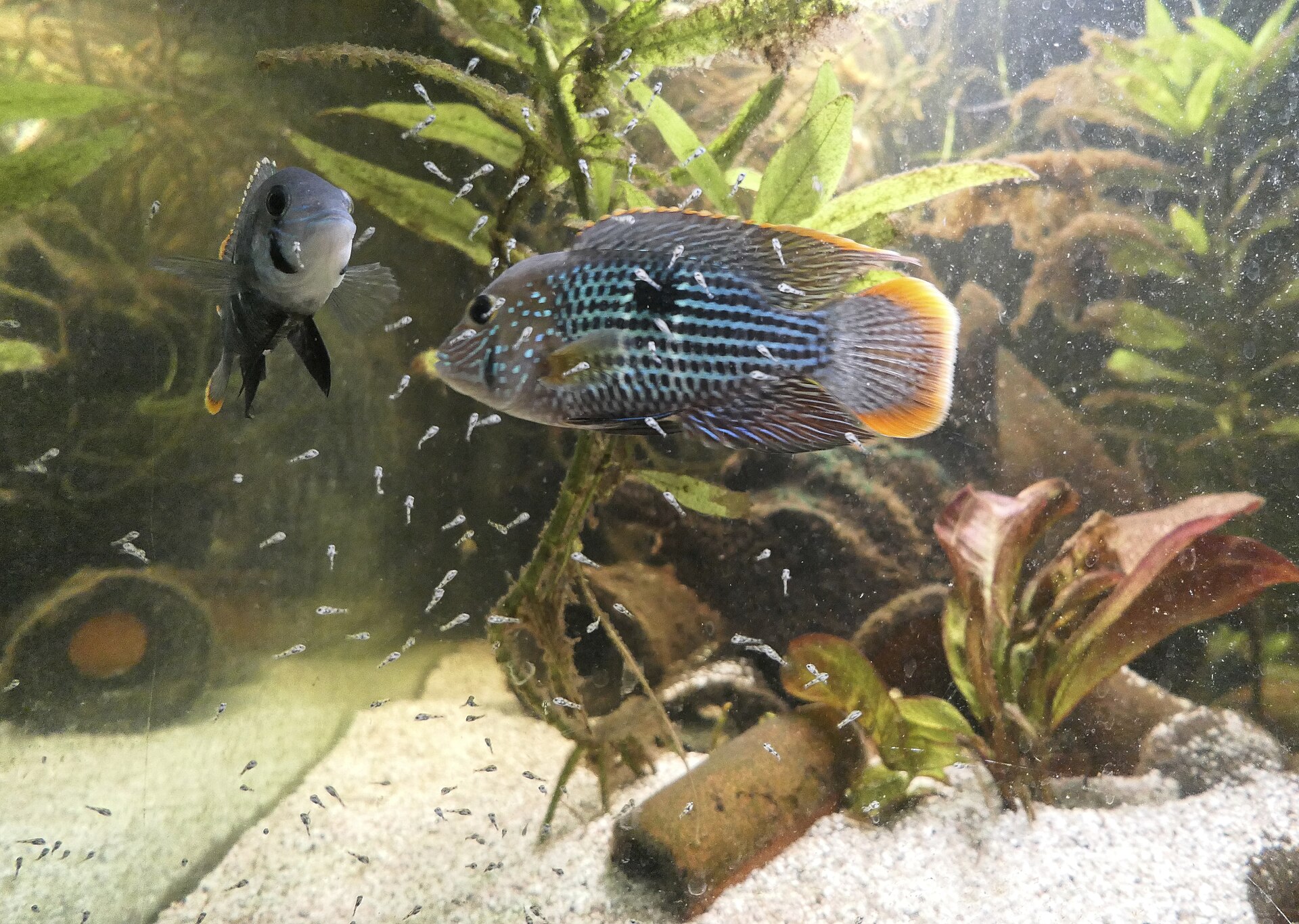
The trade name is an admission. Andinoacara rivulatus, the green terror, comes from Pacific-slope drainages of Ecuador and Peru — the Guayas, the Tumbes, rivers that run west of the Andes rather than into the Amazon — and it grew a reputation for wrecking roommates long before anyone put “terror” on the bag. Older labels said Aequidens rivulatus. German keepers still say Goldsaumbuntbarsch for the morph with a gold trim on the fins. Under every name it is a large, metallic, territorial cichlid that can reach 20 to 30 cm and will treat a 150 litre community as a personal insult.
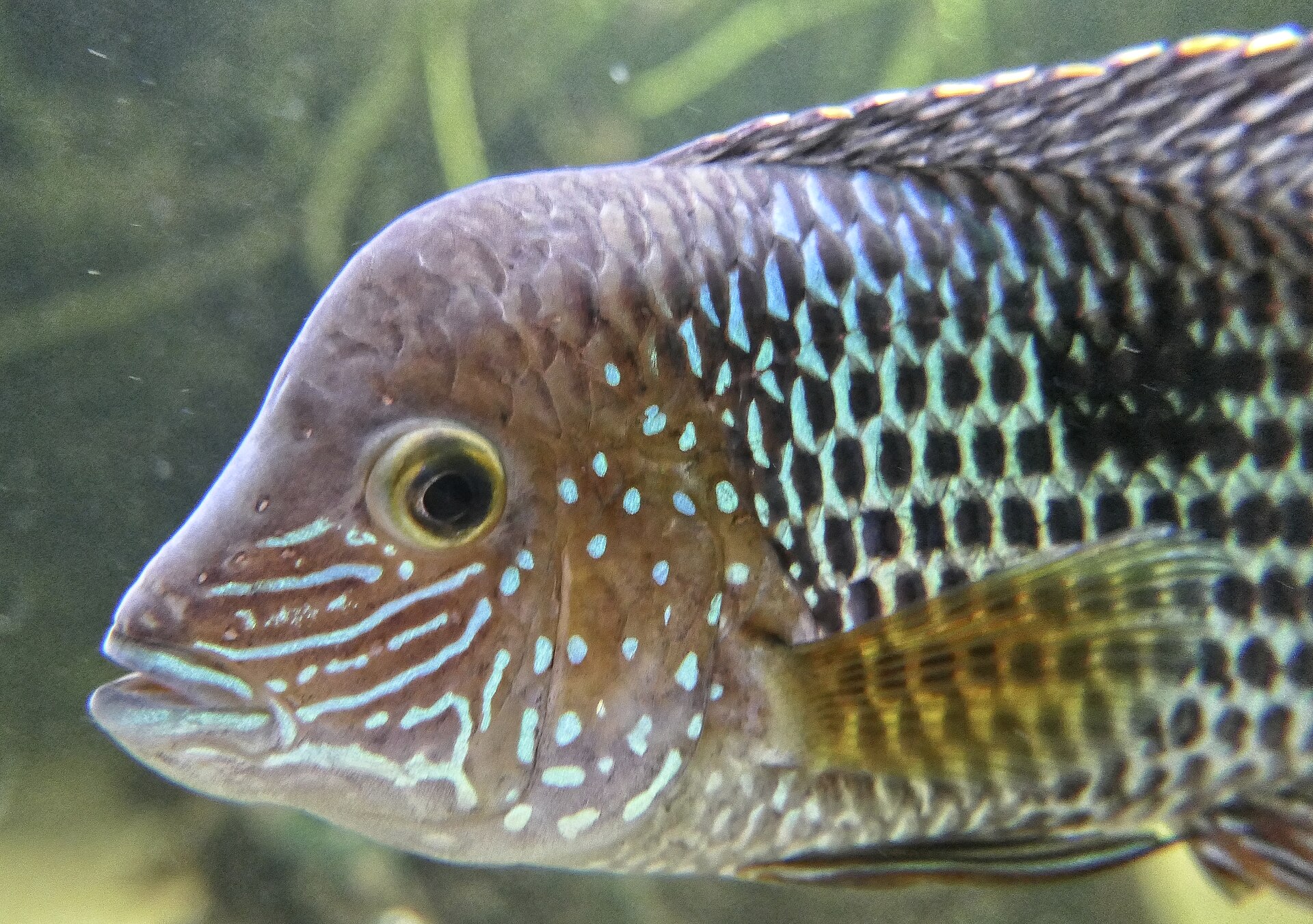
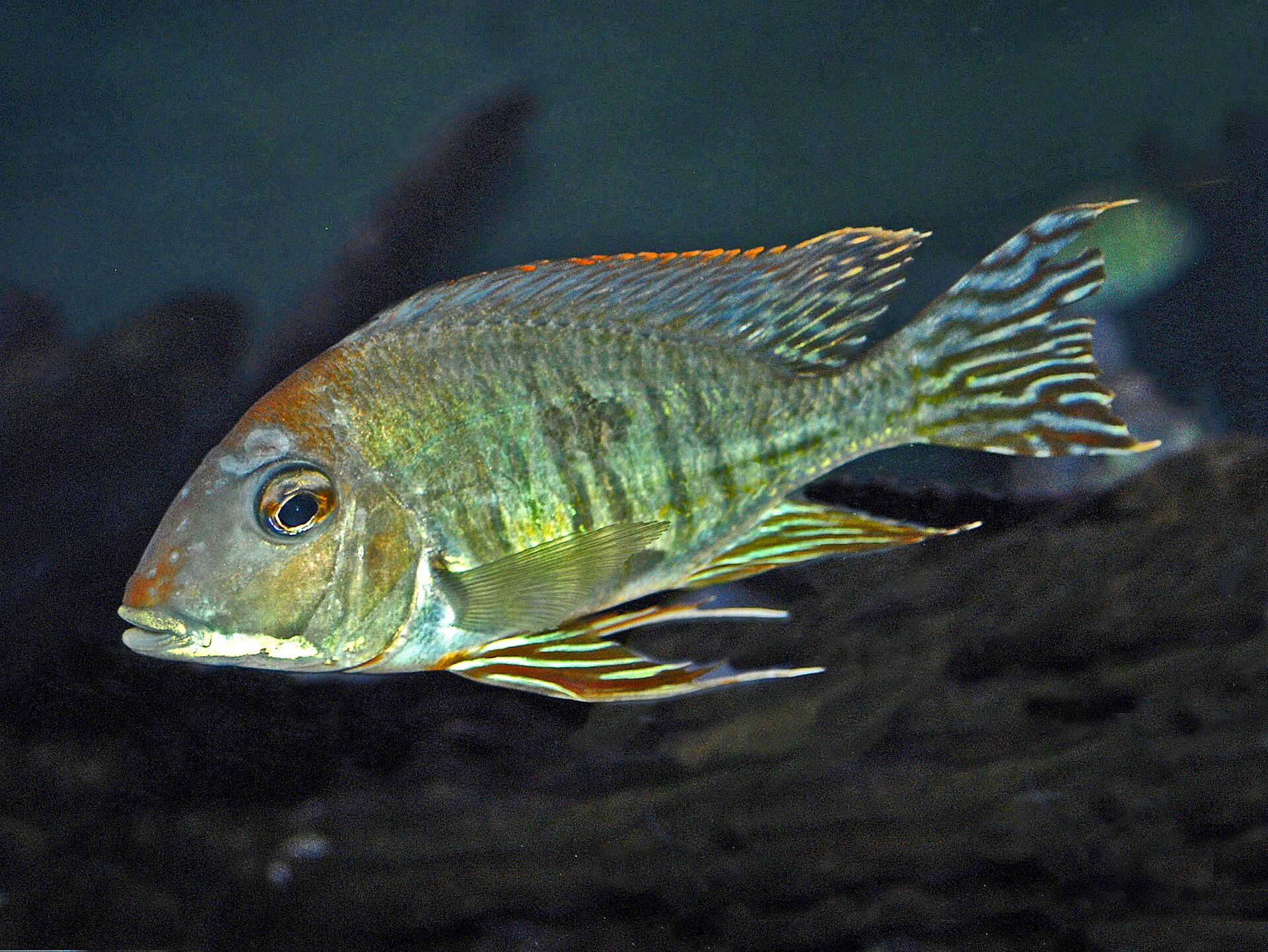
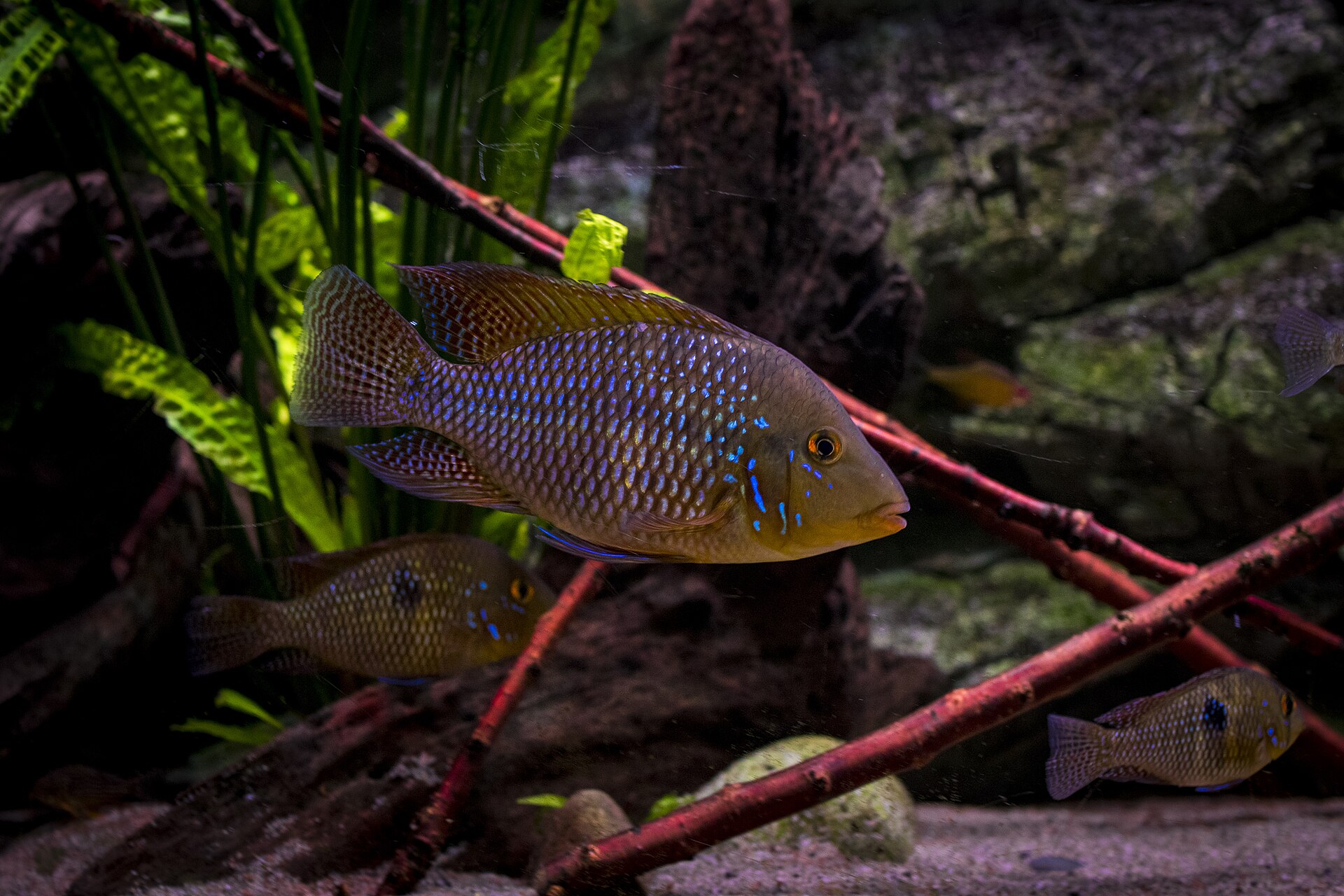
The colour is the trap. A mature male in good condition is olive to turquoise with a peppering of metallic scales, a dark blotch on the flank, and a dorsal and caudal that may be edged in gold or white (the “gold seam” and “white seam” forms). It looks like a fish you would put in a show tank with plants and neighbours. It is not that fish. It is a river predator-omnivore with a forehead that steepens with age and a willingness to break the water with a charge at the glass.
Pacific rivers, Andean minerals
These are not blackwater Amazonians. Water can be moderately hard, pH 6.5 to 8.0, temperature 20 to 28°C with the low-to-mid twenties as a comfortable home. They handle a range, including water cooler than a discus keeper would ever run. What they do not handle is a cramped territory. A single adult wants 200 litres as a conversation starter; a pair wants 300 litres or more if you expect them to remain a pair rather than a survivor. Hardscape must sit on the glass. They dig. They will undercut a rock pile. They will uproot plants. Sand or gravel they can move is fine. A carefully stacked mountain is a future avalanche.
Filtration has to be heavy. A 25 cm cichlid that eats shrimp mix and rearranges the bed produces waste in theatrical amounts. Canister plus powerhead, or a sump if you have one. Water changes are not a hobbyist personality trait here; they are how the fish keeps its metallic sheen instead of a hole in the head.
What “terror” looks like on a Tuesday
Juveniles in a shop tank are often tolerable with each other. That tolerance has an expiry date measured in centimetres. As they mature, one fish becomes the tank. Tank-mates, if any, must be similarly sized, similarly tough Central or South American cichlids in a much larger volume, or large catfish that can armour through a bad mood. Angels, discus, small schoolers, shrimp, and fancy livebearers are food or victims. A green terror with a “peaceful community” label in your head is a future rehoming post.
They will fight their own species to the death in a small tank. If you want a pair, start with a group of juveniles in a large tank, remove extras when a pair bonds, and keep a divider or a second tank ready. Two unmatched adults introduced overnight is a blood sport, not a pairing strategy.
They are not mindless. They learn feeding routines, they watch you, they will spit gravel when annoyed. That is engaging if you built the right tank. It is exhausting if you wanted a calm planted display.
A diet for a metallic bruiser

Cichlid pellets as a base. Frozen prawn, mussel, earthworm, and insect foods as rotation. Some vegetable matter in the pellet or as blanched greens so the gut is not a meat-only system. Do not feed live feeder fish. Do not feed beef heart as a staple; it is a filth factory. Colour comes from decent carotenoids in quality food and from the fish being dominant and unstressed, not from starving them into a photogenic meanness.
Feed amounts they finish. A fat green terror is a common sight and a strain on the kidneys and the water. A slightly lean, active fish with intact fins is the goal.
Spawning is when the name earns overtime
They are open substrate spawners. A bonded pair cleans a stone, lays a large clutch, and both parents guard with a sincerity that will evict anything that still lives in the aquarium. Eggs hatch in a few days; fry are herded. It is impressive. It is also the moment any remaining tank-mates need an exit plan. If you want to raise fry, have a grow-out tank. If you do not, the parents may still spawn and still rearrange the world.
Sexing: males larger, more nuchal hump with age, more pointed fins, more spangle. Females smaller, rounder, often just as aggressive on the nest. Gold-seam versus white-seam is a fin-edge morph, not a sex.
Health of a fish that outlives bad decisions
They can live a decade. Hole-in-the-head, hexamita, and general “big cichlid dirty tank” disease cluster here. Prevention is water volume, water changes, and food that is not garbage. Ich after shipping is common; they can take heat into the high twenties for treatment better than a cool-water species can. Quarantine in a tank that will hold a 20 cm fish, not a bucket.
Watch for a fish that hides and darkens after months of ruling the tank. That can be a new roommate, a reflection, a failing heater, or internal illness. Green terrors do not do subtle when they are well. Subtle is a warning.
The name was fair
Keep Andinoacara rivulatus if you want a single centrepiece or a dedicated pair in a large, rugged, moderately hard-water tank, and you enjoy cichlid intelligence with the volume turned up. Do not keep it because a 6 cm juvenile was on sale next to the community fish. The metallic green is real. The terror is the part of the common name that is doing honest work. Believe both, or believe neither and go look at a keyhole cichlid instead.
Pacific-slope cichlids are still under-read compared with Amazonian dwarfs. This one is not obscure; it is merely mis-sold. Give it geology that cannot fall, water that is clean and not too soft, and no small neighbours, and you will have a fish that looks like jewellery and behaves like a landlord. That combination is the species. It is not a marketing error. It is a warning that happens to be beautiful.
Explore other topics
Dive into more aquarium guides across the site.