

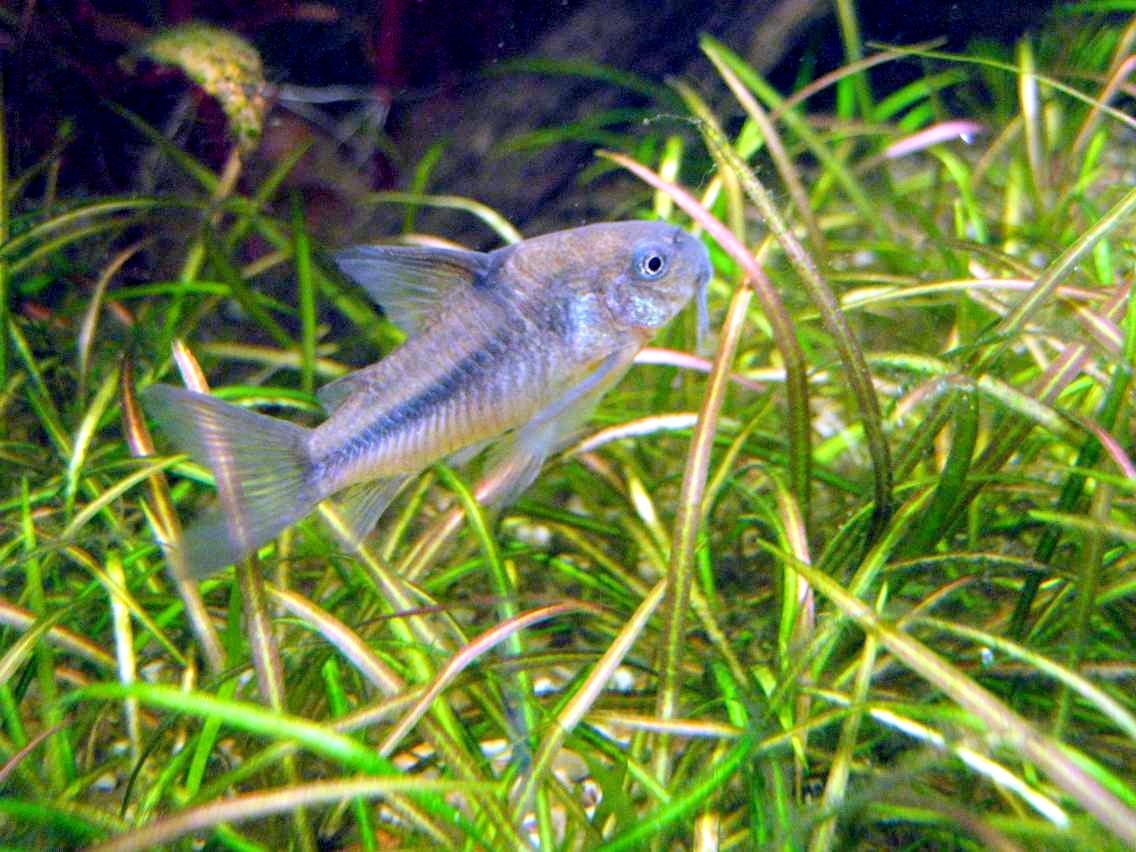
Most aquarium corys are Amazon stories. Natterer's Corydoras (Corydoras nattereri) is a coastal Brazilian fish with a blue-grey sheen and a dark lateral stripe, named for the Austrian naturalist Johann Natterer, who collected in Brazil in the nineteenth century. If you keep it like a Rio Negro Adolfoi — hot, tea-stained, discus-warm — you are applying the wrong river.
Blue on the Atlantic side
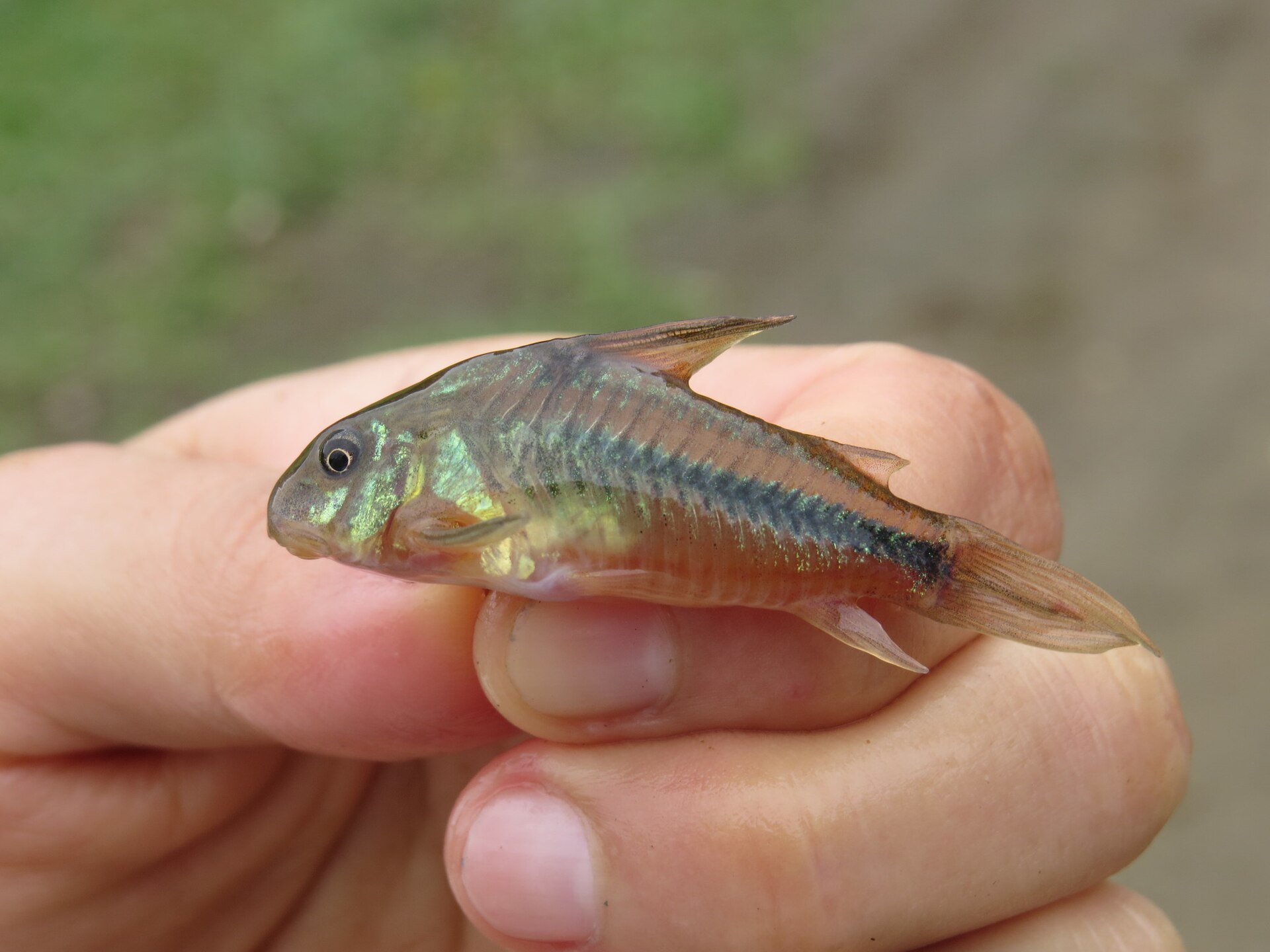
C. nattereri is native to drainages of southeastern Brazil, including waters in the Rio de Janeiro and Espírito Santo region, not the Purus, not the Negro, and not the Paraguay floodplain. Adults reach about 5–6.5 cm. The look is a cool silvery-blue to steel grey, paler below, with a darker band along the flank and relatively modest spotting compared with schwartzi. In good light the blue is real, not a filter. Fins are often translucent with some dusky marking. The snout is the short cory type.
It is not the emerald Brochis (green, deeper, more dorsal rays). It is not a “blue panda.” It is not C. paleatus, the peppered cory from further south, though both are more temperate-tolerant than Amazon blackwater fish. Shops sometimes file anything bluish under nattereri. Look for the SE Brazilian stripe-and-sheen combination, not for marketing.
Coastal streams, not igapó
Southeastern Brazilian coastal rivers can be cooler, clearer, and more seasonal than equatorial forest creeks. Some habitats are forested streams with sand and rock; others are slower. Oxygen is often good. Temperatures can sit lower than the 28°C people run for discus. That is the husbandry hint: nattereri appreciates clean, well-oxygenated water and does not need a heater slammed to tropical maximum. In Canadian homes, “room temperature” in summer may already be enough; in winter you still need a heater, just not a soup.
A tank with a cooler brief
Fine sand, because barbels still go into the bed. A long footprint for a group of six or more. Wood and plants are welcome; this species looks excellent in a greener, more Atlantic-forest layout than a leaf-stained Negro tank. Gentle to moderate flow helps gas exchange. A tight lid matters. Do not build a biotope with only botanicals and no plants if you then crank the heat — that is a different biome.
If you keep it with Amazon tetras that want 28°C, one of the two parties is in the wrong tank. Choose companions from similar climate, or keep nattereri in a species-focused cooler community.
Numbers on a steel-blue fish
A lone nattereri is a grey stick under wood. Six is the start; eight or ten shows the blue when they turn together. They forage as a unit on sand. Mixed groups with Amazon corys can work thermally if you pick a middle temperature, but you will blur the point of owning a coastal Brazilian species. If you only wanted “a cory,” bronze would be easier. If you wanted nattereri, keep nattereri.
Water that is clean first
Temperature 20–26°C is a sensible working range; many keepers sit at 22–24°C. Avoid chronic 30°C. pH 6.0–7.5. Soft to moderate hardness. SE Brazilian streams vary, but dirty water does not. High oxygen, modest nitrate, zero ammonia. Water changes should match temperature; dumping icy tap onto a 24°C tank is how you trigger a spawn or a shock, depending on luck.

What a steel-blue cory actually eats
Omnivore with a sand-sifting habit. Sinking foods, frozen insect larvae, brine shrimp, and crushed flake. Feed so the blue fish get a share. They are not otos. They are not a reason to neglect the siphon. Well-fed nattereri show more sheen; starved ones look like faded photos of themselves.
Companions from a different map
Think twice about pairing them with Negro specialists that want hotter, softer, stained water. Think well about other SE Brazilian fishes if you can source them, or about tetras and rasboras that accept 23°C. Rams and discus are a heat conflict. Goldfish are a waste and temperature conflict. Large cichlids are a predation risk. Other corys of similar size can share sand if the temperature compromise is honest.
Spawning in a cooler pulse
The T-position spawn still applies. A temperature drop with a large water change often helps, and in this species that drop may be closer to what the coastal rains actually feel like. Eggs on glass and plants. No parental care. Fry foods as for other medium corys. Do not assume Amazon breeding recipes copied from sterbai (often kept warmer) are optimal; they may still work, but nattereri is allowed to prefer cooler conditioning.
Barbels and the “hardy SE Brazil” myth
Being more temperate-tolerant than Adolfoi does not mean gravel is fine. Barbels still shred. Ich still appears, sometimes after a temperature swing you caused on purpose. Quarantine still matters. The blue sheen disappearing is your first visual alarm; it is not a lighting mode.
Who should keep Natterer's cory
Keep Corydoras nattereri if you want a steel-blue coastal Brazilian cory and you can run clean water on the cooler side of tropical. Skip it if your only tank is a 28°C discus setup or a gravel-bottom starter kit. Natterer’s name marks a real geography. The stripe and sheen mark the species. The sand still marks the family. Put those three together and you have nattereri, not “a cory from Brazil.”
Heaters, houses, and the Atlantic forest
In a Canadian winter the tank still needs a heater; it does not need 27°C. Set nattereri near 22–24°C and pick tetras that accept that, or keep the blue corys as the star of a cooler planted tank. Summer room heat may already be enough. Chronic high temperature with low oxygen is how the steel sheen goes matte and the stripe looks like a dirty mark. Open a window in the fish-house, increase surface ripple, and remember that Johann Natterer’s Brazil was coastal and seasonal, not a discus warehouse. The blue is the reward for getting the climate less wrong than the Amazon default.
They still work sand with barbels. Cooler is not permission for quartz gravel. Siphon, feed the floor, keep six or more, and the group will flash blue when they turn together — which is the whole point of owning nattereri instead of another bronze.
Explore other topics
Dive into more aquarium guides across the site.