

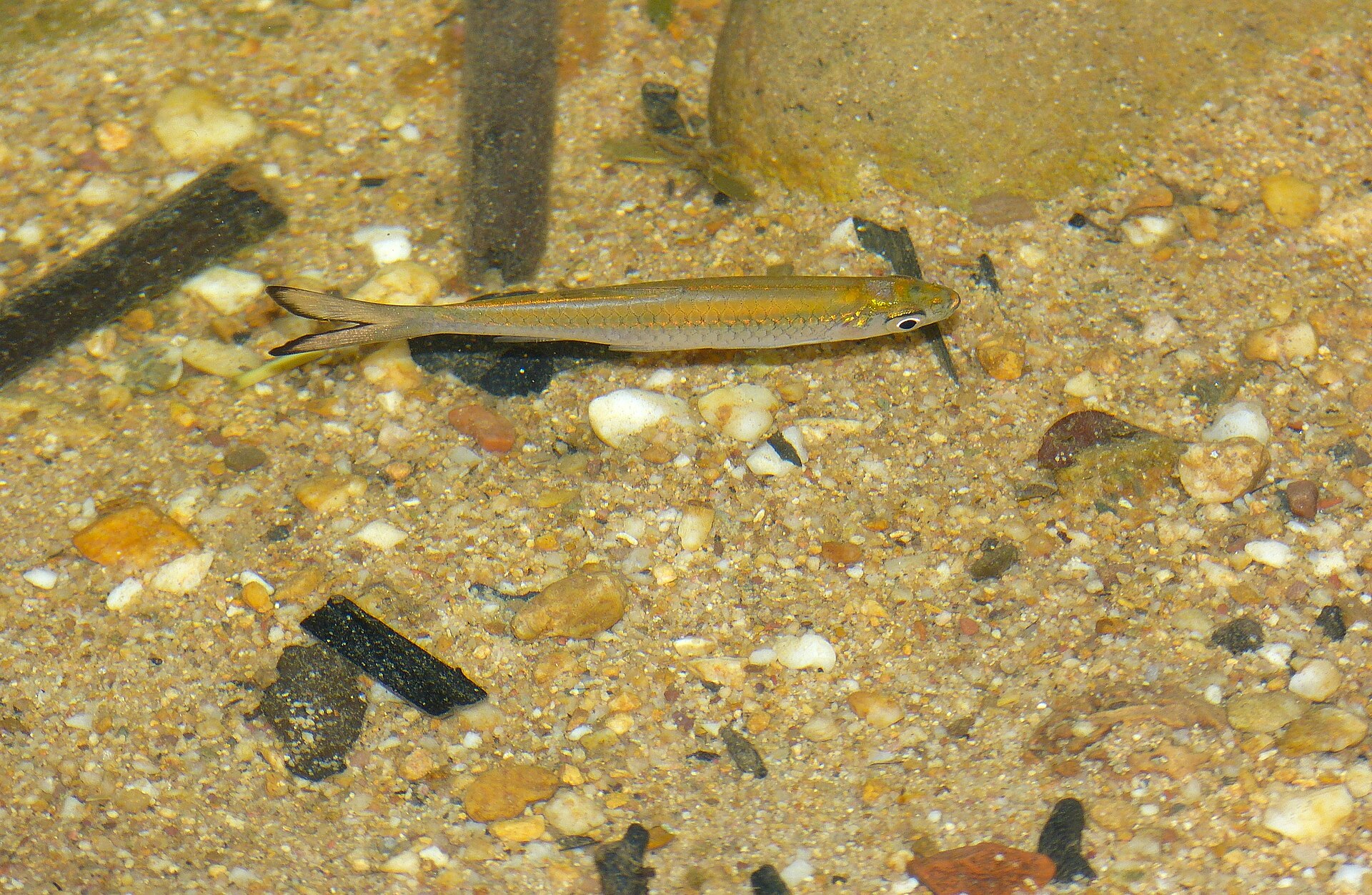
Rosefin rasbora is a fish of rivers, not of teacups. Rasbora dusonensis grows 10–12 cm, carries a silvery, streamlined body, and shows the pink to rose wash in the fins that the name promises — if the school is large, the tank is long, and the water is moving enough to keep a river fish oxygenated. It is a terrible choice for a 40 litre planted cube. It is a good choice for someone who already understands why scissortails need a lid and a commute.
The rose in the fins is condition, not a paint job. Stressed fish in a short, warm, overcrowded community look like generic silver cyprinids. Settled fish in a group flash colour when they turn. That is the whole aesthetic. There is no cave, no shell, no leaf-litter courtship like an apisto.
Rivers of Sumatra and Borneo, with room to travel
The species ranges through Southeast Asia including the Sumatra and Borneo region, in rivers and streams rather than stagnant peat. Water is typically fresh, not brackish, on the soft to moderate side, with more flow and more dissolved oxygen than a swamp. Schools use the open channel. Structure exists at the margins.
Your tank should read as a planted river: length, a current they can rest out of, plants that will survive a school this size (they may nibble and they will dig a little at the sand when feeding, but they are not eartheaters). Skip the limestone stack. Skip the snail shells.
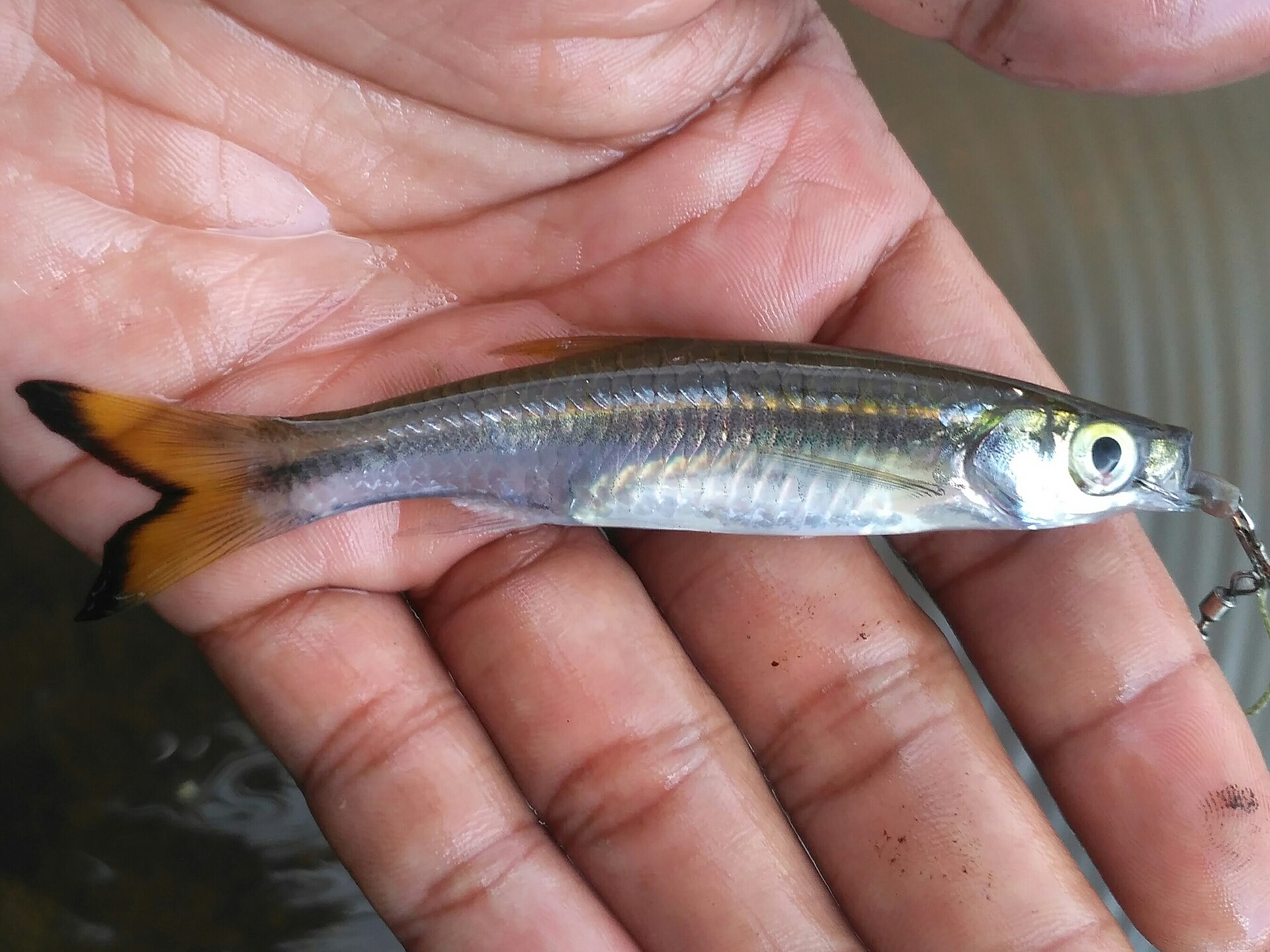
Silver body, rose on the turn
Look for a fusiform silver fish, a modest dark marking toward the rear in some individuals, and fins that pick up red-pink when the animal is mature and comfortable. Males may be slimmer; females rounder in the belly. The caudal is forked for speed, not for display like a greater scissortail’s bold spots, though both are river rasboras. Side by side, dusonensis is about the fin colour and the clean silver; caudimaculata is about the tail pattern and often a still larger frame.
Shop juveniles are often sold too small to show rose. Believe the adult size on the label. If you cannot house 12 cm schoolers, do not buy the cute 4 cm versions.
A hundred fifty litres is the start, not a boast
Start at 150 litres with a long axis. Filtration should turn the water over and keep the surface breaking. A lid is required; river rasboras jump. Plant the ends. Leave a swimming highway. Substrate can be sand; it does not need to be 8 cm deep. Wood is shade and current-break, not a sleeping cave they will occupy like a Julie.
A tall, short tank makes them pace the glass. A nano peat scape makes them look grotesque and stressed. Match the hardware to a 12 cm cyprinid.
On the cool side of tropical
Temperature 22–26°C. They do not want a 30°C Uaru vat. pH 5.5–7.5. Soft to moderately hard is acceptable for many captive fish; extremely hard alkaline water is a rift-lake recipe and will not make the fins pinker. Oxygen matters as much as pH. If the surface is still and the room is hot, they will hang at the top and you will think they have a disease.
Waste load from a school is real. Cycle the tank; do not guess. Cycling and chemistry are the unglamorous half of rosefin care.

Food for an athlete
Omnivore: flakes or pellets for medium cyprinids, frozen invertebrates, some plant content in quality foods. They will eat baby brine, but they should not be limited to it — that is a nano diet. Feed them like active barbs without the fin-nipping reputation. Two modest feedings beat one dump that fouls the river.
In a mixed tank they will outcompete glowlights and Boraras. That is a reason not to mix them, not a reason to underfeed the rosefins.
Keep a pack, pick peers that can swim
Six is a bare school; more is better. Compatible: other large peaceful rasboras, similarly sized barbs that are not thugs, robust tetras that can handle the current, Corydoras on sand if the chemistry overlaps. Incompatible: 2 cm peat fish, slow fancy guppies in a small tank, territorial cichlids, and anything that needs still blackwater at pH 5.
Do not house them with shell-dwellers. Do not house them with Altolamprologus. Those are alkaline rock problems. This is a river cyprinid problem.
Classic scatter spawning
Condition the group. Provide plants or mops in a dedicated tank. Remove adults after they scatter. Raise fry on small foods, then crushed flake. No parental guarding. If you find eggs in the display, shrimp and the parents will find them too.
Faded fins and frantic glass-pacing
Those two symptoms mean the tank is too small, the school is too small, or the water is stale. Ich follows temperature shock. Treat new fish with observation first. A rosefin that still schools and still shows colour in the fins after a year is a fish in the right river.
If the tail pattern is what you loved in the shop, you may have been looking at a scissortail or the greater scissortail. If you wanted red in a nano, you wanted a chili. Rasbora dusonensis is the rose in the fins of a real school, in a real length of water.
Why the fins stay grey in a pretty planted cube
A 60 litre aquascape with a dozen stems and a pair of rosefins is a common shop-inspired mistake. The fish pace, the fins never pink, and the owner adds more plants. The missing ingredient is commuting distance and a crowd. Length first. School second. Then the rose shows when they bank as a group. If you already own a cube, this is the wrong rasbora; look at Trigonostigma instead and wait until you have a long tank.
Seasonal thinking helps. In a river, flow and temperature shift. In the tank, a slightly cooler winter rest at 22°C with high oxygen and a warmer, well-fed summer can bring a spawn. That is not a discus heatwave and not a peat-swamp simmer. Keep a thermometer where the school actually swims, not only at the heater. A lid condensation drip that chills one corner will park nervous fish in the other corner until the rose is a memory.
Explore other topics
Dive into more aquarium guides across the site.