

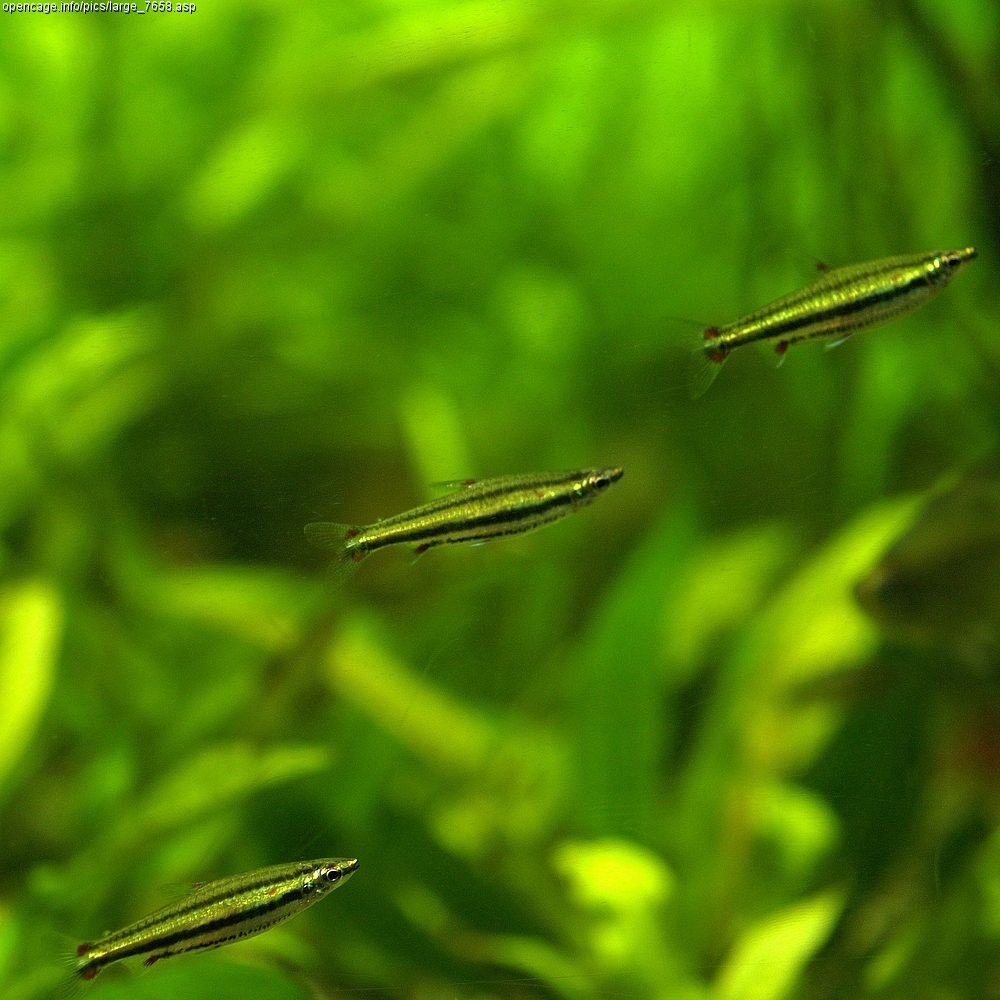
Three stripes, and more colour than the family is supposed to have. Nannostomus trifasciatus is the pencilfish people photograph: red, gold, and three clean longitudinal lines on a 4–5 cm Amazon characin. It is also the one with a reputation for nipping when the school is too small or the tank is too tight. The three-lined pencilfish is not a mean fish. It is a midwater schooler that uses its mouth on rivals and, sometimes, on slow neighbours with long fins. Keep twelve, keep plants, keep the water soft, and the nipping stays inside the school as spark and display. Keep four in a tank with a betta, and you will write a different review.
Males show more red in the fins and a sharper pattern; they are the nippers-in-chief when bored. Females are rounder, a little less gaudy. Both sexes carry the three lines that name them. If the lines are muddy, the fish is stressed, recently moved, or sitting in the wrong chemistry. Do not invent a new colour form. Fix the tank.
Amazon midwater, among the stems
Nannostomus trifasciatus ranges through Amazonian waters in Brazil, Guyana, and neighbouring countries, in vegetated, slow, often stained creeks and lakes. They school in the middle, among plant stems and drowned branches, taking small invertebrates. They are not surface hangers like eques and not quite as horizontally conventional as beckfordi in every population, but they swim in a more typical characin attitude than the diptail. Light is dappled. Predators are many. The school is the defence.
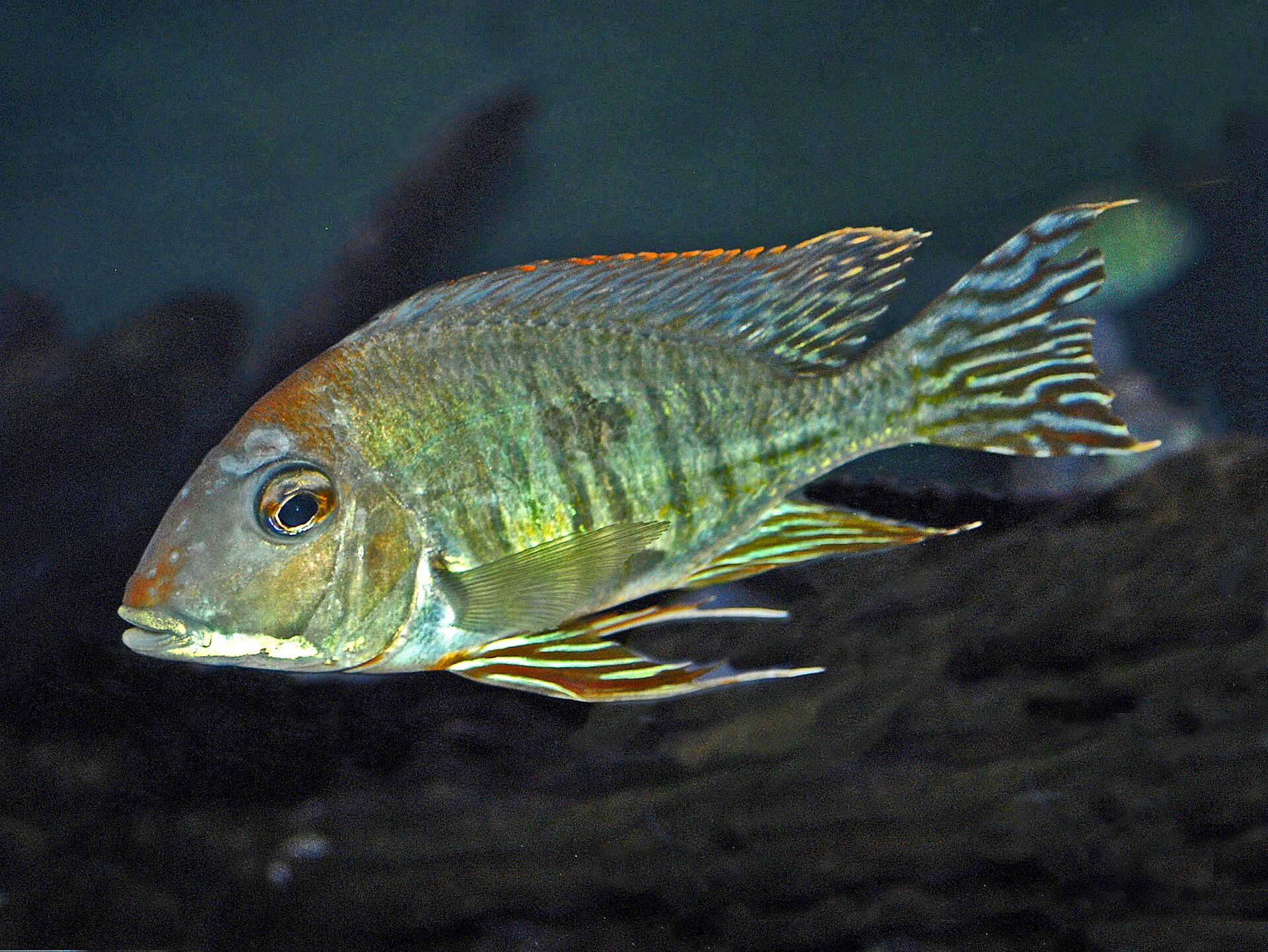
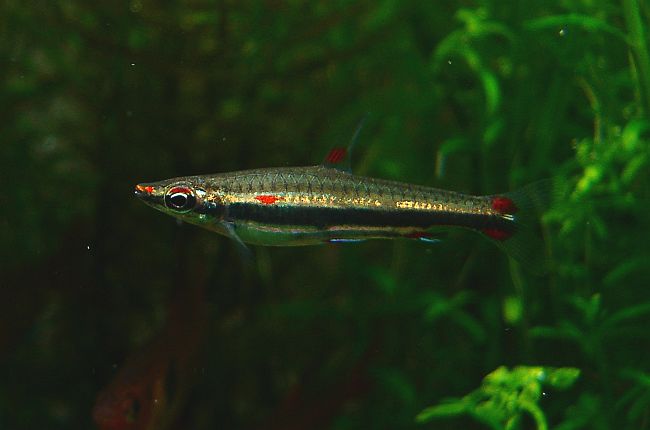 Nannostomus trifasciatus. Photo: Tsunamicarlos at en.wikipedia / Wikimedia Commons (Public domain)
Red is not a paint, it is a rank
In a large school the dominant males colour hard — red in the caudal and anal, gold on the body, stripes like ruled lines. Subordinates stay duller. That is why a photo of one male does not match your six pale fish in a new tank. Give them a month, a crowd, and live food. Shop fish are often mixed and washed out. Look for intact fins and a belly, not for show colour under supermarket LEDs.
There are aquarium strains selected for more red. They still need the same water. They still nip if you starve them of company.
Stems they can vanish into
Sixty to eighty litres for a dozen, planted with stems they can dart through: Hygrophila, Rotala, moss walls, floating plants to cut glare. A dark floor. Gentle sponge filtration. They use more of the water column than eques, so a bit of open midwater helps you see them — but a completely open tank makes them nervous and more likely to pick at tank mates. Balance clutter and a viewing lane.
Cover the tank. Cover the intake. They are small enough to go up a pipe and foolish enough to jump at a tap on the glass. Lighting moderate. They look their best in slightly stained water against green stems, not in a white-sand chromed layout.
Soft, warm, and not optional

pH 5.5–7.0, soft water, 24–28°C. Hard alkaline tap bleaches them and shortens the life of spawns. RO blend if you must. Tannins welcome. They are a little less hardy than beckfordi in poor water and a little more colourful when the water is right. Weekly matched changes. They advertise bad chemistry with faded stripes faster than many tetras — use that. If the three lines vanish, test before you shop for a new “better strain.”
Tiny prey, frequent offerings
Cyclops, baby brine, daphnia, micro pellets, quality crushed flake. They will take dry food more readily than some pencils once settled, but frozen and live foods are how you get the red. Feed twice a day in the midwater. If rummynoses or hatchetfish beat them, add a second feeding spot. Males that spend the day displaying still have to eat. Thin colourful fish are a contradiction that ends in a death.
Do not feed large bloodworms as a staple. Mouths are small; guts are small.
The nipping conversation
A school of twelve or more usually keeps aggression internal: males fence and chase and then rejoin the group. A handful of males with no females and no numbers will pick on a gourami, an angelfish’s trailing fins, or a slow betta. That is predictable. Stock the pencils as the school they are, and choose tank mates that are short-finned, similarly sized, and unbothered: small tetras, other pencils in a big tank, Corydoras, shrimp. Long-finned show fish are the wrong mix. Large cichlids will eat the pencils. Fast barbs will stress them and may nip back.
They are not community villains. They are understocked pencils in the wrong company.
Eggs among the stems
Scatterers. Java moss and stem plants collect eggs. Adults eat them. A dedicated breeding tank with very soft water and the pair or group removed after spawning is the usual method. Fry need infusoria. Colour in the young takes time. If you keep a densely planted display you may find the occasional survivor. That is a bonus. The goal is a healthy adult school that still has three stripes on Friday.
Wait for the lines to rule themselves
Quarantine together in planted, soft water. Feed cyclops. Watch for ich. Do not add six trifasciatus to a hard-water livebearer tank as jewellery. Two weeks, then a green, stained, covered aquarium with a real school.
One more stocking error is mixing them with hatchetfish in a short tank and then deciding the pencils are “aggressive.” The hatchets own the surface; the pencils own the stems; in 50 litres those layers collapse into one argument. Give each group a long tank or skip the hatchets. The three-lined pencilfish is not a surface specialist and not a bottom dwarf. It is a stem fish. Decorate like that and the nipping stories get quieter.
Nannostomus trifasciatus is the pencilfish that looks like a luxury fish when the husbandry is ordinary South American planted-tank work: softness, plants, numbers, microfood. The luxury was never a special light. It was three lines, in a crowd, with enough red to argue about, and nowhere else they needed to nip.

Explore other topics
Dive into more aquarium guides across the site.