

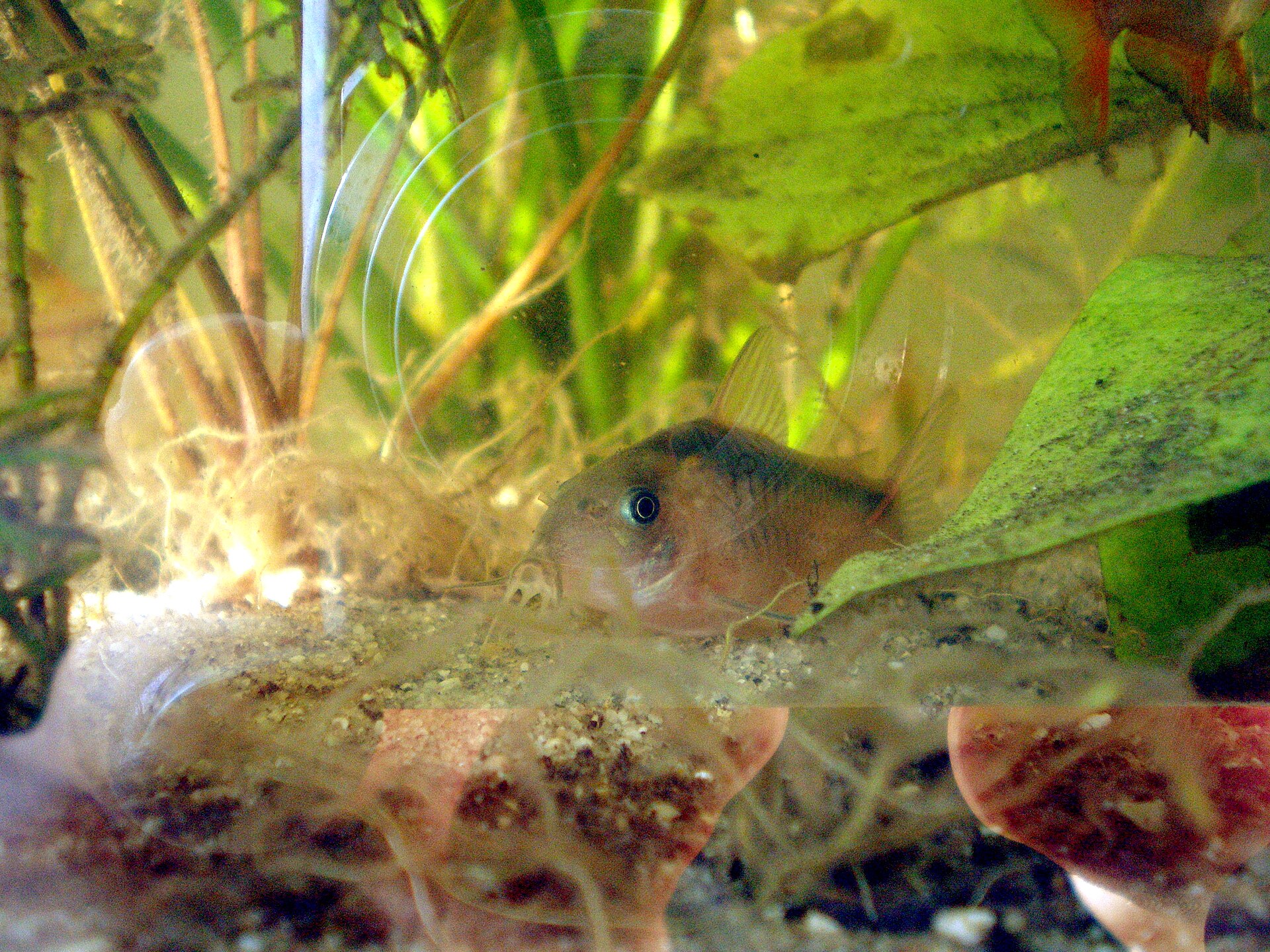
Put a rusty cory next to another rusty cory and many aquarists shrug. Zygatus Corydoras (Corydoras zygatus) is the one with the darker cape: a warm-bodied Amazon fish whose mask and dorsal saddle contrast more strongly than on C. rabauti. The name is not a colour morph. If your “rabauti” group contains two saddle types, read this page before you spawn them.
Rust plus a dark yoke
C. zygatus is a Peruvian Amazon species (Huallaga / Ucayali region in hobby and collection notes), adult size about 5–6 cm. The body is orange-brown to olive-rust. A dark mask through the eye and a dusky-to-blackish saddle over the nape and dorsal area give a two-tone look that rabauti usually lacks. Fins may show dusky colour. The snout is short. From above, a good zygatus looks like someone laid a dark finger along the spine of a copper fish.
Juveniles can be less obvious. Adults in poor water lose the contrast and then everyone calls them rabauti. Side-by-side photos in the same tank are worth more than memory. They are not Brochis splendens (green, tall, bigger). They are not Adolfoi (ivory, orange blaze, Negro saddle logic).
Peruvian tributary floors
Zygatus sifts sand in warm forest streams and river edges. Water is typically soft and tropical. Wood and leaf debris are normal. It is a group forager with the usual aerial gulp. Geography overlaps the same broad Amazonas world as rabauti, which is why mixed rusty boxes exist. Husbandry overlap is real; identity is not optional.
A tank that emphasises the cape
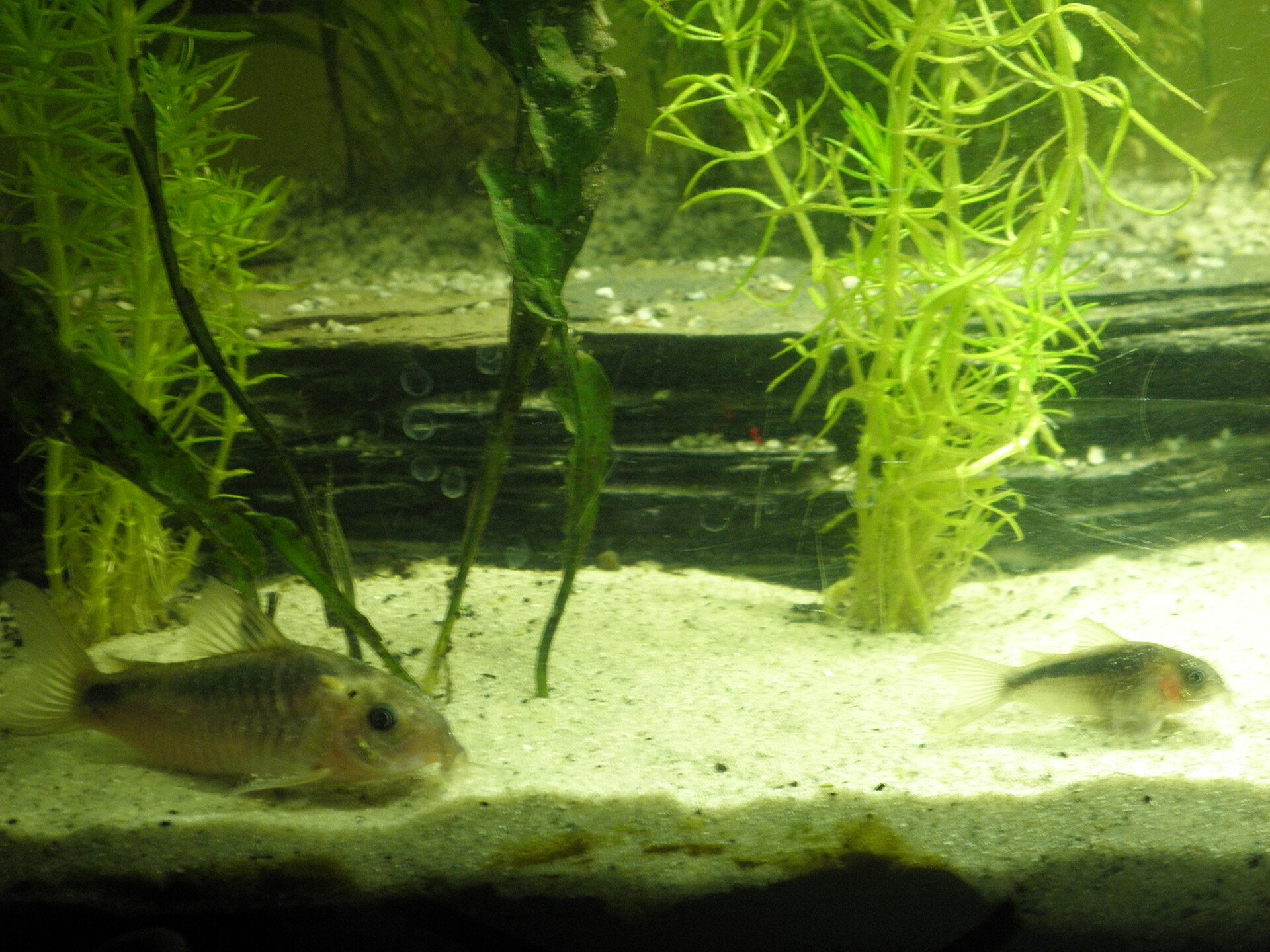
Fine sand, wood behind, open front. The dark saddle photographs best over pale sand with a dark backdrop. 80+ litres, long, for six or more. Plants optional. Lid and intake guards required. Do not “enrich” the tank with lava rock. Zygatus will forage into every grain you give it.
Huallaga chemistry without slogans
22–27°C, pH 6.0–7.5, soft to moderate, zero ammonia. Slightly stained water is fine. Extreme blackwater is unnecessary. Heat plus waste is how saddles fade and barbels inflame. If you keep zygatus with discus, feed the catfish on purpose.
Cape-to-cape grouping
Six zygatus, not two rusties of uncertain name. They shoal and sift. Mixed with rabauti they will likely mill as one rusty cloud, which is behaviourally okay and nomenclaturally messy. If you care about the species, keep a zygatus-only troop. If you only care about copper motion on the sand, at least admit the bag was mixed.
Food
Sinking granules, frozen worms, small crustaceans, crushed flake. Omnivore. Evening feeding if tetras are greedy. A fat zygatus holds contrast better than a thin one. They will not live on algae.
Who shares a cape

Peaceful Amazon tetras, dwarf cichlids, other corys in proper numbers. No predators. No gravel. Rabauti can share a large tank; then you must live with ID ambiguity in the next generation.
Breeding without blurring rabauti
T-position, eggs on glass, cooler water change. Remove eggs. Raise fry separately from any rabauti spawn if you intend to sell named fish. Hybrids will look like “sort of rusty with a maybe saddle,” which is how the trade got confused in the first place.
Barbels in Peruvian water
Saddle fading: water, diet, stress. Barbels: substrate. Ich: white dots on rust. Quarantine wild Peruvians. Young and old fish in the same photo look different — that is growth, not two species, unless the saddles truly diverge.
What a Huallaga afternoon looks like in a tank
When a zygatus group is settled, they do not “clean.” They work a sand bar. One fish noses in, another waits a body-length away, a third makes the useless dash to the surface for air that all callichthyids make. The dark yoke is easiest to see at that moment, when the back breaks the pale sand. If your fish only appear at lights-out, the room is too bright or the troop is too small. Add floating plants before you add another rust-coloured species “for company.” Company for zygatus is zygatus.
They will rest in a pile. That pile is not a disease. A fish off to the side, clamped, ignoring food, is the one to watch. Because the body is already two-tone, a sick zygatus can look like a colour morph. It is not. It is a fish that has stopped using the sand.
Buying without paying for rabauti twice
Ask the seller to photograph the dorsum in the bag, from above. You want the cape. Ask whether the group is mixed. If they do not know, price it as mixed rusty corys, not as a named Peruvian species. Captive-bred zygatus exist in specialist circles; wild fish need a week of eating in a quiet tank with sand and a sponge filter before they meet tetras. Reject shredded barbels. Reject a belly that looks like a knife edge. A beautiful saddle on a starving fish is still a starving fish.
Once home, drip them if the shop water was hard and yours is soft, or the reverse. Do not dump a bag of rust into a high-nitrate community and decide the species is “delicate.” The species is a sand-working Peruvian cory. The tank was already a mess.
Day-to-day maintenance that is not a slogan
Siphon the sand the way you would dust a shelf: often, lightly, without carving canyons. Mulm against the yoke is still mulm against the barbels. Match temperature on water changes; a surprise cold dump may spawn them or shock them, and you will not know which until morning. If you use botanicals, replace them before they become anaerobic pockets. Zygatus will forage into those pockets because that is where food smells live.
Record which fish has the strongest saddle. That individual is your ID anchor when a new “rabauti” arrives and someone wants to add it to the group. If the new fish has no yoke, it does not belong in the zygatus article, or in the zygatus tank, unless you have accepted a mixed rusty cloud.
The cape is the point
Keep Corydoras zygatus because you want the dark-yoked rusty cory from Peru, on sand, in a group. Keep C. rabauti if you want the more uniform copper. Do not keep one of each and write one article in your head. The saddle is the species. The rest of the rusty care is where they overlap — and overlap is not sameness.
Explore other topics
Dive into more aquarium guides across the site.