

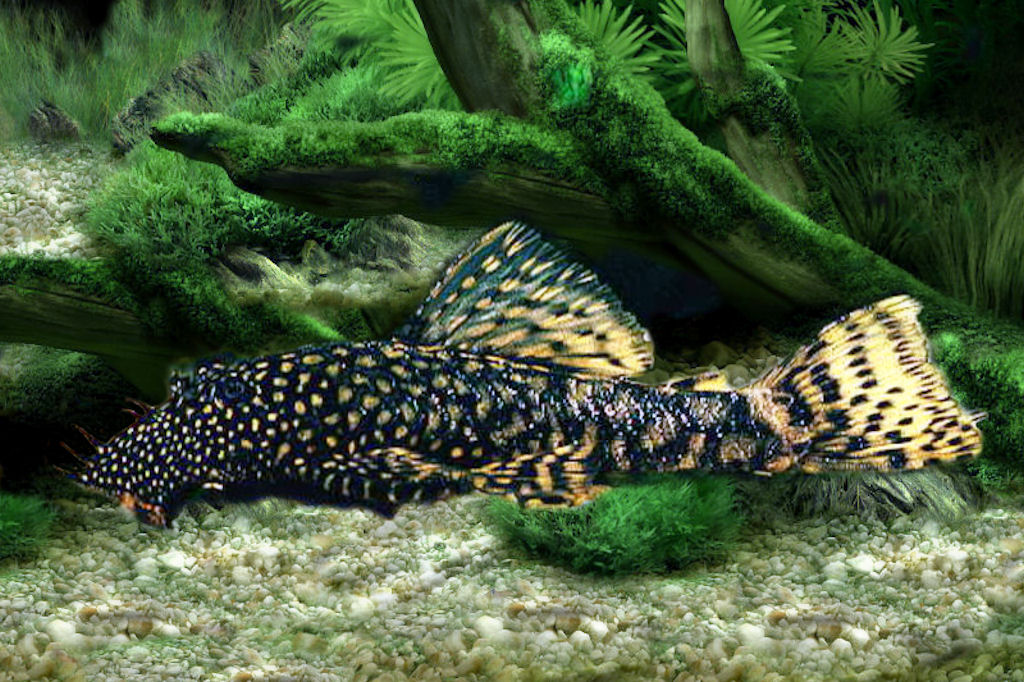
The bristles on the snout of a male Ancistrus are the easiest sexing kit in the catfish aisle. Ancistrus cirrhosus — the bristlenose commonly attached to that name in the hobby — is a small wood-eating, algae-grazing loricariid from South America that stays in the 12–15 cm range instead of becoming the 60 cm monster people still buy by accident. It is the pleco you can actually keep in a home aquarium. That does not make it a decoration. It needs wood, vegetables, caves, and a tank that is already cycling. It will also breed whether you intended it to or not, once a male owns a hole.
Taxonomy in Ancistrus is a swamp. Shop labels say cirrhosus, common bristlenose, bushynose. Colour morphs — albino, super red, calico — are still the same animal in terms of care. If your fish has a bristled snout as a male and stays small, you are in the right family of husbandry. If it is already 20 cm with no bristles, you may have a different pleco and a different future.
Wood in the water is not optional furniture
True bristlenoses come from South American flowing and still waters where submerged wood is part of the diet as well as the landscape. They rasp aufwuchs and they rasp lignum. A tank without bogwood is a tank where they will rasp plants, silicone, and each other. Put real wood in. They will spend hours on it. That is the species working, not the species being bored.
They are not hillstream fish, but they like some current and a lot of oxygen. They are nocturnal-leaning; you will see more of them after lights-out unless the tank is densely furnished enough that they feel safe by day.
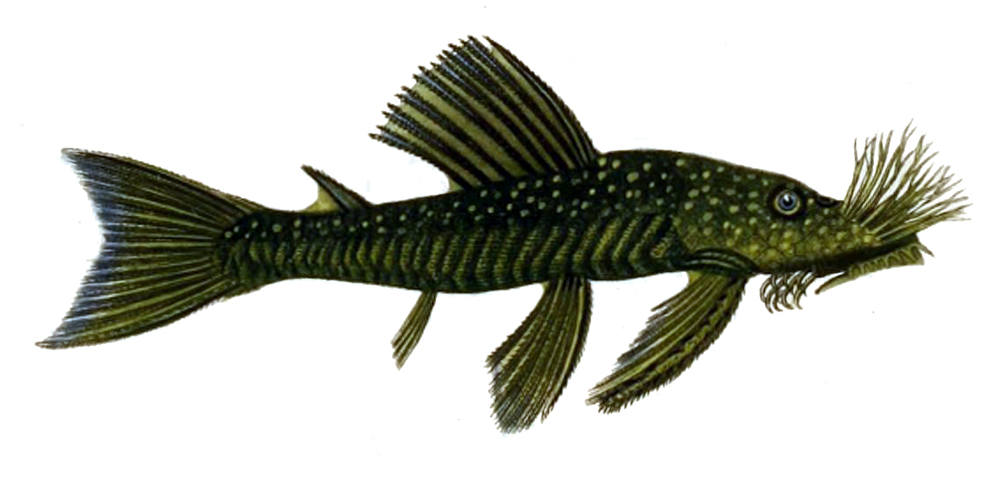 Ancistrus cirrhosus. Photo: Paul Louis Oudart / Wikimedia Commons (Public domain)
Tentacles mean male
Mature males grow fleshy tentacles on the snout and along the head. Females have fewer, shorter bristles or a mostly clean snout, and a wider body when viewed from above. Adults 12–15 cm are typical; some strains stay smaller. The odontodes on the sides of a male’s head can look spiky. That is normal. Juveniles of both sexes look similar. If you want a pair, buy several young and rehome extras, or buy a known male and female.
Albino and long-fin strains have the same needs and sometimes a little less vigour. Long fins tear on sharp décor. Smooth wood and caves with rounded rims help.
A cave he can advertise from
Eighty litres is a fair home for one adult or a pair; more if you want fry growing out in the same tank. Provide at least one cave per male — coconut, clay, PVC hidden behind wood. He will sit in the entrance. She will visit. That is breeding architecture even if you never see eggs. Sand or fine gravel; they do not need a deep sand bed but they do sift a little and they do produce a lot of waste that lodges in coarse gravel.
Plants can stay if they are robust or attached to wood. Delicate carpets may be rasped. Anubias and Java fern are usually safe. Filter intakes must be covered; a bristlenose can lodge in a pipe, and fry definitely will. They jump poorly compared to killifish, but a cover still stops a midnight exploration onto the floor.
They are messy. Overfilter. A sponge on the intake grows extra grazeable film. Canister or hang-on, your choice, as long as you clean it before it becomes a nitrate factory.

Soft to middling, warm enough, never filthy
Temperature 22–26°C, pH 6.0–7.5, soft to moderately hard water. They are more tolerant than otos and less tolerant of filth than a livebearer. Weekly water changes are part of keeping a fish that eats vegetables and wood and turns both into mulm. Ammonia from a neglected canister will hit them on the floor first.
They do fine in many planted community tanks of South American or general soft-water theme. They do not belong in a Malawi tank, not because they cannot survive the hardness for a while, but because mbuna will harass them and the wood-and-veg diet does not match the rift-lake story you should be telling in that aquarium.
Green food every week, not as a rumour
Algae in a mature tank is a start. It is not enough. Offer sinking wafers with vegetable content, blanched courgette, cucumber, sweet potato, and the occasional protein wafer or frozen food. Too much protein and you get fat fish and dirty water; too little and they rasp plants to rags. Wood is always there. Some keepers add alder cones and leaves; fine, but those are not a substitute for actual vegetable feeds.
Feed in the evening. Check in the morning that the zucchini is gone or needs removing. A bristlenose that ignores vegetables and only begs at the glass for leftover pellets is being trained badly by you. Put the veg in anyway.
One male, a hole, a neighbourhood
Males defend caves against other males. In a small tank, one male. In a large, wood-rich tank, more than one if each has a hole out of sight. They are peaceful toward fish that are not in the cave. Tetras, rasboras, Corydoras, dwarf cichlids that use different caves — all common roommates. They may eat shrimp fry. They will not eat healthy adult fish. Large aggressive cichlids will bully them off the wood and starve them of grazing time.
Do not buy one bristlenose to solve algae in a tank that has no algae and no wood. You will have a hungry catfish. Fix the tank, then add the fish.
Eggs in the doorway
The female lays in the cave. The male guards and fans. You will see him with a white or orange clutch on the ceiling of the pot. He will not eat for a bit. Do not “help” by pulling him unless you are a breeder with a plan. Fry emerge and stay on surfaces, tiny versions rasping film. They need biofilm and finely mashed vegetables. A mature tank raises some. A bare tank raises none. You will soon have more bristlenoses than you intended. That is the species. Have a rehoming path. Clubs and shops that already sell them will sometimes take tank-bred young.
The pleco that stays the right size
Quarantine in a cycled tank with wood and a cave, not in a bucket. They usually eat immediately. Watch for skinny imports — sunken belly, no faeces — and offer veg and a bit of protein. Ich is less common than in scale-less looking fish but still happens after chills. Injuries from other catfish in a crowded shop tank heal in clean water.
A bristlenose given wood, vegetables, a cave, and filtration that matches its mulm will live a long time and decorate the glass with a bristled face at night. That is the contract. Break it by buying a “common pleco” instead, or by starving an oto and calling it a bristlenose, and you are back in the part of the hobby that does not read the Latin. Ancistrus cirrhosus, or whatever bristlenose you actually have, was the easy loricariid all along — easy because the adult still fits in the tank you own.
Explore other topics
Dive into more aquarium guides across the site.