

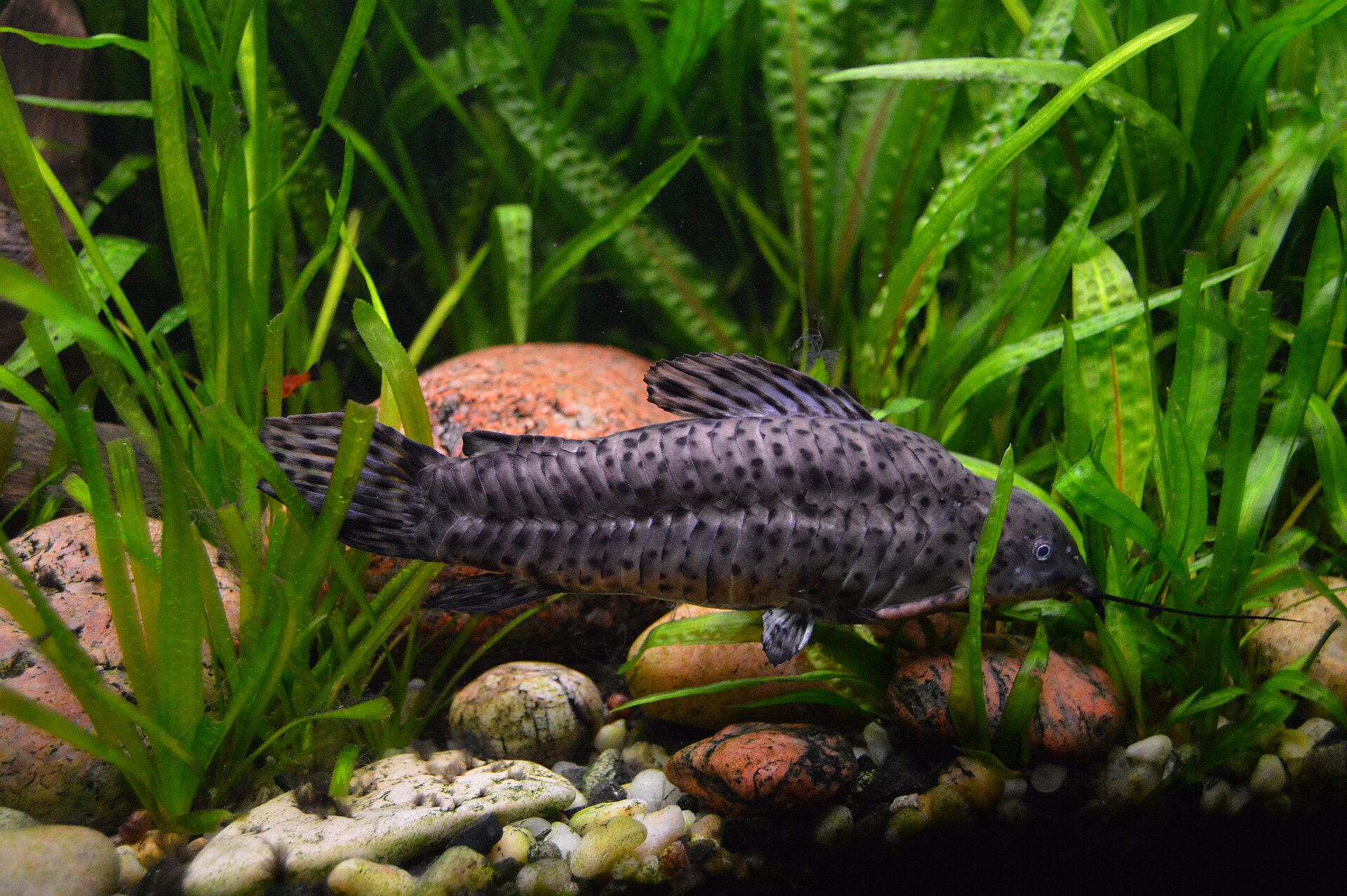
The brown hoplo is a floodplain specialist with a habit of jogging to the surface for a gulp of air. Megalechis thoracata (you will still see the old name Hoplosternum thoracatum on older lists) wears two rows of bony plates and a mottled brown-and-cream pattern that can look spotted, marbled, or almost chocolate depending on mood and light. Adults reach about 12–15 cm. That is a medium armoured catfish of seasonal pools, not a giant pimelodid and not the larger port hoplo. It is also not a rock-rasping pleco. If you keep it like a still-water, leafy, warm callichthyid that is allowed to breathe atmosphere, it makes sense. If you keep it like a hillstream rubberlip or like a shovelnose, it does not.
Flooded grassland, not a mountain riffle
Brown hoplos range widely in northern and central South America — Orinoco, Amazon tributaries, Guianas — in places that get shallow, warm, and low in dissolved oxygen when the dry season squeezes water into pools. The ability to use atmospheric air via a modified gut is how they survive those pools. When the rains return, they spread into flooded forest and grass. An aquarium that never lets them reach the surface is a trap. An aquarium that is ice-cold and torrential is the wrong biome.
They work the leaf-litter and mud interface, poking for insect larvae and worms. Vegetation, fallen grass, and dim light are more honest than a bleached sand scape under LEDs. Soft, tannin-stained water is typical but they are not as chemically fussy as some blackwater tetras, provided oxygen at the gills is decent and the surface is open for gulps.
Do not confuse the habitat with the coastal marsh world of the bigger Hoplosternum littorale. Brown hoplos are the smaller, often more boldly patterned Megalechis. Mixing the two under the single shop name “hoplo” is how people undersize the tank for a port hoplo or overheat a setup meant for something else.
Mottled armour and a face made for poking mud
The body is stocky, compressed side-to-side compared with a flattened pleco, and fully plated. The caudal fin often shows a reddish or rusty wash in good colour. Females look fuller; males in breeding condition can show more intense colour and a slightly thicker pectoral spine. Juveniles are already clearly hoplos, not miniature sucking-mouth fish.
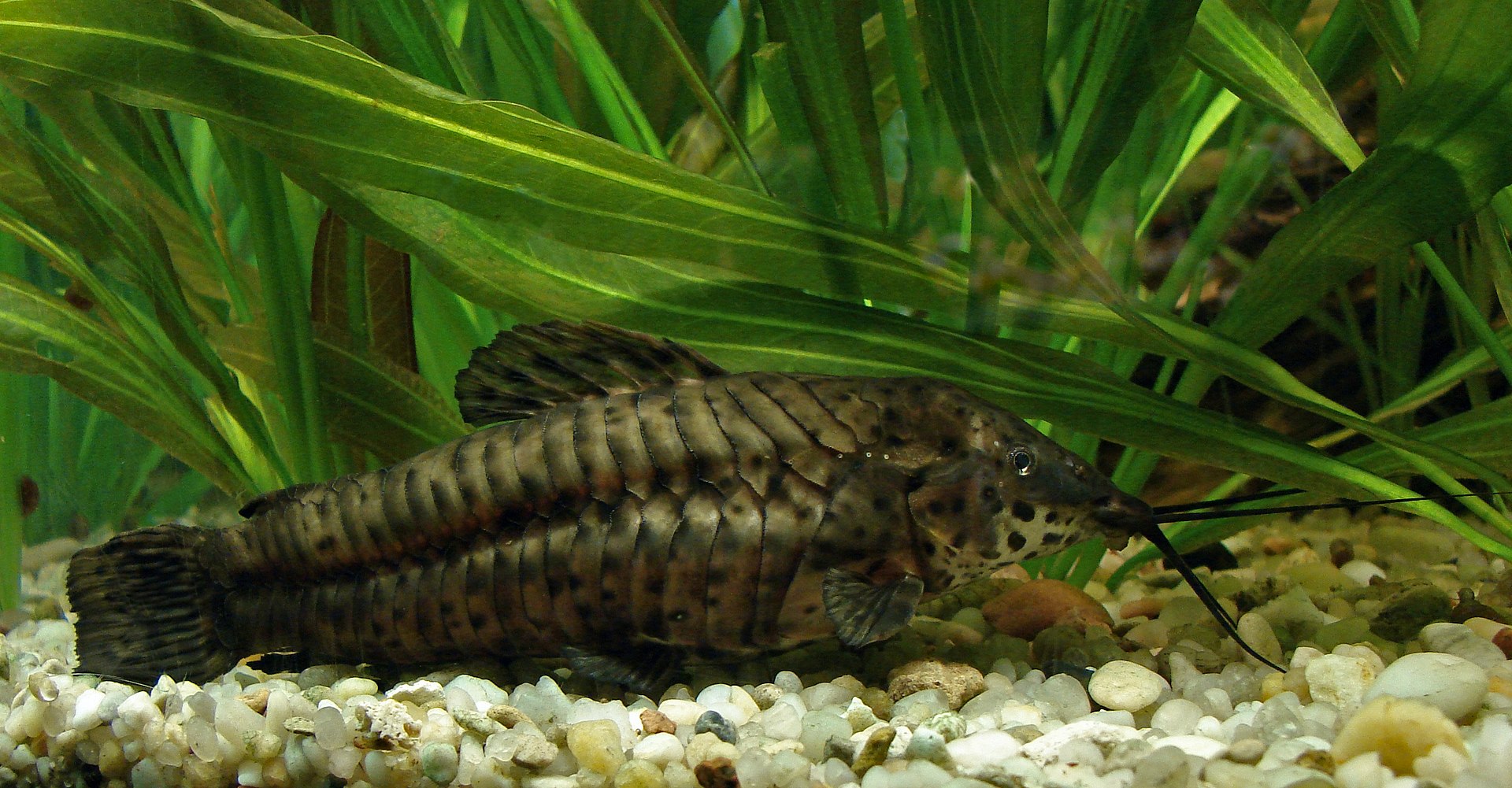
Barbels are short compared with a pimelodid. Eyes are modest. The fish will rest on the bottom or hover-walk with pectoral fins. A healthy brown hoplo has a rounded belly, intact plates, and a regular trip to the surface that looks casual, not panicked. Constant desperate gasping plus sitting on the bottom with clamped fins is bad water, not “normal air breathing.”
A dim, planted floor with a clear path up
A tank of about 80–100 litres suits a small group if the footprint is long. Soft sand or fine rounded gravel, leaf litter, and wood create foraging ground. Floating plants or a cover of frogbit give shade and give males a ceiling for bubble nests. Leave an opening at the surface; a completely sealed lid with no air gap makes gut-breathing harder and traps humid air.
Filtration should be gentle to moderate. They are not hillstream fish. A sponge or a baffled output keeps fry and nests from being sucked apart if you ever breed them. Height matters only because they must reach air. Decor that blocks the entire surface is a mistake.
Keep the heater from turning the shallows into a hot skin of water. Brown hoplos use the top for air, not as a sauna.
Warm pools, not cool torrents

Temperature 22–28 °C is the working band, with many keepers in the mid-20s. pH 6.0–7.5 is comfortable. They handle low oxygen better than rubberlips because they can gulp air, but that is not a licence for filth. Ammonia still burns gills. Nitrate should not be a swamp. Regular water changes keep a leafy tank from turning into a bacteria bloom that coats the surface and blocks the gulp.
If you use RO, remineralise to a soft-but-not-empty mix. If you use hard tap, they often adapt if you change water gradually. Sudden pH swings during a nest are how eggs die.
Worms, insects, and sinking foods
Brown hoplos are omnivorous foragers with a bias toward meaty small items: frozen bloodworm, chopped earthworm, quality sinking pellets, and some vegetable matter. They will scavenge, but a group of tetras can still outcompete them at feeding time. Drop food at dusk and watch the plates. A sunken belly on a plated fish is easy to miss if you only glance from above.
They are not algae-eaters-for-hire. A green glass wall will not feed M. thoracata. They are not wood-eaters. Offer a menu that matches a floodplain insectivore-omnivore.
A sociable plated fish among similar-sized neighbours
They do well in a small group of their own kind. Peaceful, similar-sized companions that share warm, leafy water can occupy midwater. Avoid fin-nipping barbs and anything large enough to see a 12 cm hoplo as a snack. Avoid cool-water hillstream fish. Avoid giant catfish. This is a community-scale callichthyid for a calm tank, not a predator exhibit.
Incoming fish should rest in a simple, warm, planted box with surface access until they eat. Shipping bags that go stale kill air-breathers in a special way: they run out of both dissolved oxygen and usable air space.
Bubble nests under floating plants
Males of Megalechis build a nest of bubbles mixed with plant fragments at the surface, often under floating leaves. The female lays eggs into that nest and the male guards. This is one of the more achievable catfish spawnings in a home tank if you have floating cover, softish water, and no nest raiders. After rains (a large water change) and extra live or frozen foods, a pair may try.
Fry hang at the surface at first. They need infusoria then tiny sinking foods. The male can be left with the nest if the tank is calm; remove other fish if they eat eggs. This breeding story is nothing like a bristlenose cave and nothing like a pimelodid that never spawns in captivity.
Brown versus port, and why the name “hoplo” is lazy
If the fish is heading toward 20 cm, looks plainer and greyer, and came in as “hassar” or “atipa,” you may have Hoplosternum littorale, the port hoplo — a bigger, heavier animal with a different adult footprint. M. thoracata stays smaller and usually shows more mottling. Buy the species you can house. Related: port hoplo, chemistry, cycling.
Explore other topics
Dive into more aquarium guides across the site.