

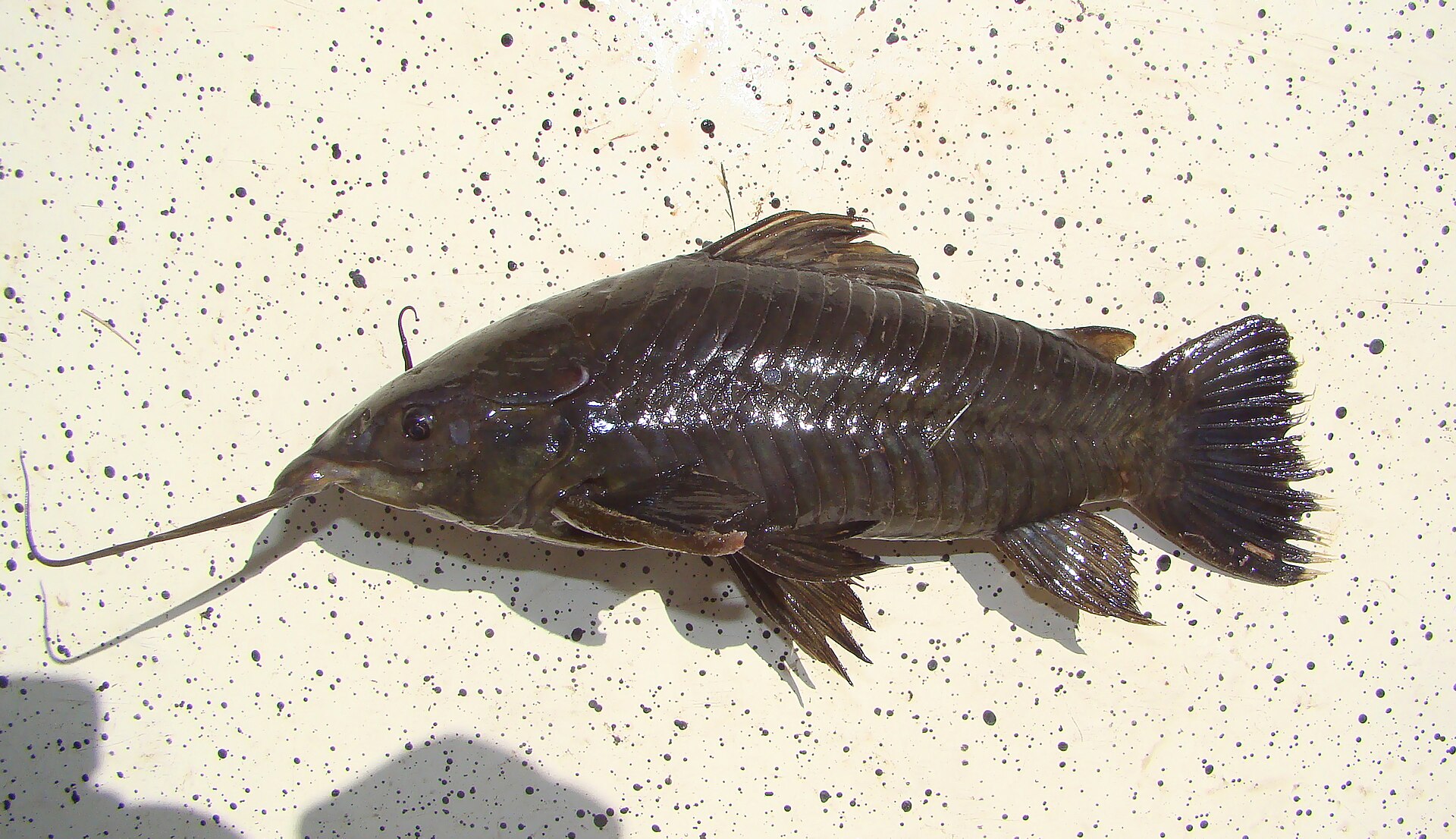
In Trinidad they fry it. In the Guianas it is hassar. In the trade it is the port hoplo. Hoplosternum littorale is the widespread, robust, armoured catfish of South American lowlands from the Orinoco through the Amazon to the Paraná, including coastal drainages and brackish-tinged estuarine edges in some populations. Adults commonly reach 18–24 cm. That is a serious plated fish with a food-fish history, not the smaller mottled brown hoplo, and not a metre-long pimelodid. It gulps air, builds a floating nest, and turns a modest community tank into an overcrowded box if you believed the shop photo of a 8 cm juvenile.
Coastal plains, ditches, and the edge of the tide
Port hoplos use slow rivers, canals, flooded savanna, and muddy pools. They are famous for surviving water that would suffocate a trout. The gut-breathing habit is the adaptation. Some populations wander into slightly brackish water; the species is still a freshwater callichthyid, not a marine ariid. Do not keep it in a reef tank. Do not assume it needs salt. Do assume it needs a path to air and a lot more space than a dwarf plated catfish.
The natural diet in those ditches is whatever the mud offers: insects, detritus, plant mush, small crustaceans. People harvest them because they grow fast and taste good. An ornamental keeper is taking a food-fish species and asking it to live in glass. That only works if the glass is large, warm, and open at the top.
Compared with Andean rubberlips, this is still, warm, muddy water. Compared with Megalechis thoracata, this is a bigger, often drabber, more heavily built animal with a wider geographic and cultural footprint.
A grey-brown tank, plated, with a blunt head
Colour is typically olive-grey to brown, less carnival-spotted than a brown hoplo, though individuals vary. The plates are obvious. The head is broad. The caudal fin may show a pale band. A well-fed adult looks like a small rugby ball in armour. That bulk is why a “community hoplo” tank fails: the fish is simply large.
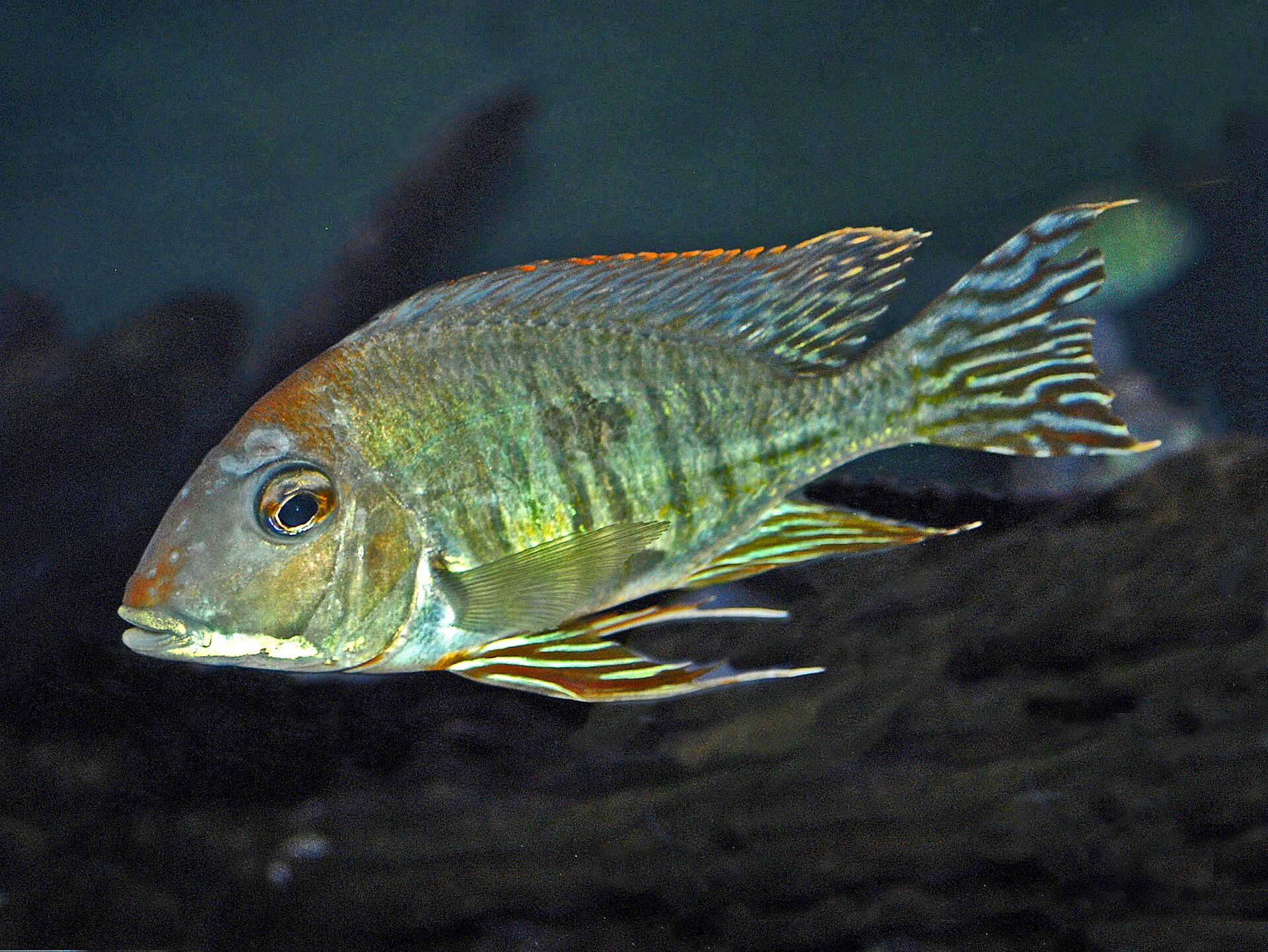
 Hoplosternum littorale. Photo: geosesarma / Wikimedia Commons (CC BY 4.0)
Males in nesting season can look darker and more determined about a patch of floating plants. Females are deeper-bodied when full of eggs. Juveniles in shops look like generic armoured catfish. Ask for the scientific name. If the answer is a shrug, measure your tank against a 24 cm adult anyway.
Barbels probe mud. Eyes are small. The fish is nocturnal-leaning but will forage in dim daylight in a settled tank. Panic circling and crashing into glass is a newly imported, brightly lit animal, not the species’ personality.
Room for a food-fish body
A pair or a small group needs 150 litres or more and a long footprint, not a tall cube. Soft substrate, wood, and a real covering of floating plants recreate the ditch. They will root and puff sand; delicate carpets will lose. Filtration needs to be stronger than for a brown hoplo because the bioload is larger, but the current should not be a river rapids. Leave surface access. A tightly sealed paludarium lid without air space is a bad idea.
They are messy. Overstocking three port hoplos in 80 litres because “they breathe air so they don’t need oxygen” is how you get a stinking tank and sick fish. Air breathing is a backup for hypoxic pools, not a substitute for filtration.

Heat, mud chemistry, and an open sky of air
Temperature 24–28 °C suits them. They are lowland tropical animals. pH 6.0–7.8 is a working range. Hardness is secondary to cleanliness. They can handle a little salt better than many Amazon tetras, but you are not keeping a pemecou sea catfish; do not build a marine system around a port hoplo.
Large water changes keep a muddy-looking tank from actually being toxic. Match temperature. They feel cold snaps. In outdoor ponds in the tropics they are at home; in a Canadian winter indoor tank, the heater is required, unlike a channel catfish pond.
A bigger appetite than the brown hoplo
Feed sinking omnivore pellets, frozen mixes, earthworms, and some vegetable matter. Adults will take substantial portions. They will also vacuum fry of other fish if the fry are the right size. This is not a gentle nano inhabitant. Feed at dusk, watch consumption, and siphon leftovers from the sand. A food fish in a tank still produces food-fish waste.
Do not put them on an algae-wafer-only diet. Do not assume they will “clean up after the other fish” and stay healthy.
Neighbours that will not be eaten and will not be crushed
Large, peaceful characins, similarly robust catfishes of comparable size, and bigger barbs can work in a spacious tank. Tiny tetras may be eaten as the hoplo grows. Slow, long-finned show fish get bumped at night. Cool-water species are wrong. Giant shovelnoses are a different, predatory problem; do not mix a port hoplo into a predator exhibit as “bottom staff.”
They can live in a group. Males may quarrel over a nest site in season. Extra floating cover reduces warfare.
The floating nest of a ditch fish
Like other hoplos, H. littorale males build a bubble nest at the surface, often a large, messy raft of bubbles and bits of plant. Eggs go in the raft. The male guards. This is documented in the wild and in ponds, and it is more likely in a large, planted, warm tank than in a bare quarantine box. If you want fry, you need a plan for a lot of them — this is a species people culture for food in parts of its range.
Do not expect bristlenose cave mechanics. Do not expect a pimelodid-style “never breeds.” This is a callichthyid with a public, floaty nest.
Buy the adult size, not the cultural nickname
Hassar, atipa, port hoplo, atipa catfish — the names travel farther than the care sheet. Hoplosternum littorale is a large air-breathing plated fish of plains and ditches. If your tank is a 60 litre tropical community, this is the wrong hoplo. If you can offer a warm, filtered, open-topped system and you like a characterful, heavy catfish that is still not a river monster, it can be a long-lived inhabitant. See brown hoplo for the smaller cousin, plus chemistry and cycling.

Explore other topics
Dive into more aquarium guides across the site.