

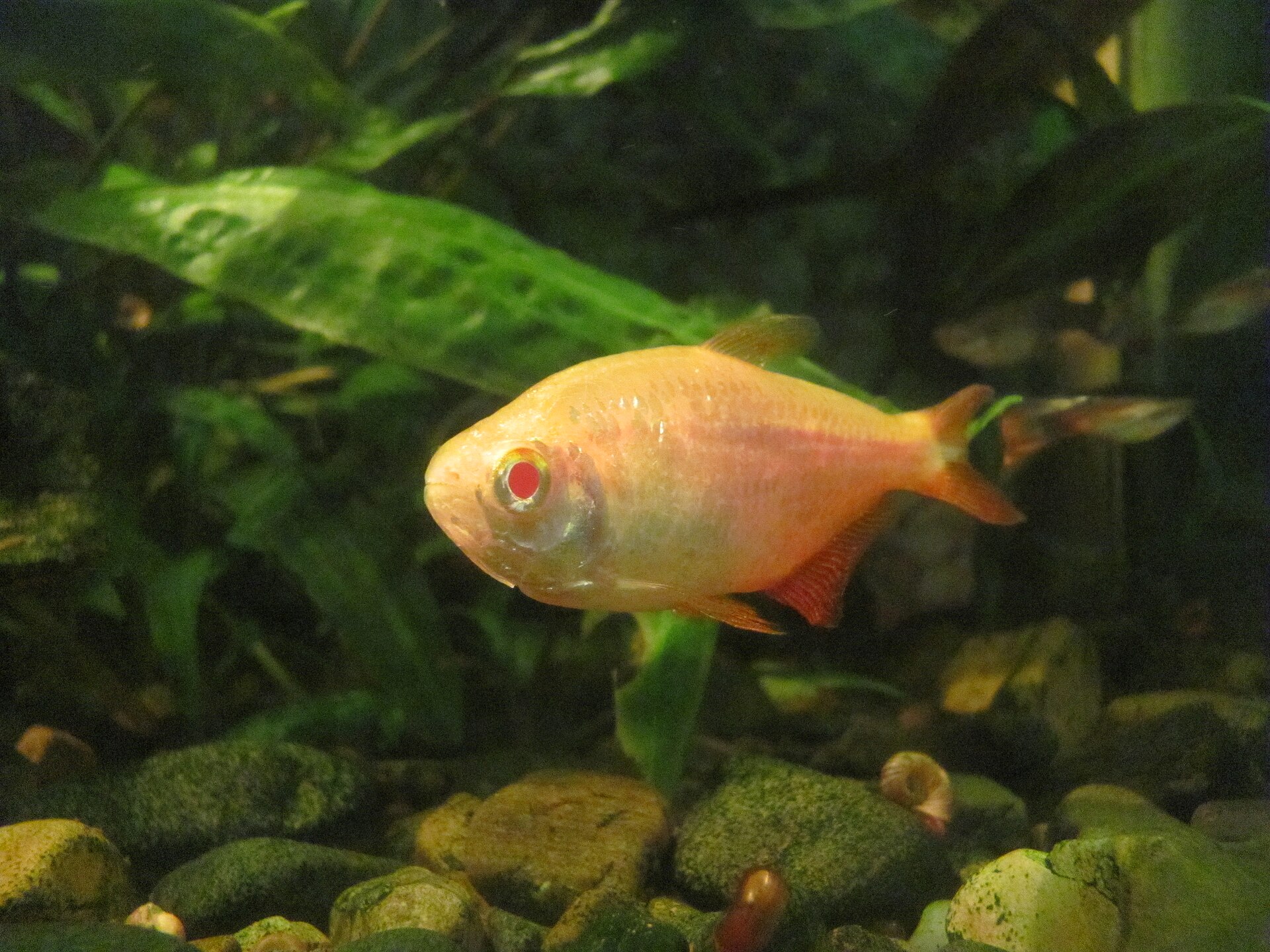
The Buenos Aires tetra is a La Plata fish, not an Amazon one. Hyphessobrycon anisitsi (still sold under older names such as Hemigrammus caudovittatus) comes from the Paraná–Paraguay–Uruguay system in Argentina, Paraguay, and southern Brazil. Keepers who treat it like a neon in 28°C blackwater usually get a restless, plant-shredding school that nips anything with a trailing fin.
A southern climate, not a jungle creek
Those drainages see cooler winters than the equatorial forest. Wild fish live through seasonal temperature drops that would stall a rummynose. In the aquarium that translates to a species that looks and behaves better in the low-to-mid twenties Celsius, and that can sit near 18°C without the collapse you would see in a cardinal tetra. Pushing them to a constant 28°C to “match the tropical community” often makes them hyperactive and more inclined to pick at plants and neighbours.
Water chemistry is broad: pH roughly 6.0–8.0, and hardness from fairly soft to moderately hard. They are not a peat-swamp specialist. Tannins are optional decoration, not a requirement. What they do require is oxygen, swimming length, and a group large enough that chasing stays inside the school instead of landing on a guppy.
The look people underestimate
Adults reach about 6–7.5 cm. The body is deeper than a pencilfish, silver to olive, with a dark mark on the caudal peduncle and a reddish wash on the tail and anal fin in well-kept fish. There is an albino line in the trade; it is the same species with the same appetite and the same plant problem, just paler. Females fill out; males stay slimmer and often show more red on the fins.
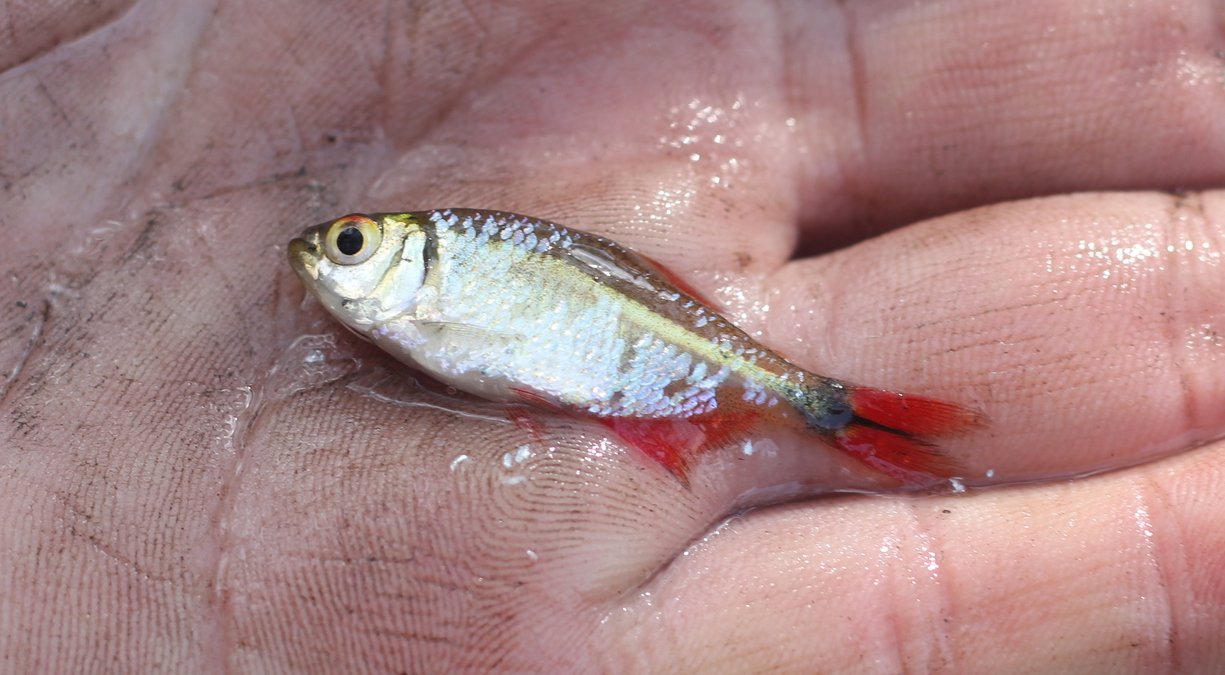
Colour collapses in a pair kept as “dither fish” in a cichlid tank. It also collapses in water that is chronically warm and dirty. The fish is hardy compared with many characins; hardy does not mean it looks good in neglect.
Why planted tanks lose leaves
Buenos Aires tetras eat plants. Soft species — Vallisneria tips, Cabomba, young Hygrophila, expensive carpeting plants — get shredded. They are omnivores with a real vegetable component, not tetras that merely “might nibble.” If you want a lush Dutch scape, this is the wrong school. If you want a tougher layout, use Java fern, Anubias, Bolbitis, and craggy wood they cannot macerate as easily, and accept that some greens will still vanish.
That herbivory is also why they stay in good weight on a mixed diet. Flakes or pellets plus frozen invertebrates plus the occasional blanched courgette or spinach matches the wild menu better than protein-only feeding, which can worsen nipping and waste.
Footprint and flow
A school of six adults belongs in something near 100 litres with length, not height. They are active midwater swimmers. Gentle to moderate flow is fine; they are not hill-stream danios, and they are not still-water hatchets. A lid helps. Startled fish jump, especially in bright, open tanks with no overhead cover.
Filtration should keep the water moving and clean without blasting a 7 cm tetra against the glass. They produce more waste than a school of embers. Stock and feed accordingly.
Nipping, stocking, and honest tankmates

In a group of eight or more, most aggression stays inside the school. In a group of three, they pick on slow, long-finned fish. Angelfish, bettas, fancy guppies, and veil-tail species are poor companions. Better matches are other robust, similarly sized tetras, medium barbs, peaceful rainbowfish that like similar temperatures, and bottom dwellers that can handle cool-to-moderate water. Avoid mixing them with delicate Amazon specialists that need 26–28°C stained water as a rule.
They are not community angels. They are a boisterous southern tetra. If your tank is built around discus, skip this species.
Cool-water spawning
They scatter eggs, often after a cooler period followed by a water change and a slight temperature rise — a rough stand-in for seasonal shift. A dedicated tank with a spawning mop or fine plants, then removal of adults, is the reliable method. Eggs hatch in a couple of days at moderate temperature. Fry are small but not as tiny as Boraras fry; they take infusoria briefly, then micro worms and baby brine shrimp.
Do not expect a planted community to yield a crop of young. Adults eat eggs, and the same fish that demolish Cabomba will demolish spawning sites.
Health in a “beginner” tetra
Ich still appears after a chill or a shipping event. Because the species tolerates cooler water, people sometimes run unheated tanks in rooms that swing. A slow drop is tolerable; a crash to the low teens is not. Watch for flashing, clamped fins, and white specks. Bacterial fin issues show up when nipping and dirty water combine. Quarantine new stock. They are common in shops and often sit in mixed tetra vats, which is a disease exchange.
Lifespan in good care is several years. They do not stay the cute 3 cm fish from the bag. Buy for the adult, the appetite, and the plant bill.
If you wanted a peaceful Amazon school
Choose a different characin. Ember tetras and cardinals occupy a different climate and a different temperament. Buenos Aires tetras earn a place in unheated or lightly heated temperate-tropical rooms, in tougher planted layouts, and with keepers who like an active silver school and do not mind sacrificing soft stems. That is a niche, not a default “tetra for any community.”
For chemistry that is already on the hard, alkaline side of tap water, this species is often a better fit than a peat-swamp rasbora. For a blackwater display, it is the wrong fish wearing a tetra label.
Seasonal rooms and unheated stands
In parts of North America and Europe, keepers run Buenos Aires tetras in rooms that sit in the low twenties in winter without a heater. That can work if the room does not crash overnight and if oxygen stays high. It is not an invitation to put them on a balcony. It is a recognition that H. anisitsi evolved with seasons. A heater set to 22°C is a safer default than no heater in a house that hits 15°C at night. Conversely, a heater locked at 28°C because “all tropical fish like it hot” is how you get a twitchy, plant-razing school.
If you already keep white cloud mountain minnows or hillstream loaches, you understand cool, oxygenated water. Buenos Aires tetras can share that climate better than they can share a discus tank. They still need more swimming length than a white cloud, and they will still eat soft plants the minnows ignore.
Explore other topics
Dive into more aquarium guides across the site.