

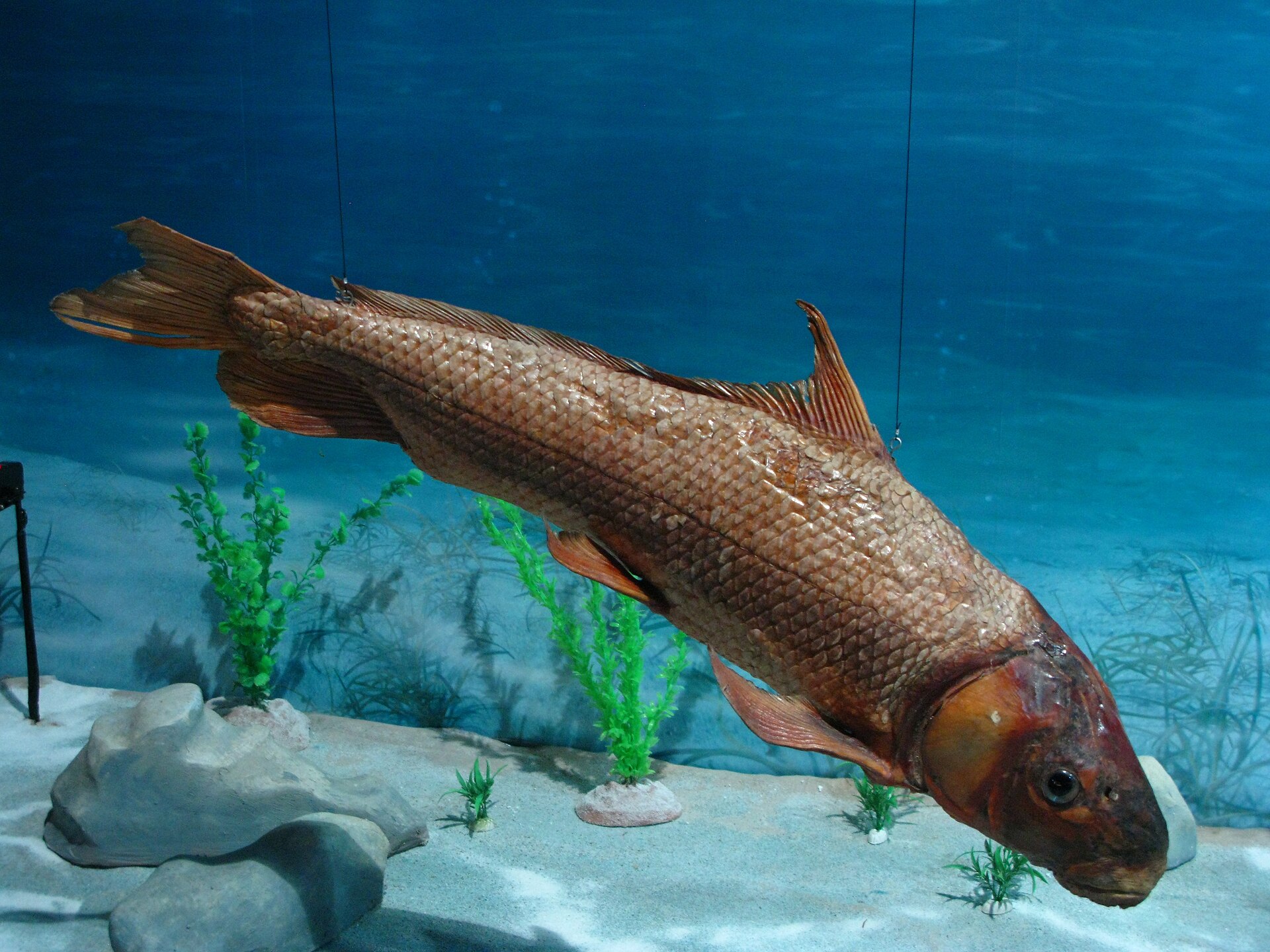
The trade name is a pile of lies. The Chinese high-fin banded shark is not a shark. It is not a catfish, even if some site tags still lump it with them. Myxocyprinus asiaticus is a sucker, family Catostomidae, the Asian oddity in a family that is otherwise mostly North American. It is a cooler Yangtze carp-like river fish that wears a spectacular dorsal sail and bold bands as a juvenile, then grows into a large, plainer, high-bodied adult that belongs in cold-to-cool rivers and huge displays. People buy the striped baby. They inherit a fish that can approach 60–100 cm and wants temperatures closer to a goldfish hall than to a discus tank.
The Yangtze is not a tropical community
Wild M. asiaticus is tied to the Yangtze basin of China, including the upper river and associated large tributaries. Those waters run cooler than Amazon lowlands, especially in the uplands, and they are big. Dams, overfishing, and habitat change have hammered wild populations; the species is of conservation concern in its home range. Captive-bred juveniles still appear in the ornamental trade because the baby look sells. That does not make the adult a living-room fish.
In nature it is a benthic browser of aufwuchs, detritus, and small invertebrates on rock and hard bottom in moving, oxygen-rich water. Think large cypriniform river, not a heated box of tetras. Putting a “hi-fin shark” in 26–28 °C water year-round is how keepers get listless, disease-prone animals that never show the sail properly.
Seasonal temperature change is part of a temperate-subtropical river. A flat tropical thermostat is not “stability” for this species; it is the wrong climate.
The sail that shrinks and the bands that fade
Juveniles are the postcard: a tall, triangular dorsal fin, dark bands on a pale body, a sucking mouth on the underside. That sail is a juvenile flag. As the fish ages, the body deepens, the relative height of the dorsal fin drops, and the bands wash toward grey or bronze. Adults look like large suckers, not like reef sharks and not like striped panaques. If you are buying the fish for the baby pattern, you are buying a look that time erases.
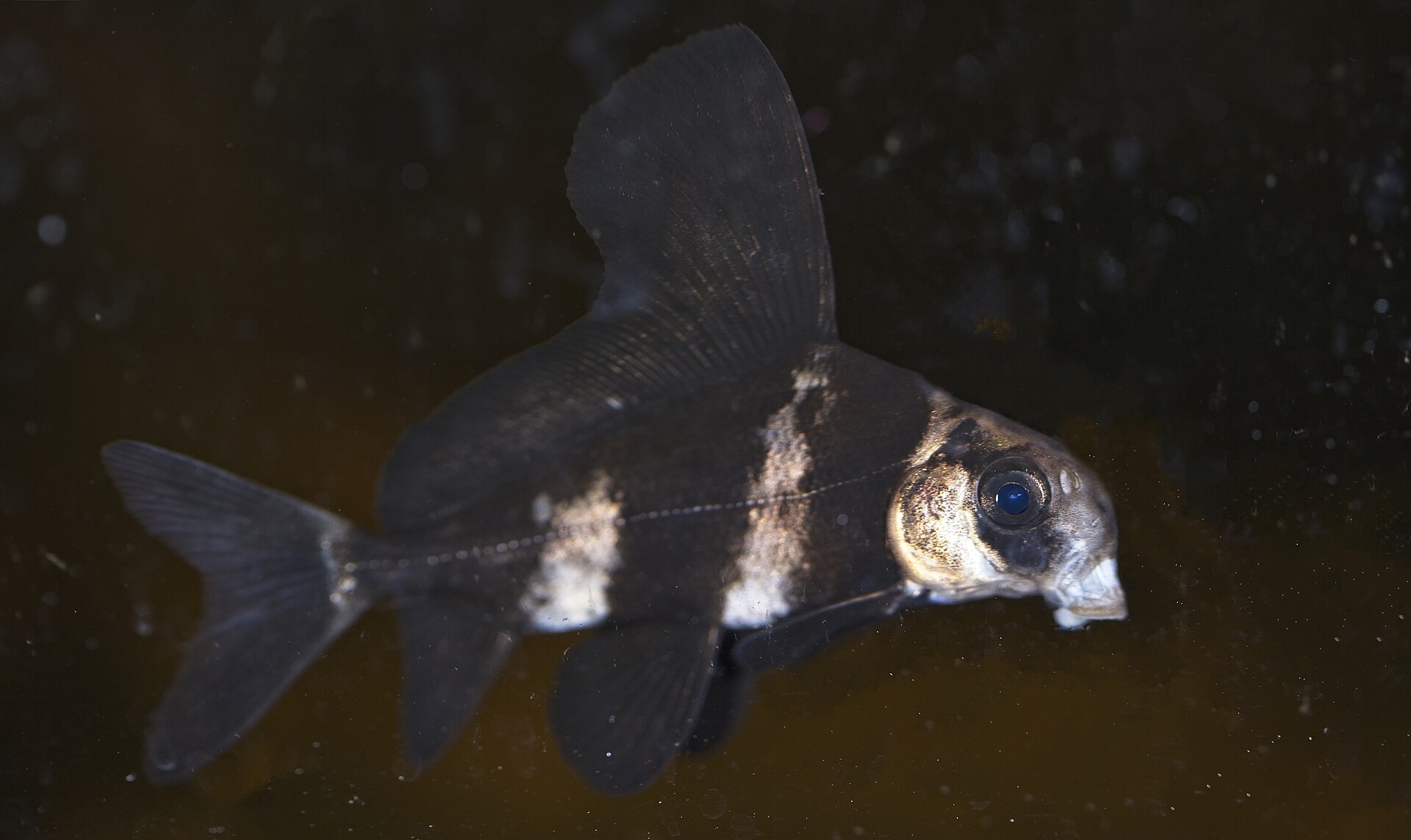
The mouth is a downward sucker for grazing hard surfaces, similar in job to some other suckers, not a catfish barbel array and not a shark jaw. Scales are large. The eye is modest. Healthy juveniles are alert, compressed, and constantly picking at surfaces. Pinch-headed, clamped, tropical-hot fish in a tiny tank are already failing.
Sexing is a mature-fish problem. Tubercles and body shape may help on large adults. Shop babies are unsexable. Breeding belongs in conservation and aquaculture programs, not in a 200 litre tank.
Cool volume, hard surfaces, and swimming length
Adults need pond-scale or public-aquarium volume: thousands of litres, cool, with swimming length and a lot of rock or hard bottom to graze. A juvenile can live for a while in a few hundred litres, which is exactly why people get trapped. If you cannot house a metre-class temperate sucker, do not buy the striped 8 cm fish.
Flow should be steady and oxygen high. Temperature targets in the high teens to low 20s °C are more honest than tropical heat; many keepers treat them closer to fancy goldfish or koi climate than to Amazon climate. A chiller in a warm apartment is not an eccentricity; it is how you copy the Yangtze instead of the Amazon.

Substrate can be rounded gravel or sand over a rock field. Sharp gravel damages the ventral mouth. Plants get uprooted or grazed. Goldfish-style pond plants are a better thought than delicate tropical stems. Filtration must be enormous. These fish eat constantly and waste constantly.
Chemistry for a Chinese river sucker
pH around 6.5–8.0, moderate hardness, high oxygen, zero ammonia. They are not blackwater specialists. They are not marine. They are not brackish. Nitrate control in a large cypriniform system means big water changes and real filters. Do not mix them into a rift-lake cichlid tank or a 28 °C South American community “because they are peaceful.” Peaceful and huge and cool is still a climate mismatch.
Watch for velvet and fungal issues when temperature is too high and oxygen too low. Treat water first. A tropical ich protocol in a 29 °C tank is the wrong river.
Grazing like a carp, not hunting like a shark
The diet is aufwuchs, algae, detritus, and small invertebrates — a sucker’s menu. In captivity: quality sinking vegetarian and omnivore foods, blanched greens, gel diets, and the film on rock. They will take some protein but they are not piscivorous sharks. They will also eat more than a bristlenose by an order of magnitude as they grow. Underfeeding a juvenile in a sterile tank produces a pinched fish; overfeeding a half-grown fish in a small box produces a toilet.
They are not wood-eating panaques. They are not algae-only otos. They are large cool-water grazers.
Peaceful until the body fills the building
Temperament is generally peaceful toward fish that are too big to bully and that share cool, clean water — koi, large goldfish, other temperate pond fish in a pond. Tropical tetras in a heated community are in the wrong climate and will be crowded out by waste if not by mouths. This species is not a predator in the shovelnose sense. It is a huge river grazer that accidentally kills communities by outgrowing them and fouling them.
Keep one, or a small group only in vast volume. They can be mildly competitive over food. They are not a school of 5 cm otos.
Conservation, dams, and the cute juvenile
Wild Yangtze suckers have been squeezed by river engineering and harvest. Buying a captive-bred juvenile does not restore the Yangtze, and dumping an unwanted adult into a local pond is how temperate regions get odd introductions. If you cannot keep a cool-water giant for decades, do not participate in the baby-sail market.
Related reading: chemistry, cycling. For actual tropical catfish, pick a tropical catfish. For this animal, think Yangtze carp, not shark.
Explore other topics
Dive into more aquarium guides across the site.